Nylon Bristles Replaced Pig Hair in 1938 — and the Toothbrush Finally Stopped Rotting
For centuries, toothbrushes were made from hog bristles set in bone. The hair held bacteria, fell out, and went soft when wet. Then DuPont invented nylon, and the first thing they sold it as was not stockings.
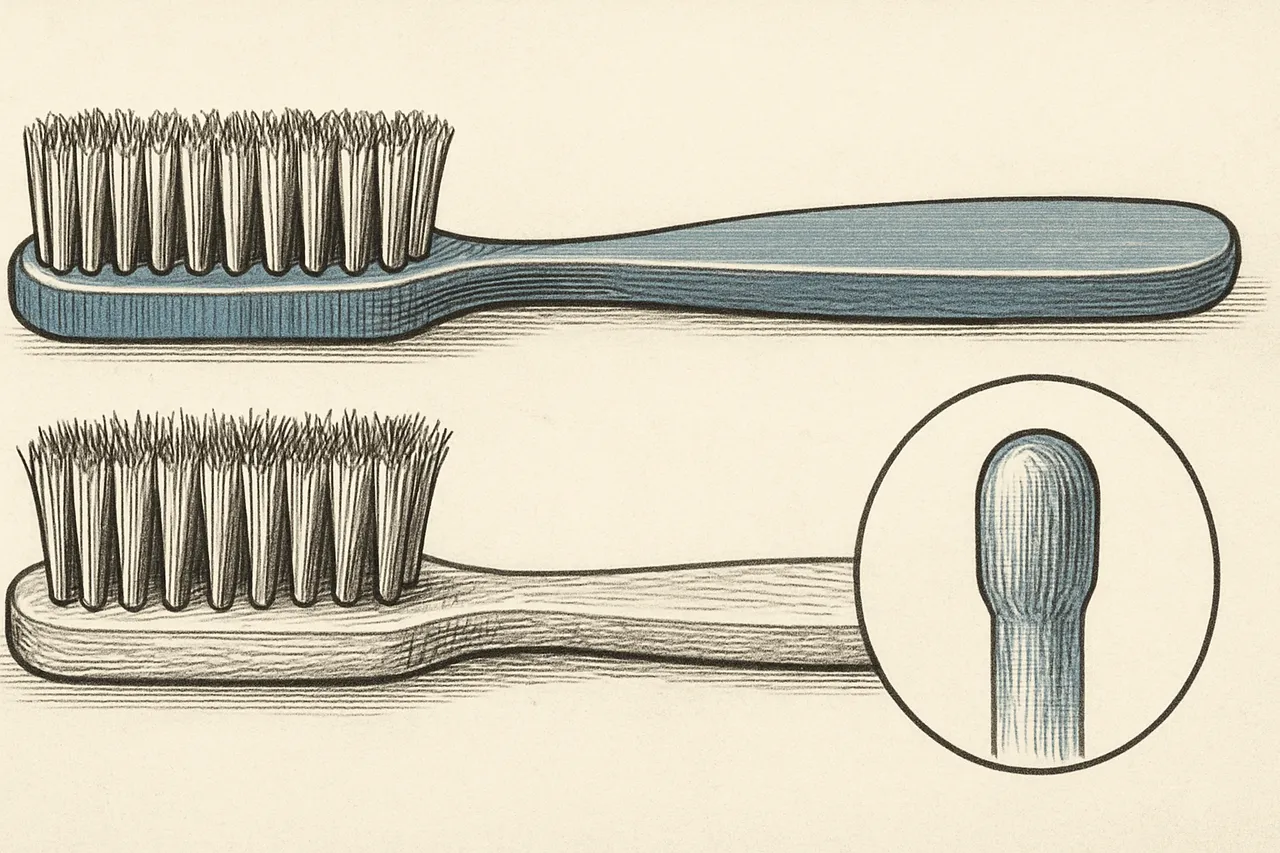
US2225331 belongs to the family of DuPont patents covering nylon and its use as a bristle filament — the change that turned the toothbrush from a slightly disgusting object into a hygienic one.
The toothbrush itself is very old. Chewing sticks go back thousands of years, and the recognizable bristle-in-a-handle brush appears in China by the fifteenth century, made with coarse hairs from the necks of Siberian hogs set into bone or bamboo. That basic construction — hog bristle in a bone handle — persisted essentially unchanged into the 1930s.
It had serious problems. Natural hair is porous, so it absorbs moisture, stays damp, and harbors bacteria. The bristles fall out and lodge between teeth. They soften when wet and lose their scrubbing action. The bone handles could crack and were themselves difficult to keep clean. Natural bristle was also expensive and supply-constrained, most of it imported from China.
Nylon
In 1935, Wallace Carothers' team at DuPont produced nylon — the first fully synthetic fiber. It is remembered mainly for stockings, which appeared in 1940 and caused near-riots at department stores.
But the first commercial nylon product was not hosiery. It was toothbrush bristles, launched in 1938 as "Dr. West's Miracle Tuft" toothbrush.
Nylon fixed nearly every problem at once. It does not absorb water, so it dries and does not host bacteria the way hair does. It holds its stiffness when wet. It does not shed. It could be manufactured to a consistent diameter and stiffness rather than sorted from animals, and it was far cheaper.
Early nylon bristles were, admittedly, too hard — they were rough on gums, and the ends were cut square and sharp. The refinement that followed was end-rounding: polishing each filament tip so it will not abrade gum tissue, which is now a standard specification and part of why a modern brush feels nothing like a 1938 one.
The habit came from the army
Having a good toothbrush did not automatically make Americans brush regularly. The behavioral change is usually credited to the Second World War: military hygiene regulations required servicemen to brush daily, and several million men came home in 1945 with the habit thoroughly installed. Household brushing rates rose sharply afterward.
The last piece was the handle. Injection-molded plastic replaced bone entirely, making the brush cheap, waterproof, hygienic, and — eventually — disposable enough that dentists could recommend replacing it every few months.
The object in your bathroom is therefore a product of three separate things arriving at once: a synthetic polymer invented for a chemical company's fiber business, a manufacturing process for cheap molded plastic, and a war that taught a generation to use it every day.
See the original
The full text of US2225331 is on patents.us.
Related stories
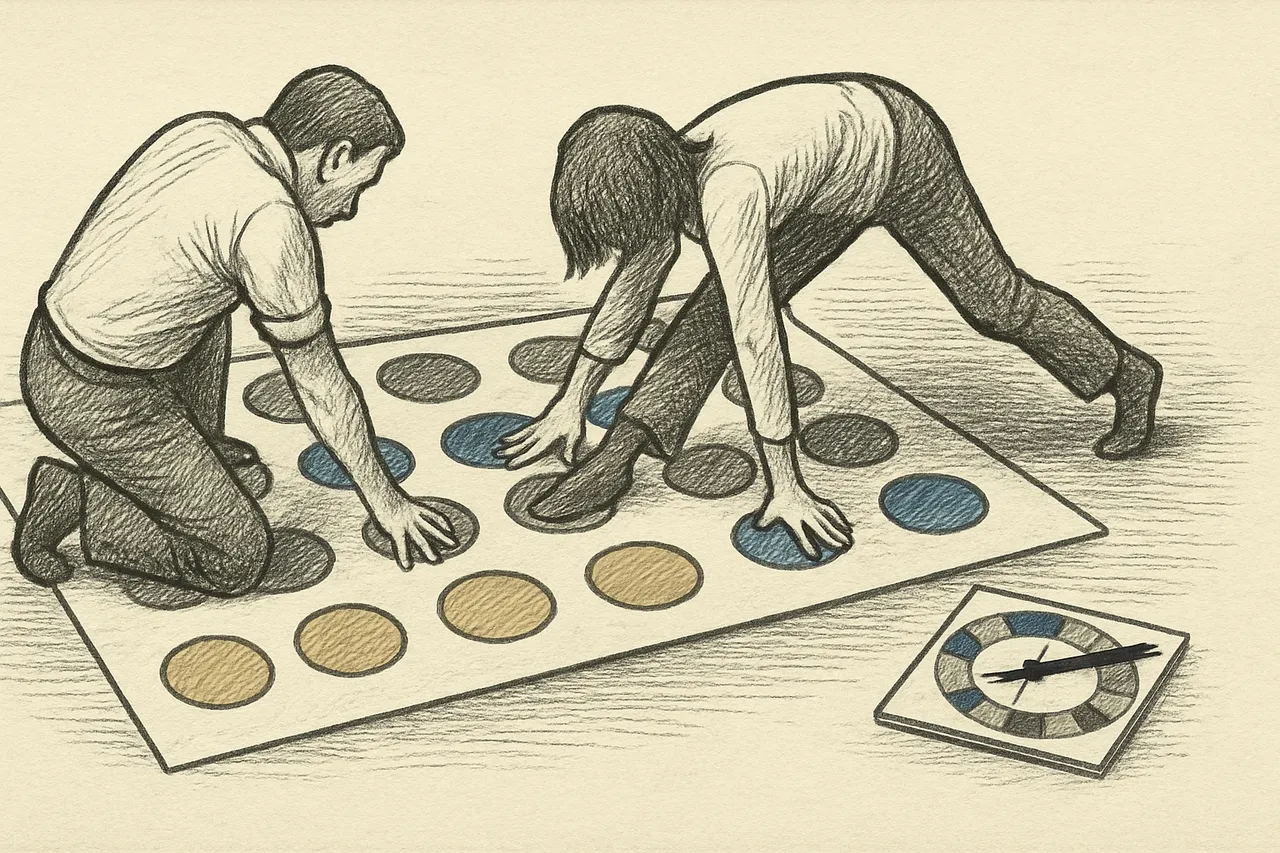
Twister's Patent Is Titled 'Apparatus for Playing a Game Wherein the Players Constitute the Game Pieces'
The patent title is the whole idea: the people are the pieces. Milton Bradley released the game in 1966, some retailers were wary of it, and critics found it a little too intimate. Then Johnny Carson played it on television with Eva Gabor, and the orders poured in.
Read the story →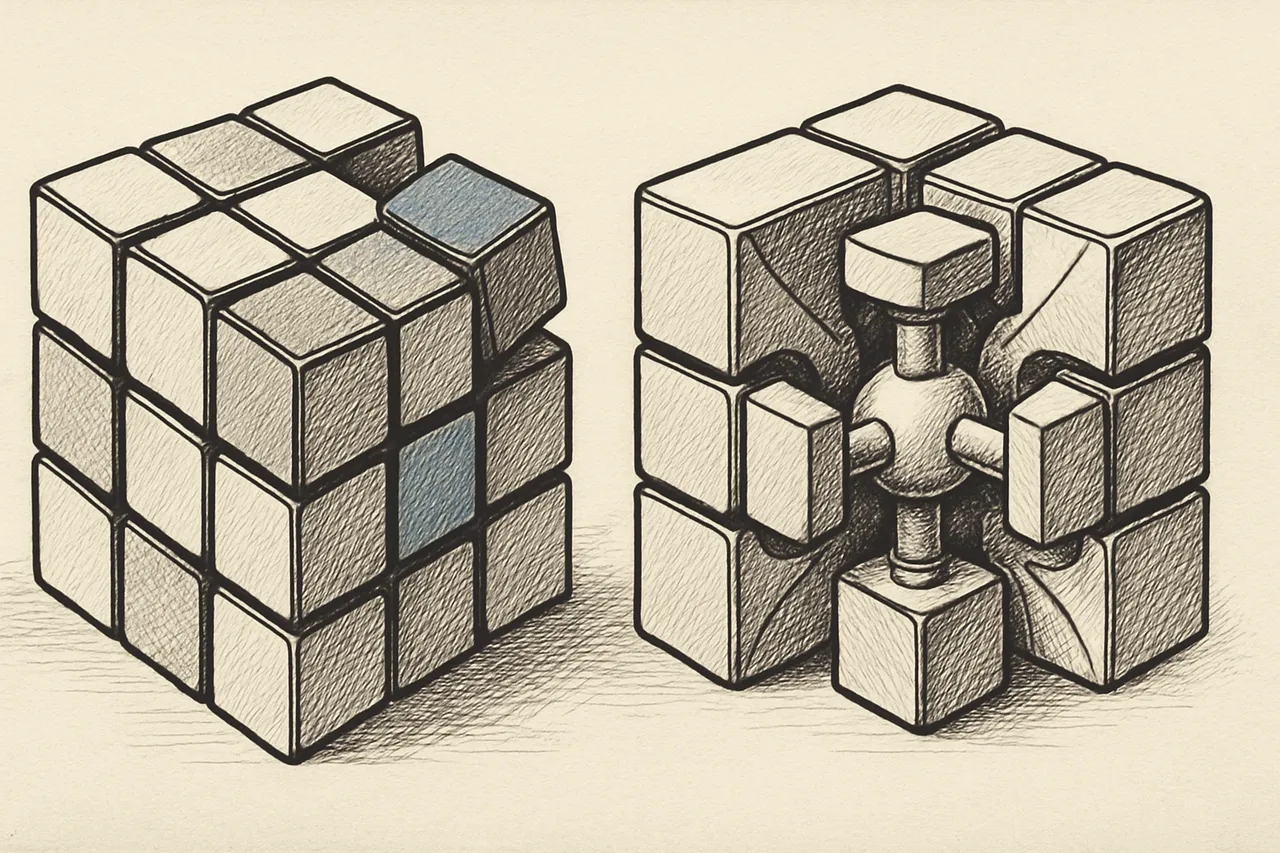
Ernő Rubik Needed About a Month to Solve His Own Cube. An American Court Later Found It Infringed an Earlier US Patent.
Rubik built the first cube in Budapest in 1974 as a way to think about three-dimensional movement. The clever part is how it holds together when most of its pieces are not attached to anything. In the United States, a chemist named Larry Nichols had patented a related puzzle in 1972, and his company sued.
Read the story →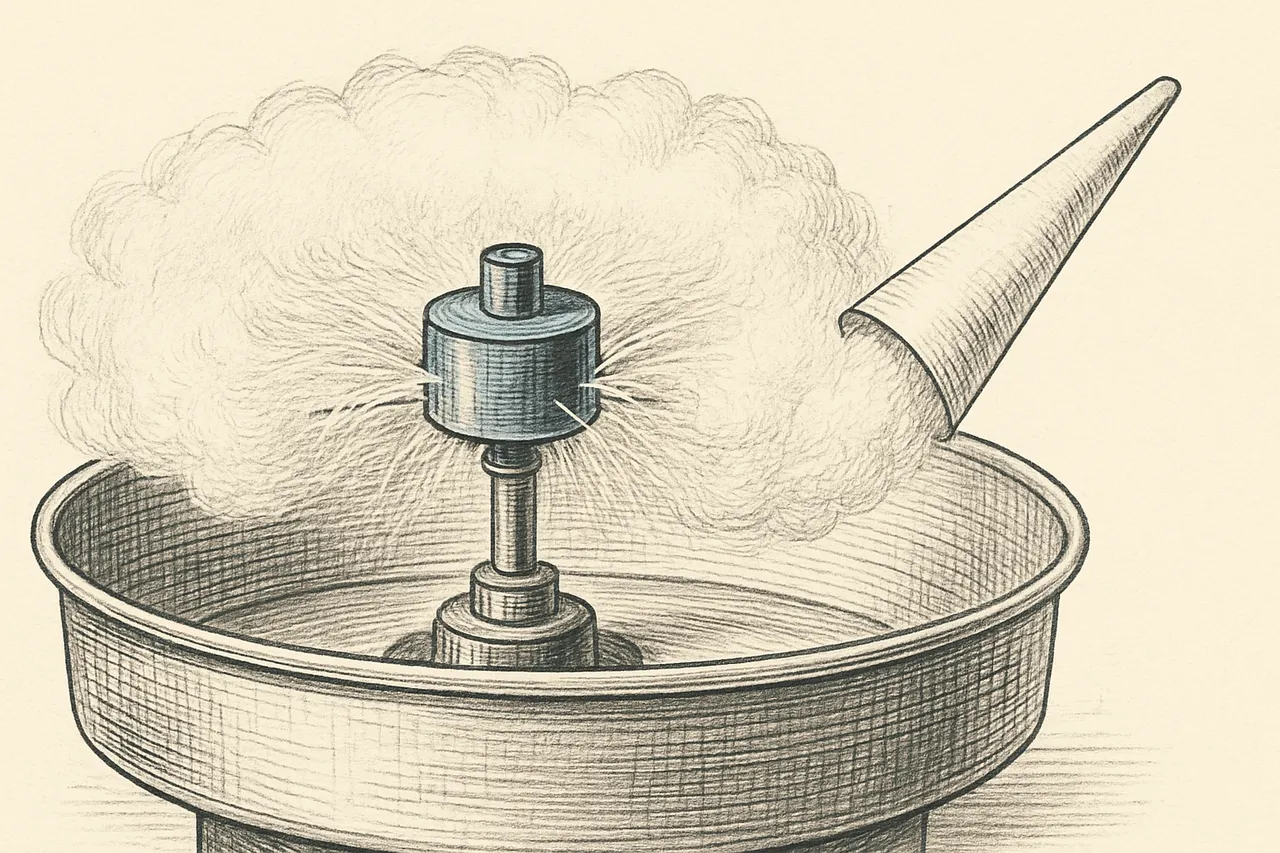
A Dentist Co-Invented the Cotton Candy Machine, and It Was Sold at the 1904 World's Fair as Fairy Floss
William Morrison was a dentist and John Wharton was a candy maker. Their machine melted sugar and flung it through tiny holes so that it cooled into threads finer than hair before it could crystallize. They filed in 1897, and at the St. Louis World's Fair it was a sensation.
Read the story →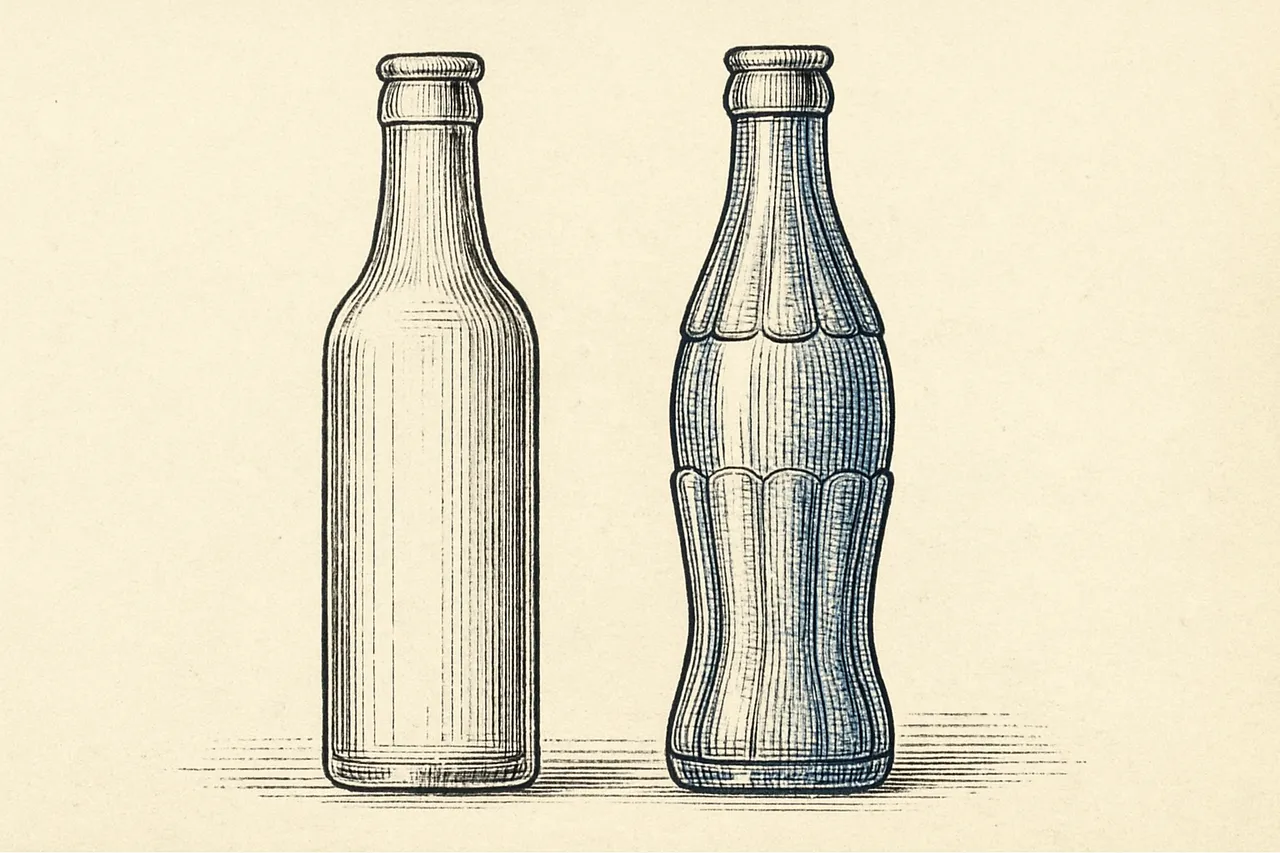
Coca-Cola Asked Glassmakers for a Bottle You Could Recognize in the Dark, or Broken on the Ground
In 1915 Coca-Cola had an imitation problem, since competitors used the same straight-sided bottles and borrowed-sounding names. It challenged glass companies to design a bottle identifiable by touch alone. The winner came from a small glassworks in Terre Haute, Indiana, and the name on the patent is not the name of the man who drew it.
Read the story →