Microwave Popcorn Doesn't Work Without the Bag, and the Bag Is the Actual Invention
Popcorn was one of the first foods anyone microwaved, back in 1945. It stayed bad for forty years, because microwaves heat unevenly and half the kernels never got hot enough. The fix was a strip of metallized film glued inside a paper bag.
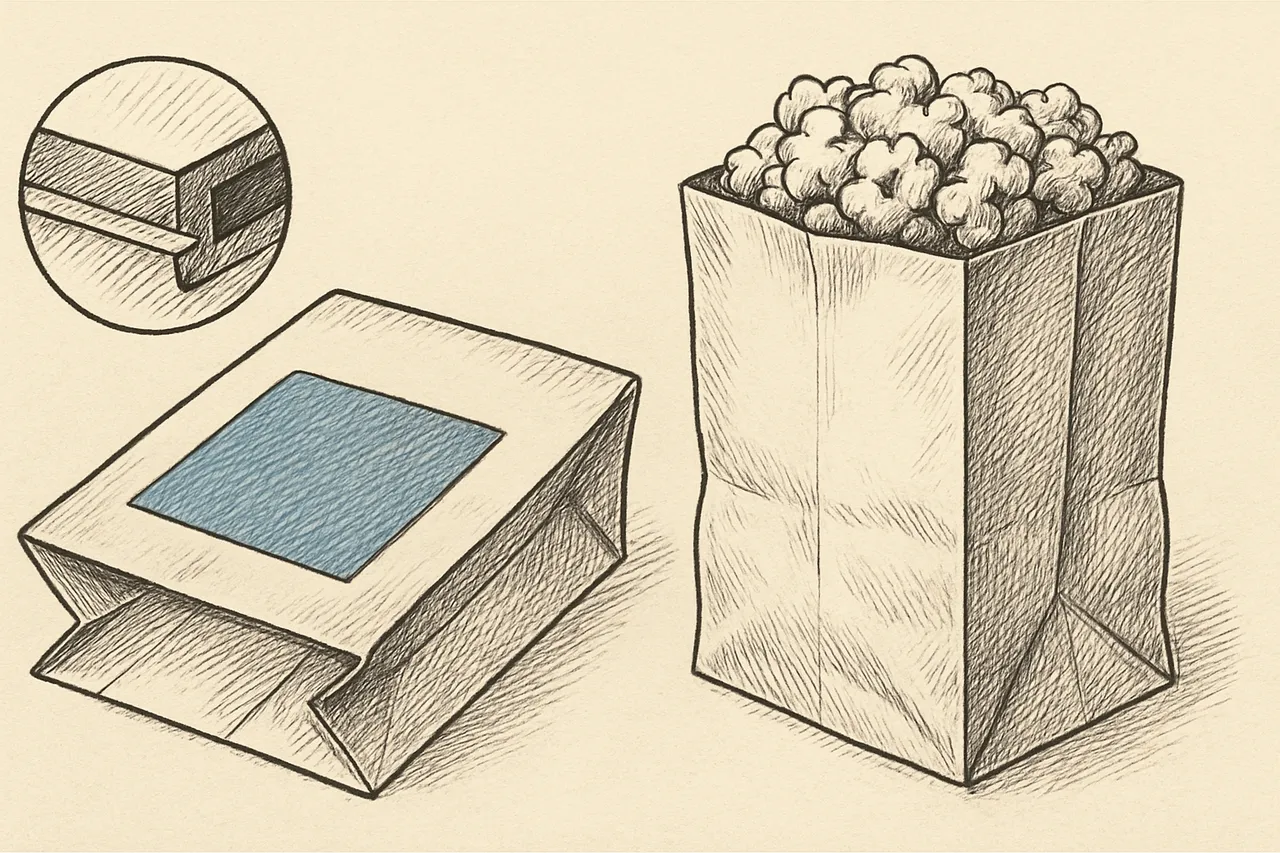
US4691374 and its relatives cover the microwave popcorn bag, and specifically the part of it that does the work: a susceptor, a small panel of metallized polyester film laminated into the bottom of an ordinary paper bag.
Popcorn has an unusually long association with microwaves. When Percy Spencer discovered microwave heating at Raytheon in 1945, popcorn was among the first things he deliberately tried, and it is depicted in his original patent. Popcorn is nearly the perfect microwave food: each kernel is a sealed pressure vessel with its own water supply, and it announces its own doneness audibly.
For about forty years, the results were still bad.
Why plain bags fail
A microwave oven does not heat evenly. It produces a standing-wave pattern with hot spots and cold spots, which is why turntables exist. Kernels sitting in a cold spot never reach the roughly 180 psi of internal steam pressure needed to burst.
You end up with the familiar bad outcome: a layer of scorched popped corn where the hot spots were, and a substantial bed of unpopped kernels everywhere else. Adding time burns the popped corn before it rescues the rest.
Oil helps couple energy into the kernels, but oil alone does not fix the spatial problem.
What the susceptor does
The susceptor is a very thin layer of aluminum — thin enough to be partly transparent to microwaves rather than reflecting them like foil.
Microwaves passing through it induce currents in the metal, and because the film is so thin and resistive, that energy dissipates as heat in the film itself. The panel becomes a hot surface, quickly reaching temperatures well above what the food alone would achieve.
So the bag heats the kernels two ways at once: microwave energy heats the water inside each kernel directly, and the susceptor conducts heat into the kernels sitting on it, evening out the cold spots and giving the bottom layer the extra push it needs.
The rest of the bag is engineered around that. The paper is folded so it expands as steam builds, vents enough to avoid bursting, and holds a pool of solid fat and salt that melts and distributes. The whole assembly is a single-use cooking appliance that costs a few cents.
What it enabled
General Mills introduced shelf-stable microwave popcorn in the early 1980s, and it became one of the fastest-adopted food products of the decade. It is frequently credited with driving microwave-oven sales as much as the reverse — a genuine reason for households without one to buy one.
Which makes the paper bag a rare object: a piece of disposable packaging that is simultaneously the cooking vessel, the heating element, the serving bowl, and the reason people bought the appliance.
See the original
The full text and figures of US4691374 are on patents.us.
Related stories
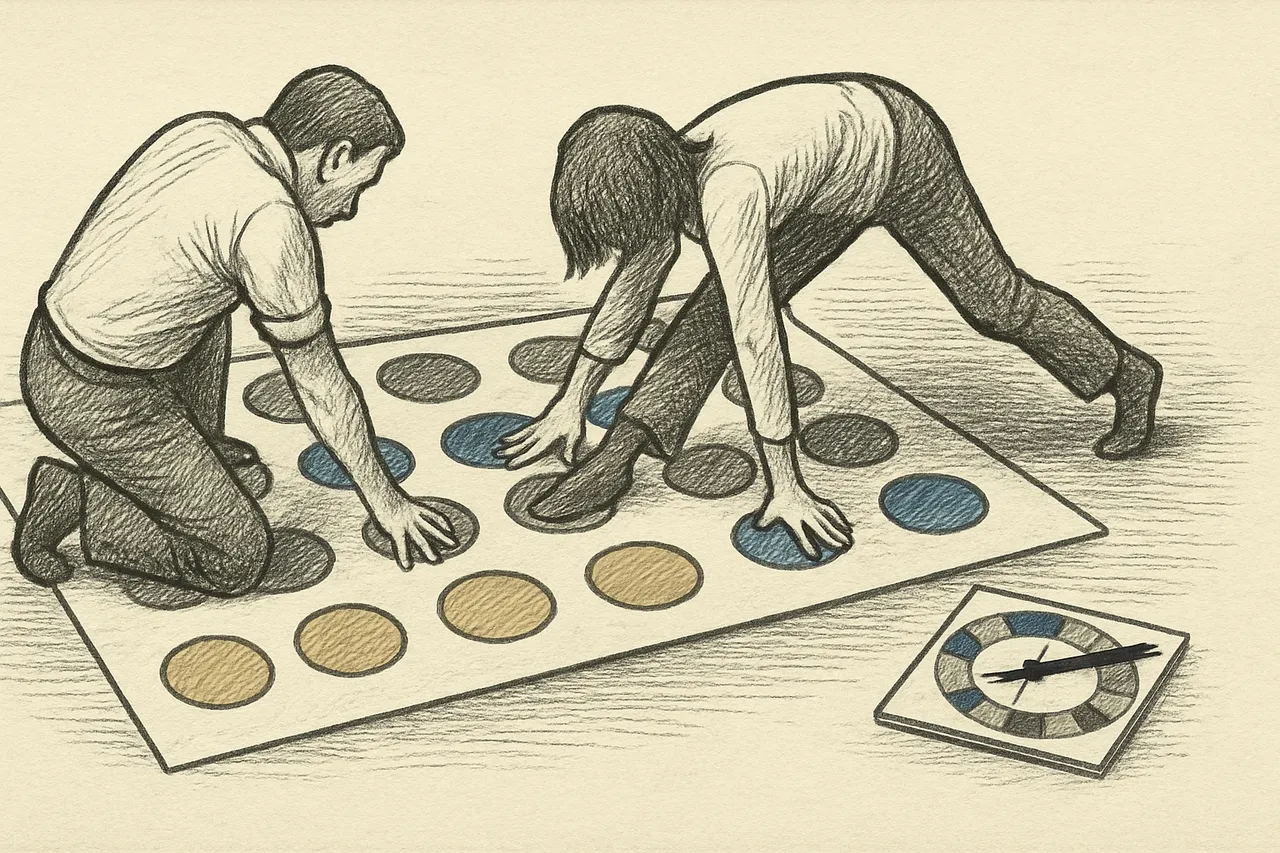
Twister's Patent Is Titled 'Apparatus for Playing a Game Wherein the Players Constitute the Game Pieces'
The patent title is the whole idea: the people are the pieces. Milton Bradley released the game in 1966, some retailers were wary of it, and critics found it a little too intimate. Then Johnny Carson played it on television with Eva Gabor, and the orders poured in.
Read the story →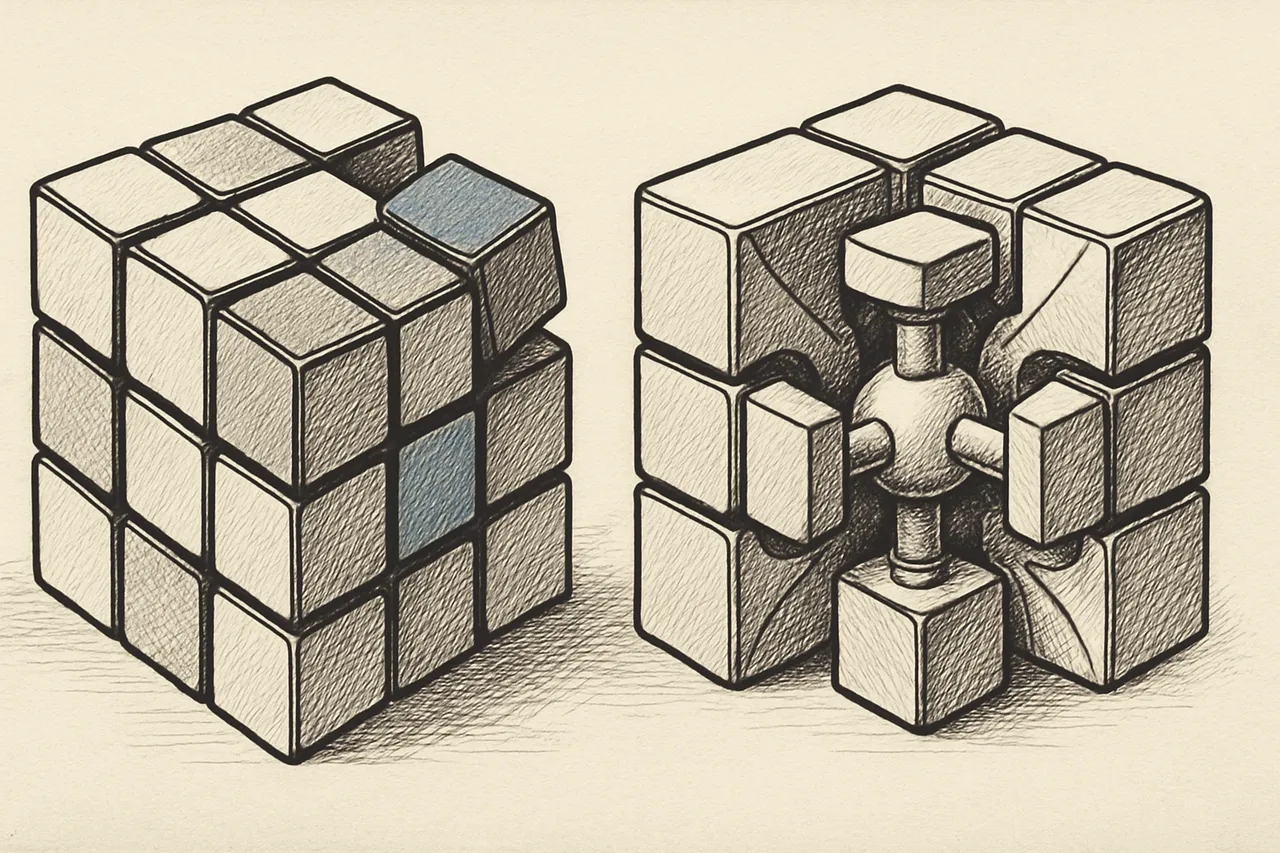
Ernő Rubik Needed About a Month to Solve His Own Cube. An American Court Later Found It Infringed an Earlier US Patent.
Rubik built the first cube in Budapest in 1974 as a way to think about three-dimensional movement. The clever part is how it holds together when most of its pieces are not attached to anything. In the United States, a chemist named Larry Nichols had patented a related puzzle in 1972, and his company sued.
Read the story →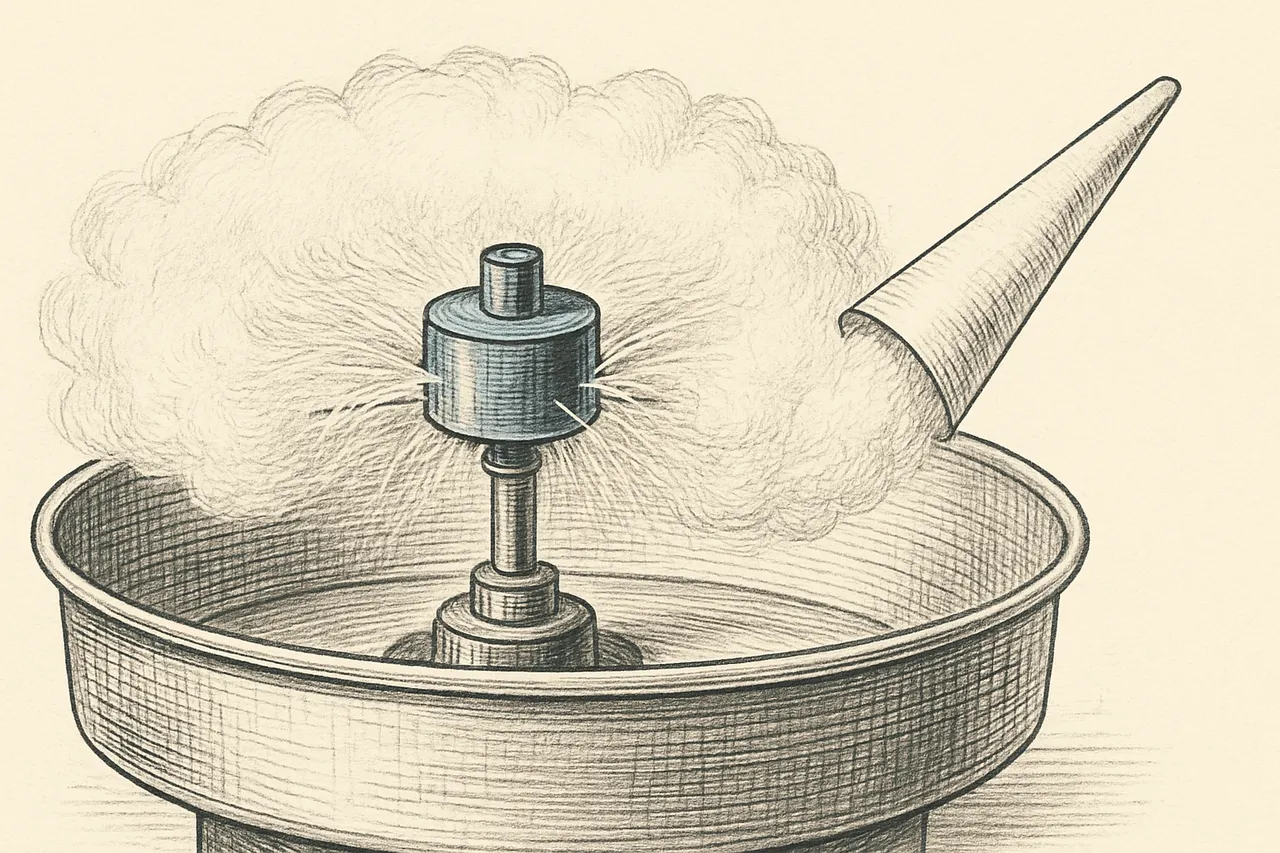
A Dentist Co-Invented the Cotton Candy Machine, and It Was Sold at the 1904 World's Fair as Fairy Floss
William Morrison was a dentist and John Wharton was a candy maker. Their machine melted sugar and flung it through tiny holes so that it cooled into threads finer than hair before it could crystallize. They filed in 1897, and at the St. Louis World's Fair it was a sensation.
Read the story →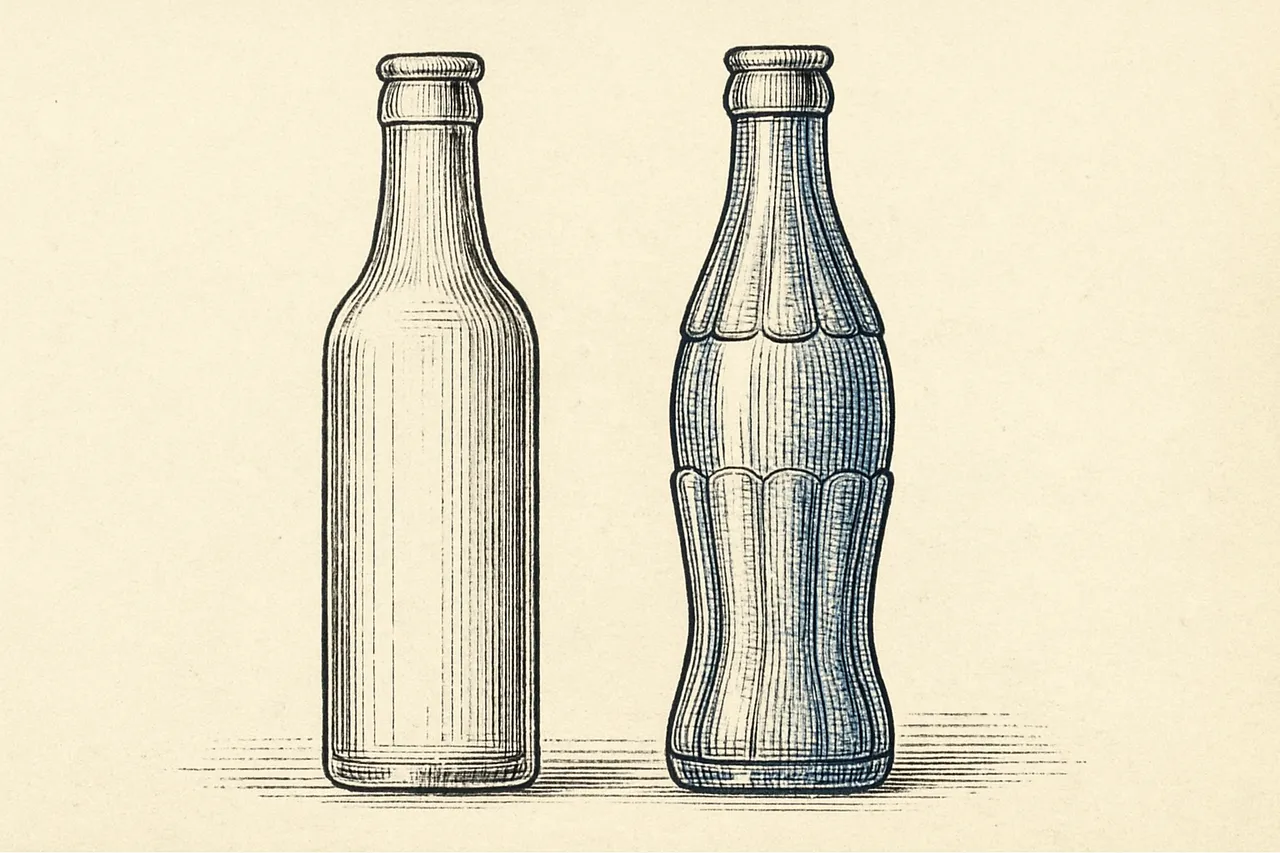
Coca-Cola Asked Glassmakers for a Bottle You Could Recognize in the Dark, or Broken on the Ground
In 1915 Coca-Cola had an imitation problem, since competitors used the same straight-sided bottles and borrowed-sounding names. It challenged glass companies to design a bottle identifiable by touch alone. The winner came from a small glassworks in Terre Haute, Indiana, and the name on the patent is not the name of the man who drew it.
Read the story →