Michael Jackson Held a Patent on the Smooth Criminal Lean. The Secret Was in the Heel.
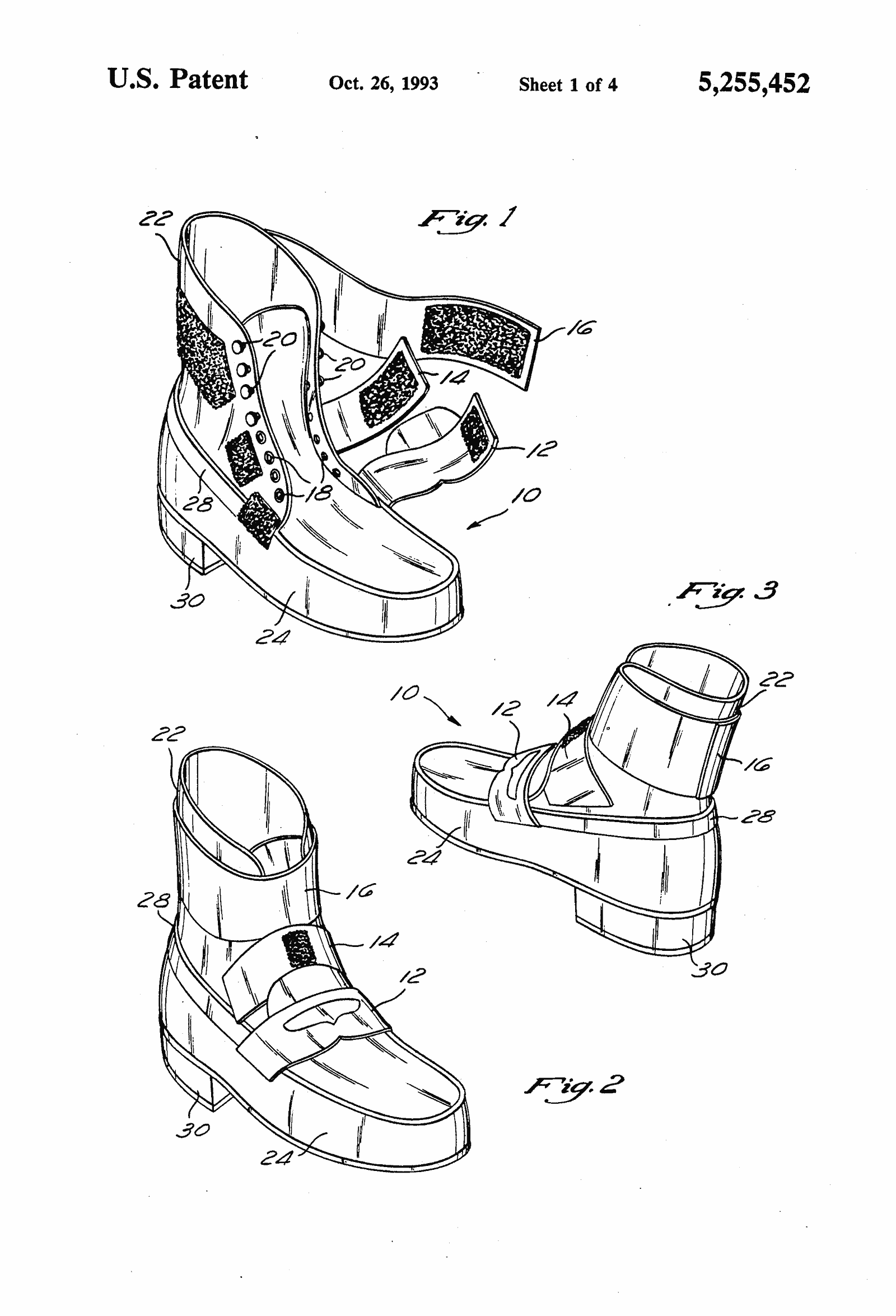
In the Smooth Criminal film the famous forward lean was done with wires. Wires could not work on a live stage, so Jackson and two costume designers patented a shoe with a slot in the heel that locks onto a peg rising through the floor.

US5255452 was filed on June 29, 1992, and granted on October 26, 1993. The title is "Method and Means for Creating Anti-Gravity Illusion." The inventors named on it are Michael J. Jackson of Los Angeles, with Michael L. Bush and Dennis Tompkins of Hollywood, and it was assigned to Triumph International, Inc.
Yes, that Michael Jackson. The patent is the working explanation for one of the best-known moves in pop music: the moment in "Smooth Criminal" when he and his dancers tip forward about 45 degrees with their backs straight and their feet flat on the floor, hold it, and come back up.
The problem with wires
The patent explains its own origin with some candor. One of the inventors, it says without naming him, had leaned past his center of gravity in his "recorded video performances." That effect came from cables connecting a harness around the dancer's waist to hooks on the stage. Since stagehands had to connect and disconnect the cables, the system could not be used in live performances, and the cables restricted movement.
So the question was how to do the same lean live, with no wires and no helpers. The closest thing in the earlier patents, which the application cites, was footwear for astronauts that clips onto a rail.
A slot and a peg
The answer is a shoe with a specially shaped slot in the heel, and a hitch that rises through a hole in the stage floor at the right moment. The performer slides a foot forward, the slot catches the hitch, and the foot is locked to the floor. From there the performer can lean forward "at a very acute angle relative to the stage floor," well past the point where balance would normally fail, with the hitch taking the load.
After returning to a normal standing position, the dancer slides the shoes backward to come free, and the hitches are withdrawn from the holes, which can then be plugged. The drawings show the shoe from several angles, with straps that fix the foot firmly inside and a sock-like covering that hides them.
Jackson's name on the patent is what makes it unusual. Pop stars do not often appear as named inventors, and here the inventor is also the demonstration.
The shoe does not do the work
The hardware only solves half of the problem. In 2018 three neurosurgeons from Chandigarh, India, Nishant Yagnick, Manjul Tripathi and Sandeep Mohindra, wrote about the move in the Journal of Neurosurgery: Spine. When a person bends forward normally, they pointed out, the hips act as the pivot and the back muscles take the strain. In the lean the pivot moves down to the ankles, and the load goes to the Achilles tendons, which are not built for it.
Even with the shoes, the authors said, the move takes unusual core strength. They also warned that dancers who try to copy it risk injuring their spines.
The patent, then, is an honest piece of stage engineering that hides a real physical feat. The peg holds the performer to the floor. It takes a very strong dancer to look relaxed doing it.
See the original
The full text and figures of US5255452 are on Google Patents.
Related stories
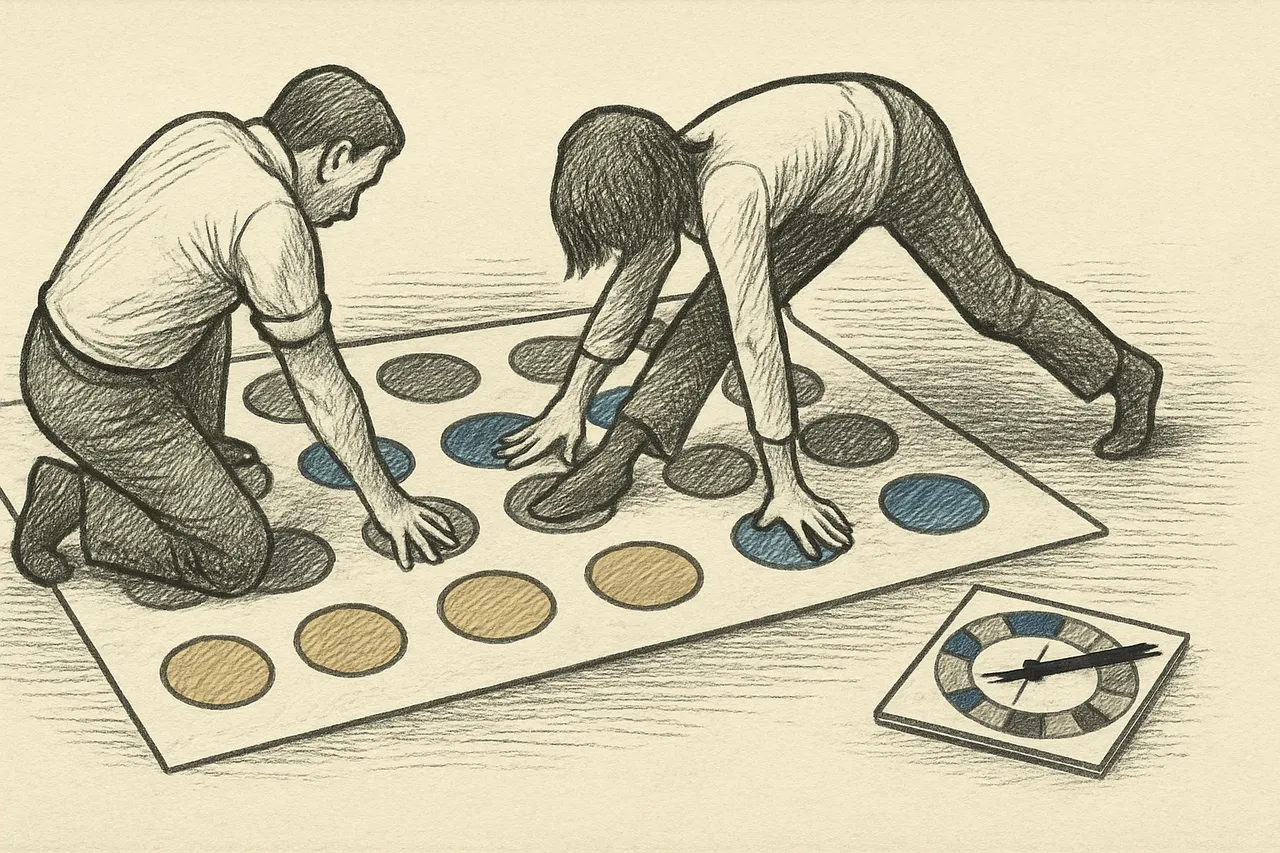
Twister's Patent Is Titled 'Apparatus for Playing a Game Wherein the Players Constitute the Game Pieces'
The patent title is the whole idea: the people are the pieces. Milton Bradley released the game in 1966, some retailers were wary of it, and critics found it a little too intimate. Then Johnny Carson played it on television with Eva Gabor, and the orders poured in.
Read the story →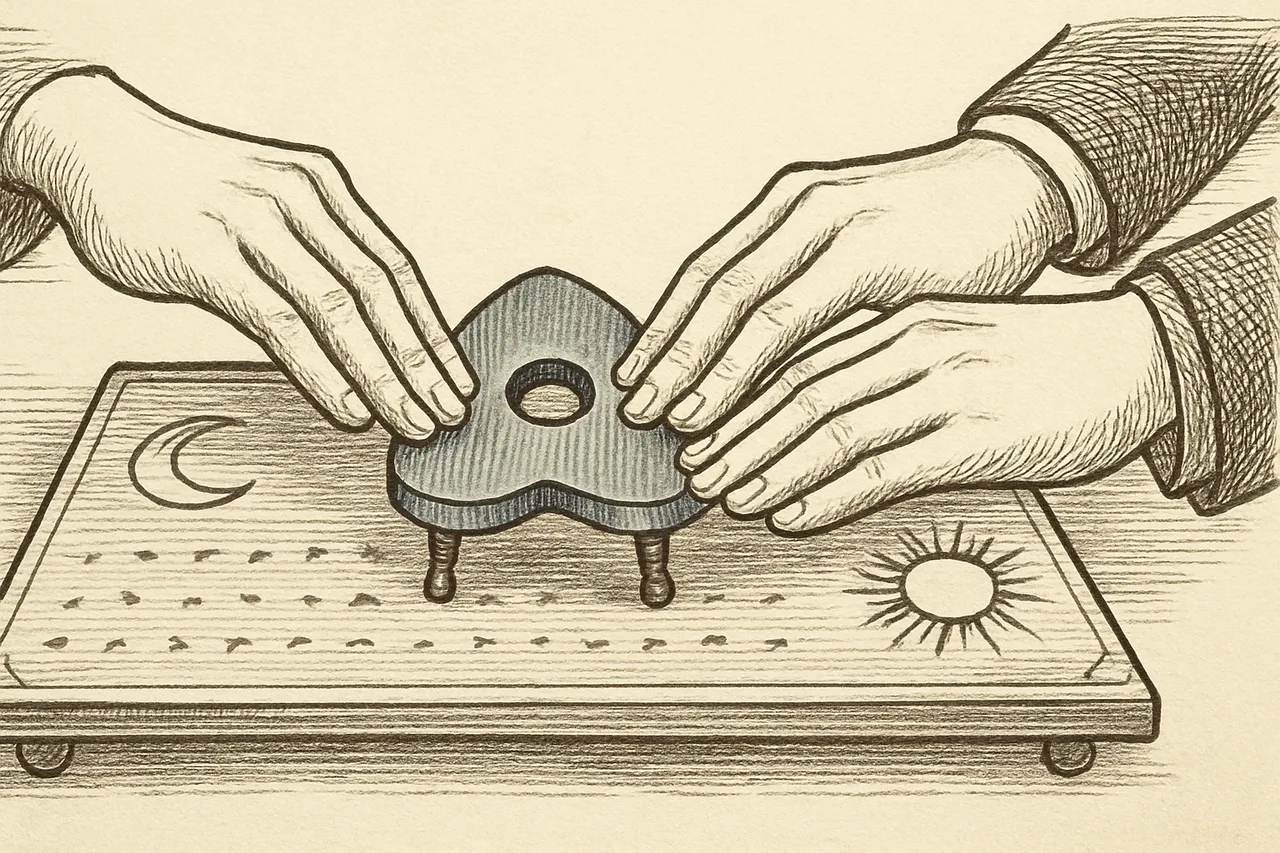
The Ouija Board's 1891 Patent Calls It an 'Egyptian Luck-Board' and Never Says How It Works
Elijah Bond's patent describes a board and a small pointer on legs, and makes no claim about what moves the pointer. The popular legend says the patent examiner demanded a demonstration first. The science, worked out decades before the patent, says the players are moving it themselves without realizing it.
Read the story →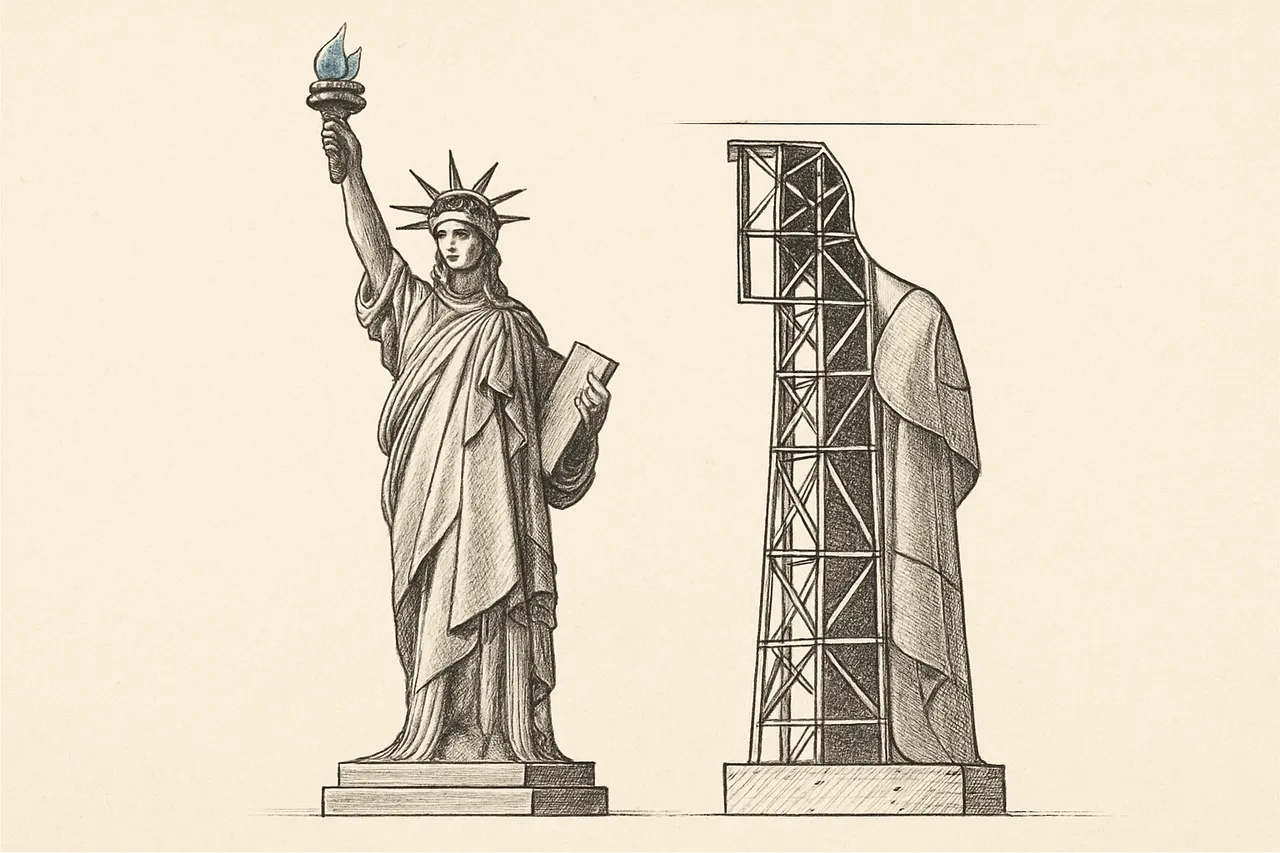
The Statue of Liberty Was Patented in 1879, Seven Years Before It Was Dedicated
Auguste Bartholdi received US Design Patent 11,023 in February 1879 for a statue that would not stand in New York Harbor until 1886. Replicas were a fundraising tool for a project that was chronically short of money, and a design patent gave control over who could legally make them.
Read the story →
The Mousetrap Is the Most-Patented Device in American History. Almost None of Them Work.
More than four thousand mousetrap patents have been granted in the United States. By the usual estimate, roughly twenty have ever made money. The one that won was patented in 1894 and costs about a quarter.
Read the story →