Sweeping Used to Mean Getting on Your Knees. Lloyd Ray Patented the Handle.
Collecting dirt off a floor meant crouching with a shovel or a shingle and a brush. Lloyd Ray put a metal collection pan on a long wooden handle in 1897, and the job could be done standing up.
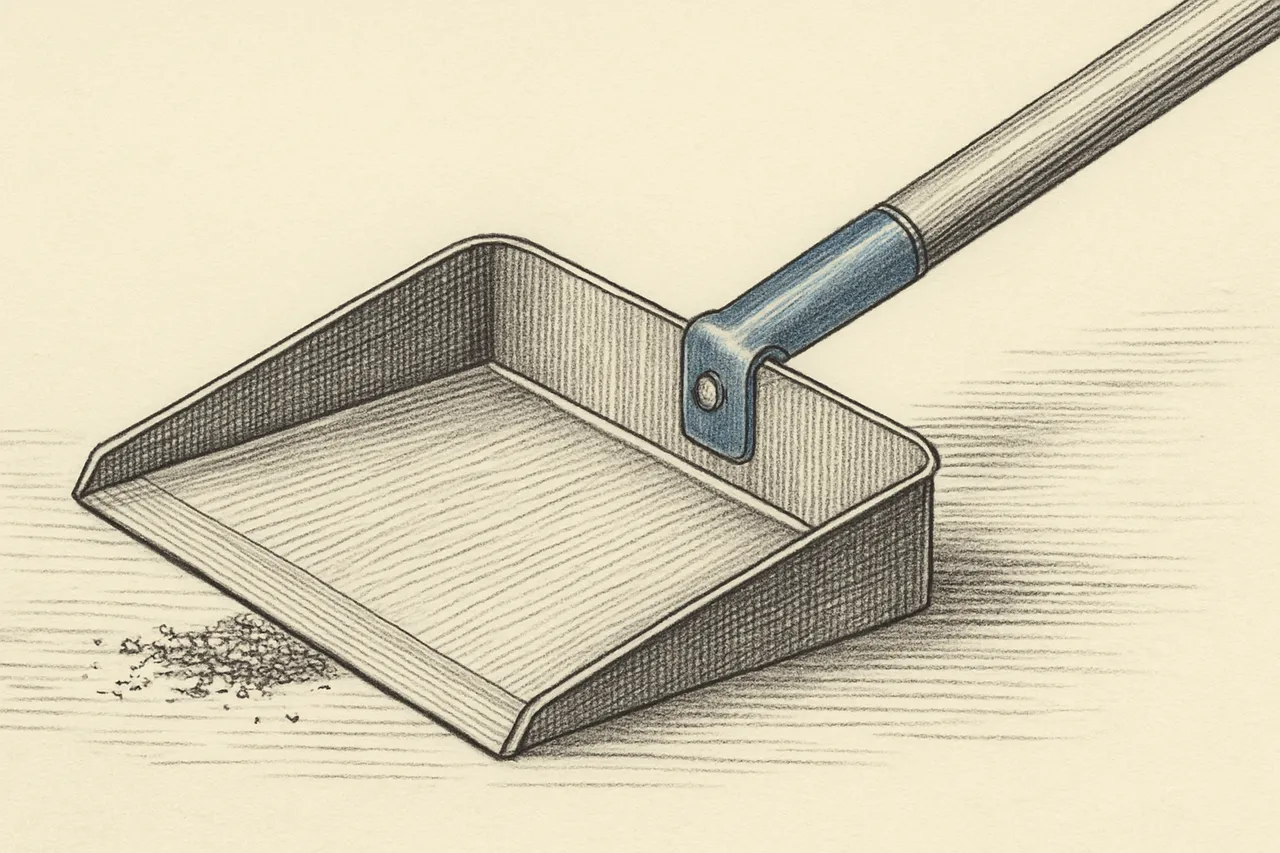
US587607 was granted to Lloyd P. Ray of Seattle on August 3, 1897, for an improved dust pan.
Ray was a Black inventor working at a time when the patent office recorded no information about race, which is why the count of nineteenth century Black patentees remains an estimate assembled by historians from census records, city directories, and correspondence rather than from the patent files themselves. What survives of Ray in the record is his address, his occupation as a porter, and this patent.
The problem with a shingle
Sweeping a floor produces a pile, and the pile has to be lifted. Before the dust pan, the tool for that job was whatever was to hand. Households used a flat piece of wood, a piece of tin, a shovel, or a broken roof shingle, held at floor level with one hand while the other worked a brush.
That means kneeling or bending, repeatedly, for every pile. For anyone doing it as paid work, several times a day, it is a back injury waiting to happen. It is also slow.
What Ray changed
Ray's patent describes a collection pan with a long handle attached, so the user stands upright and positions the pan with the handle rather than with their hand.
Two details in the design matter as much as the handle. The leading edge of the pan is thin and flat, so the sweepings go over it instead of piling against a lip and spilling back. And the pan has raised sides and a back, so that a pile pushed in does not simply slide out again when the pan is lifted and tilted.
Modern dust pans have exactly this geometry. The long handled version stands in a corner next to the broom in most commercial buildings, and the short handled version in most kitchens is the same shape scaled down.
The wider pattern
Ray belongs to a group of Black inventors filing in the 1890s whose patents address domestic and janitorial work, which reflects the jobs available to them rather than the limits of their ability. Thomas Stewart patented an improved mop in 1893. John Lee Love patented a portable pencil sharpener in 1897. Sarah Boone patented the shaped ironing board in 1892.
These are not minor objects. They are the tools of a large and mostly invisible labor force, improved by people doing the work, and they are still in the corner of every building in the country.
Very little else about Lloyd Ray survives. The patent is one page.
See the original
The full text and figures of US587607 are on patents.us.
Related stories
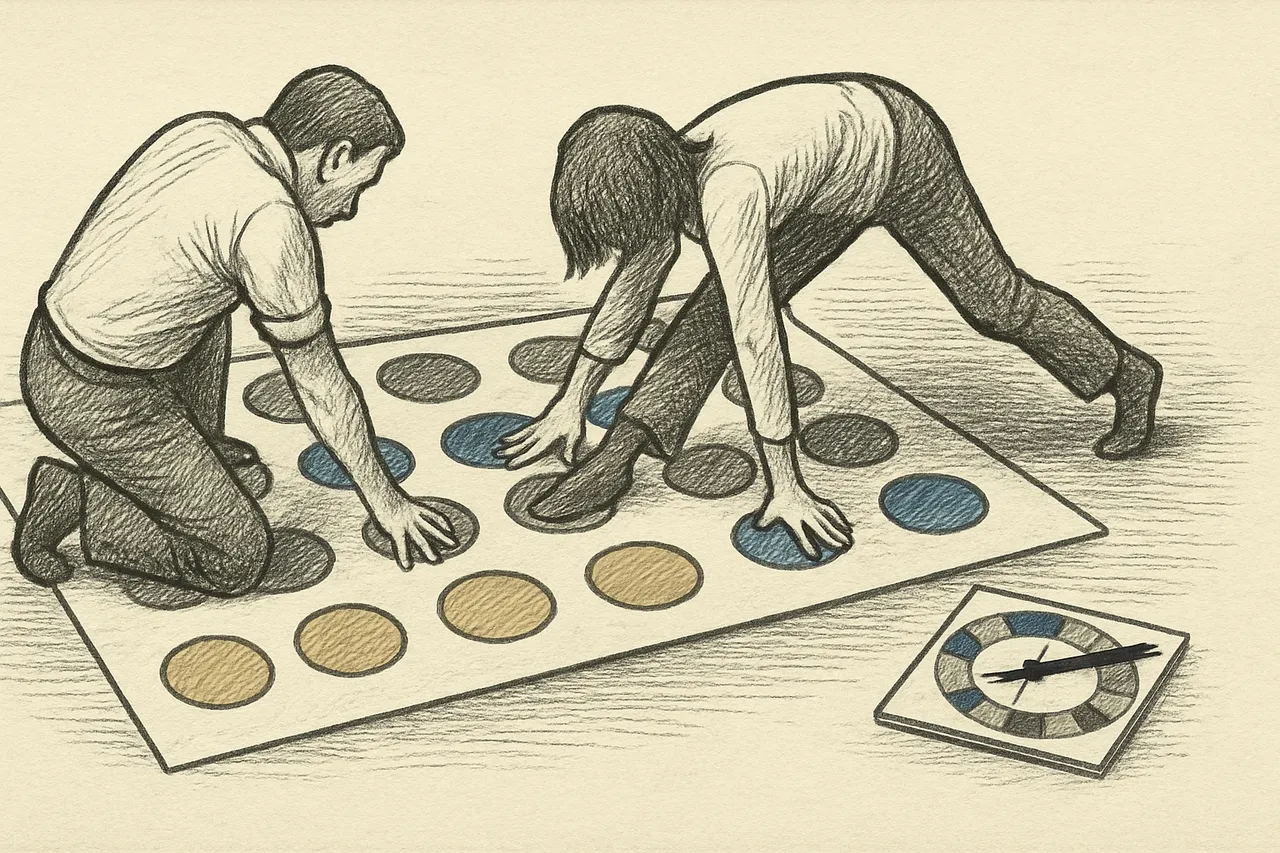
Twister's Patent Is Titled 'Apparatus for Playing a Game Wherein the Players Constitute the Game Pieces'
The patent title is the whole idea: the people are the pieces. Milton Bradley released the game in 1966, some retailers were wary of it, and critics found it a little too intimate. Then Johnny Carson played it on television with Eva Gabor, and the orders poured in.
Read the story →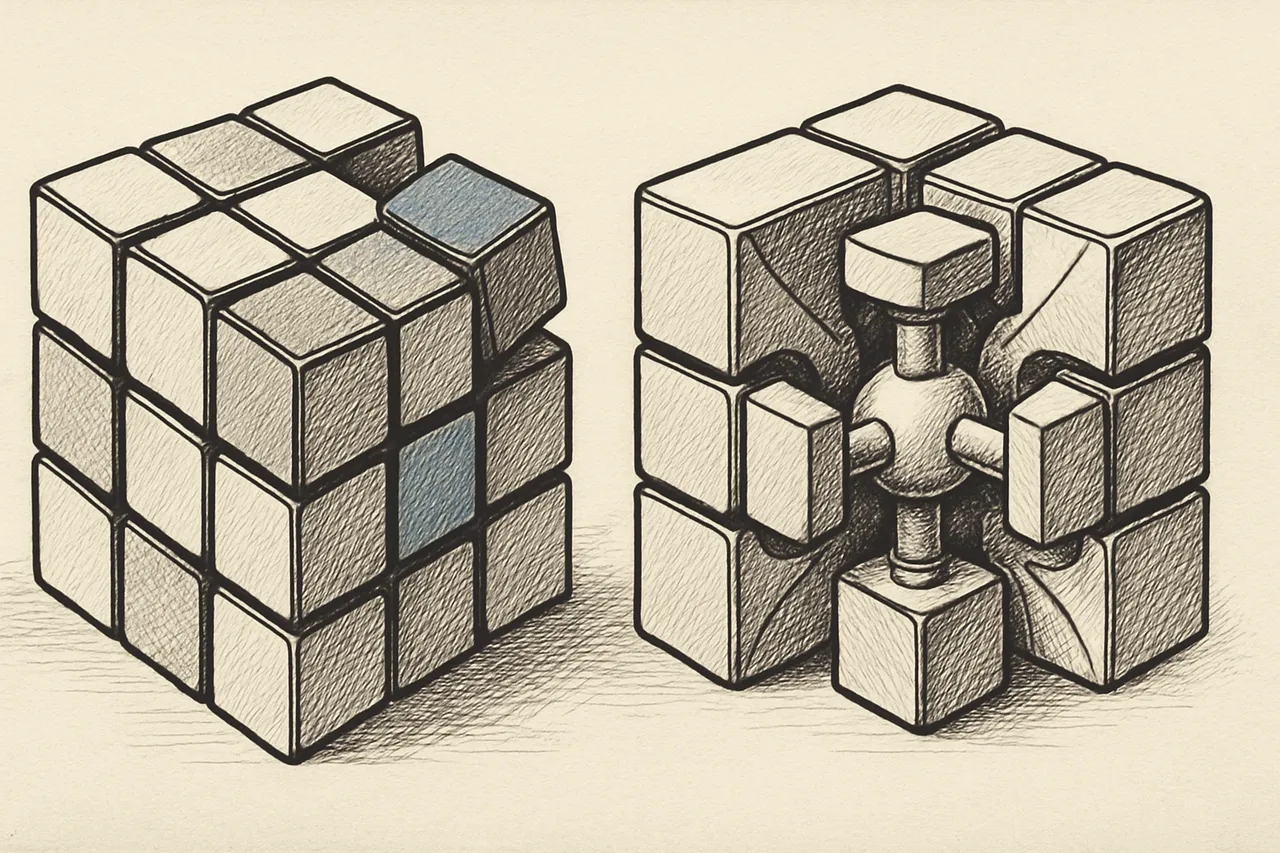
Ernő Rubik Needed About a Month to Solve His Own Cube. An American Court Later Found It Infringed an Earlier US Patent.
Rubik built the first cube in Budapest in 1974 as a way to think about three-dimensional movement. The clever part is how it holds together when most of its pieces are not attached to anything. In the United States, a chemist named Larry Nichols had patented a related puzzle in 1972, and his company sued.
Read the story →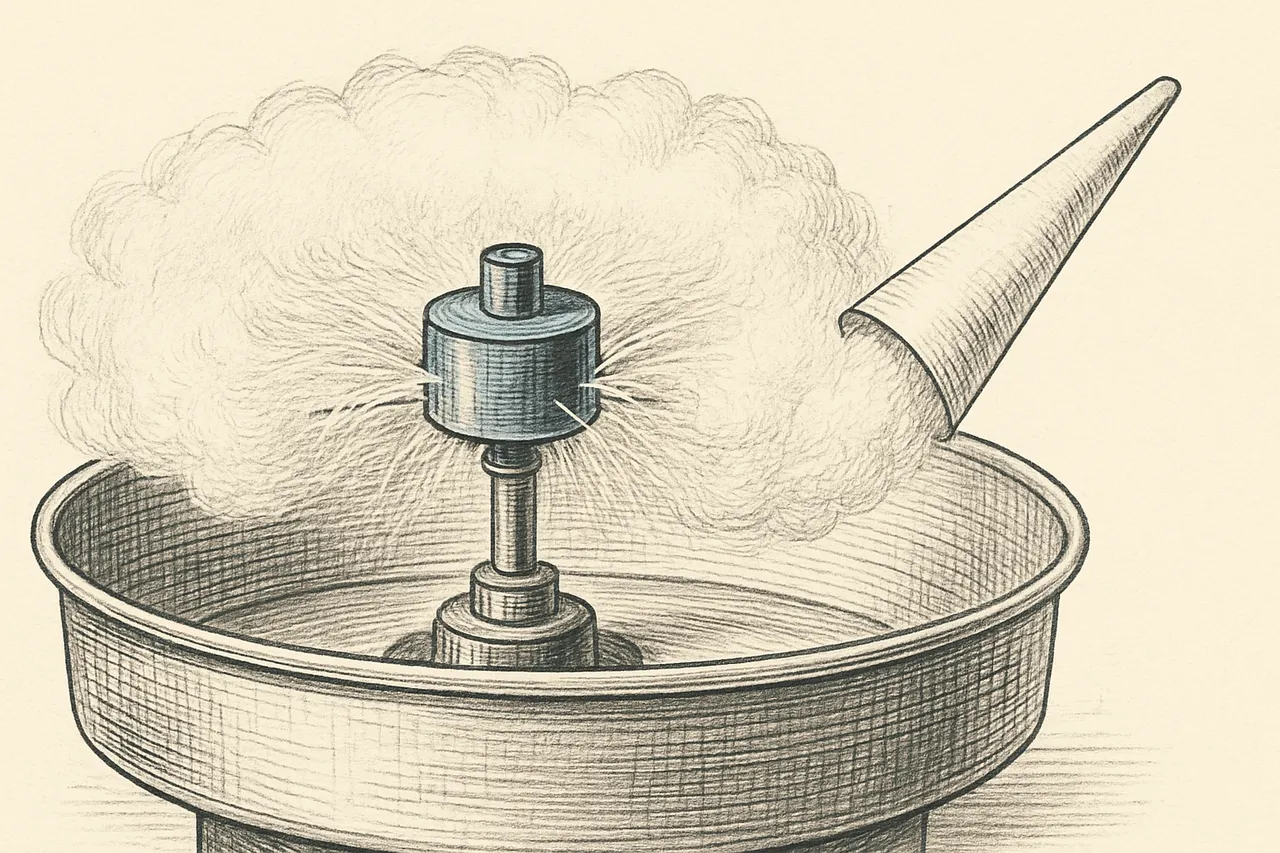
A Dentist Co-Invented the Cotton Candy Machine, and It Was Sold at the 1904 World's Fair as Fairy Floss
William Morrison was a dentist and John Wharton was a candy maker. Their machine melted sugar and flung it through tiny holes so that it cooled into threads finer than hair before it could crystallize. They filed in 1897, and at the St. Louis World's Fair it was a sensation.
Read the story →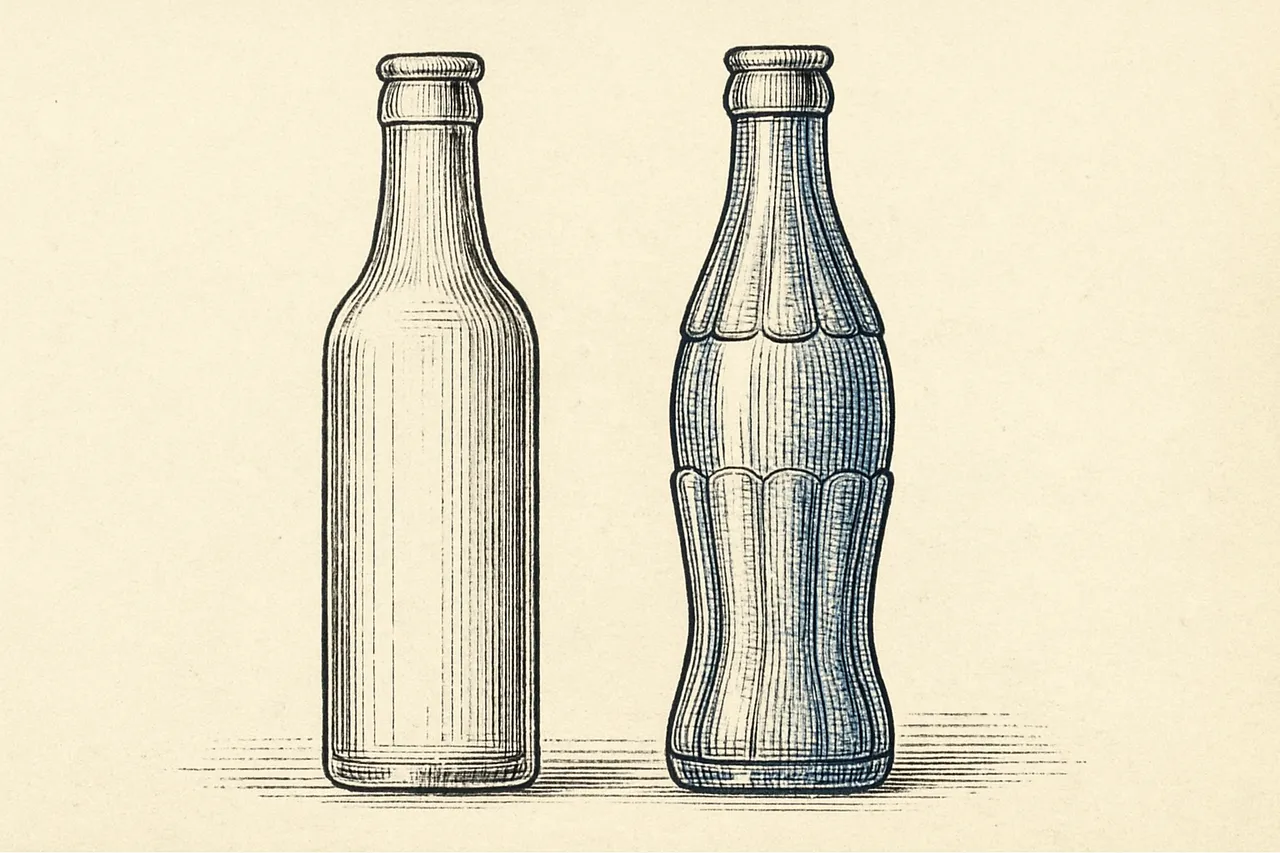
Coca-Cola Asked Glassmakers for a Bottle You Could Recognize in the Dark, or Broken on the Ground
In 1915 Coca-Cola had an imitation problem, since competitors used the same straight-sided bottles and borrowed-sounding names. It challenged glass companies to design a bottle identifiable by touch alone. The winner came from a small glassworks in Terre Haute, Indiana, and the name on the patent is not the name of the man who drew it.
Read the story →