Carpenters Sharpened Pencils With a Knife. John Lee Love Put the Blade in a Box.
Desk-mounted crank sharpeners existed by the 1890s, but they were furniture. A carpenter on a job site still carried a knife and shaved the point by hand. Love built one that fit in a pocket and caught the shavings.
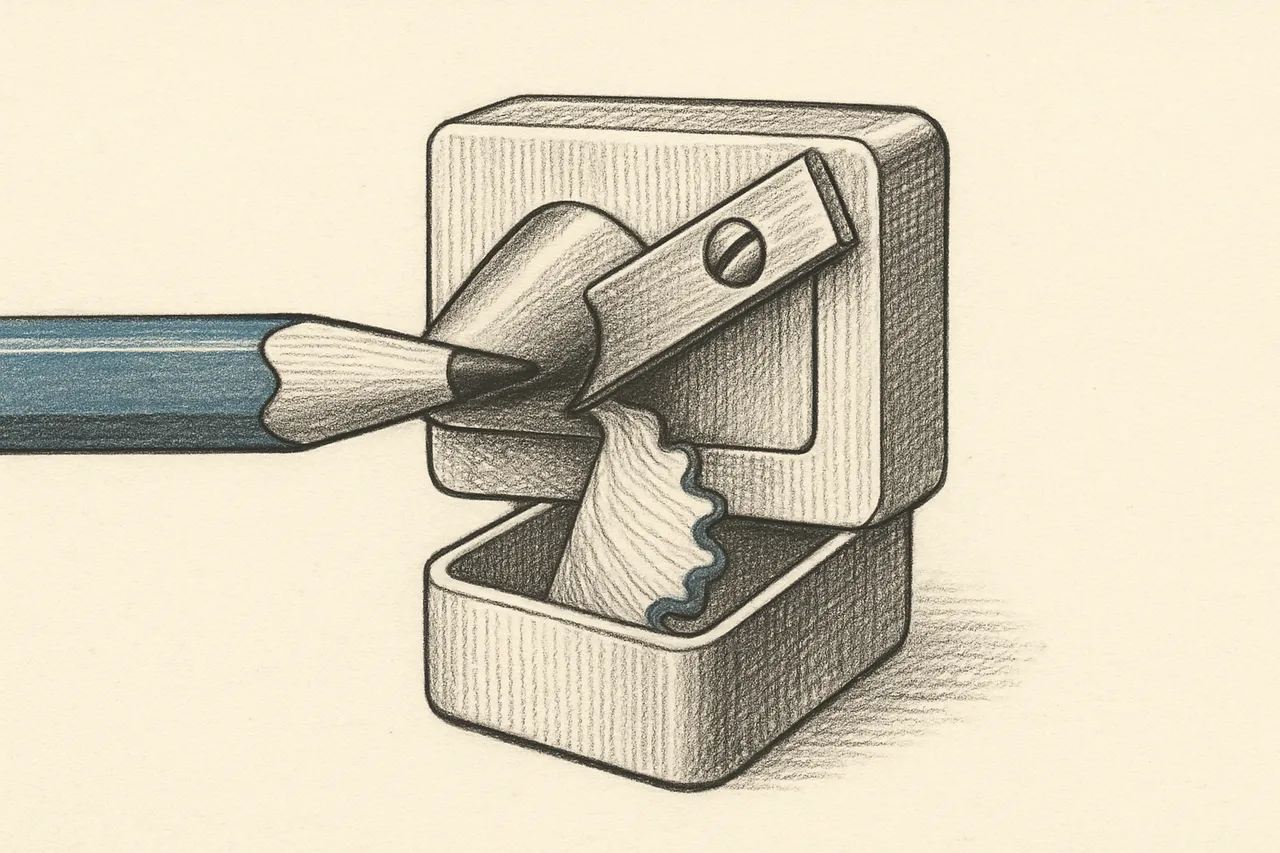
US594114 was granted to John Lee Love on November 23, 1897, for a portable pencil sharpener. It is usually called the Love Sharpener.
Love was a Black inventor working as a carpenter in Fall River, Massachusetts. He held at least two patents, and the other one, for an improved plasterer's hawk, tells you the same thing about him: these are tools designed by someone who used tools all day.
Two kinds of sharpener
Mechanical pencil sharpeners existed before 1897. The good ones were large crank-operated machines bolted to a desk or a wall, with planetary cutters that produced an excellent point. Schools and offices had them.
That does no good on a job site. A carpenter marking cuts needs a sharp pencil constantly, and the standard method was to take out a pocket knife and whittle the point, which takes both hands, produces an uneven point, wastes pencil, and occasionally produces a cut finger.
Love's patent targets that gap. The device is small enough to carry, requires no mounting, and works with one hand: put the pencil in the conical opening and turn it against a fixed angled blade.
The shavings
The feature that separates his design from a bare blade is the receptacle. The sharpener captures the shavings inside the body instead of dropping them wherever the user is standing.
On a construction site that is a practical matter of not filling a client's floor with cedar curls. In an office it is the reason a sharpener can sit on a desk. Nearly every handheld sharpener sold since has the same arrangement: a blade over a tapered hole, and a sealed chamber underneath with a lid.
The mechanism is so simple that it has resisted improvement for more than a century. The plastic sharpener in a school pencil case is Love's design in a cheaper material.
What is recorded
Details of Love's life are sparse and the dates in circulation conflict with each other. He is generally recorded as born in North Carolina and working in Fall River, Massachusetts, and he died in 1931. Beyond that the documentation is thin, which is the usual situation for Black inventors of the period, whose lives were recorded in municipal directories rather than in newspapers.
The patent office kept his drawing.
See the original
The full text and figures of US594114 are on patents.us.
Related stories
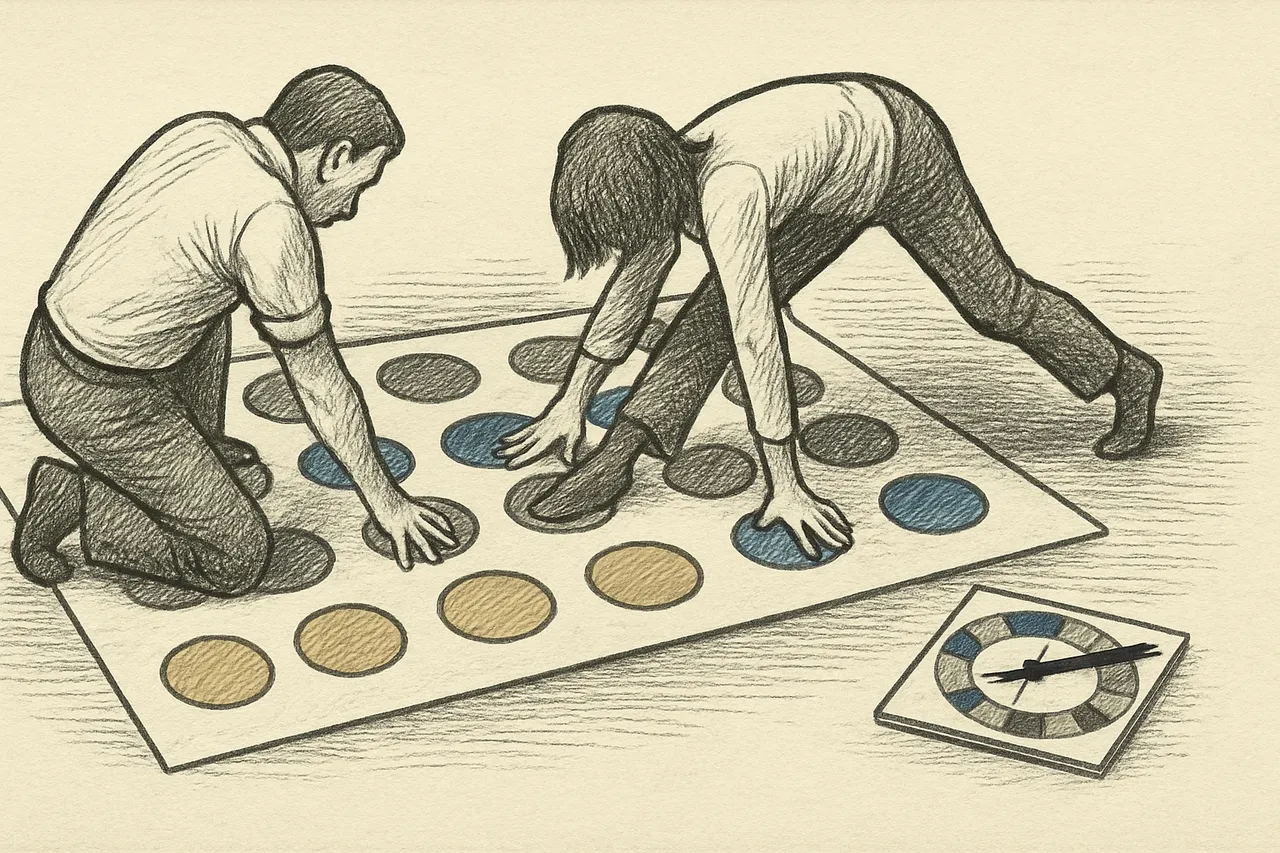
Twister's Patent Is Titled 'Apparatus for Playing a Game Wherein the Players Constitute the Game Pieces'
The patent title is the whole idea: the people are the pieces. Milton Bradley released the game in 1966, some retailers were wary of it, and critics found it a little too intimate. Then Johnny Carson played it on television with Eva Gabor, and the orders poured in.
Read the story →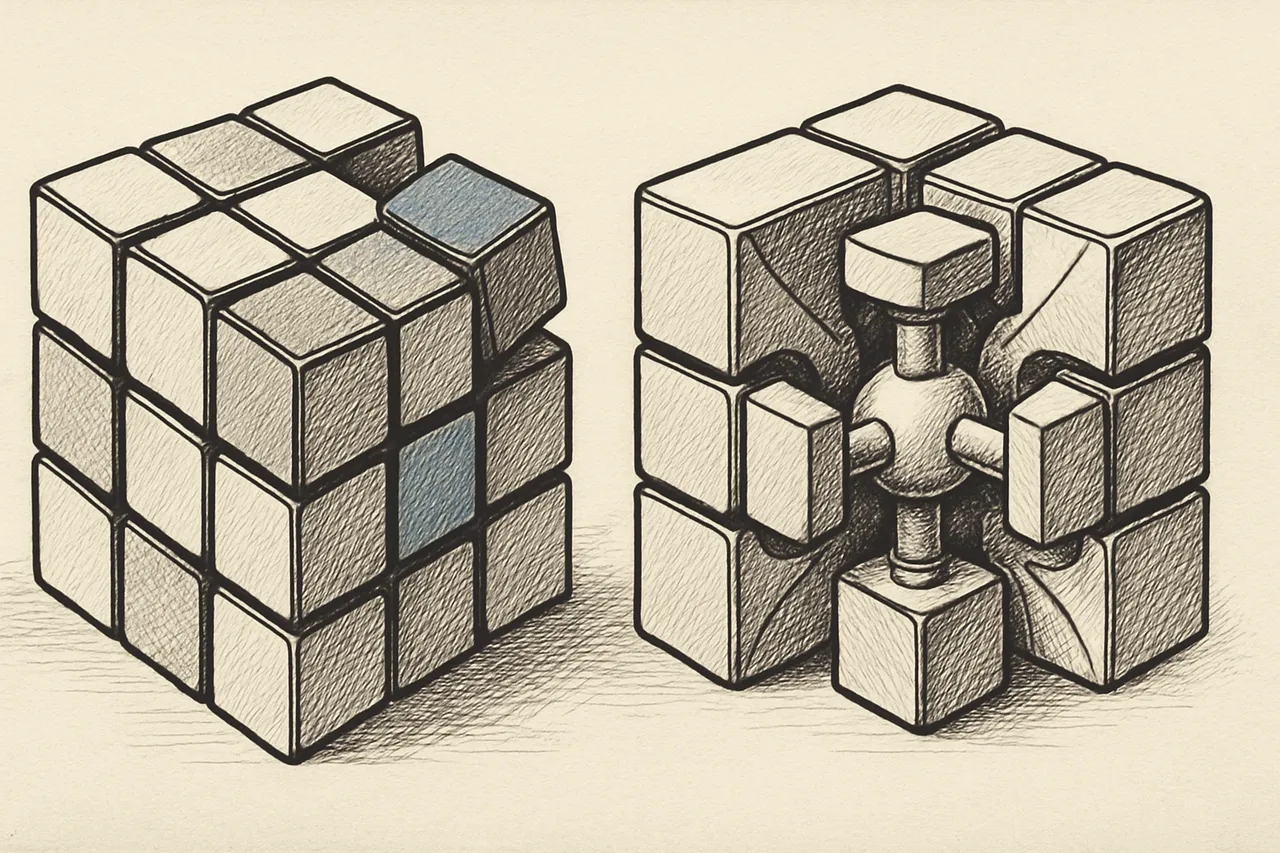
Ernő Rubik Needed About a Month to Solve His Own Cube. An American Court Later Found It Infringed an Earlier US Patent.
Rubik built the first cube in Budapest in 1974 as a way to think about three-dimensional movement. The clever part is how it holds together when most of its pieces are not attached to anything. In the United States, a chemist named Larry Nichols had patented a related puzzle in 1972, and his company sued.
Read the story →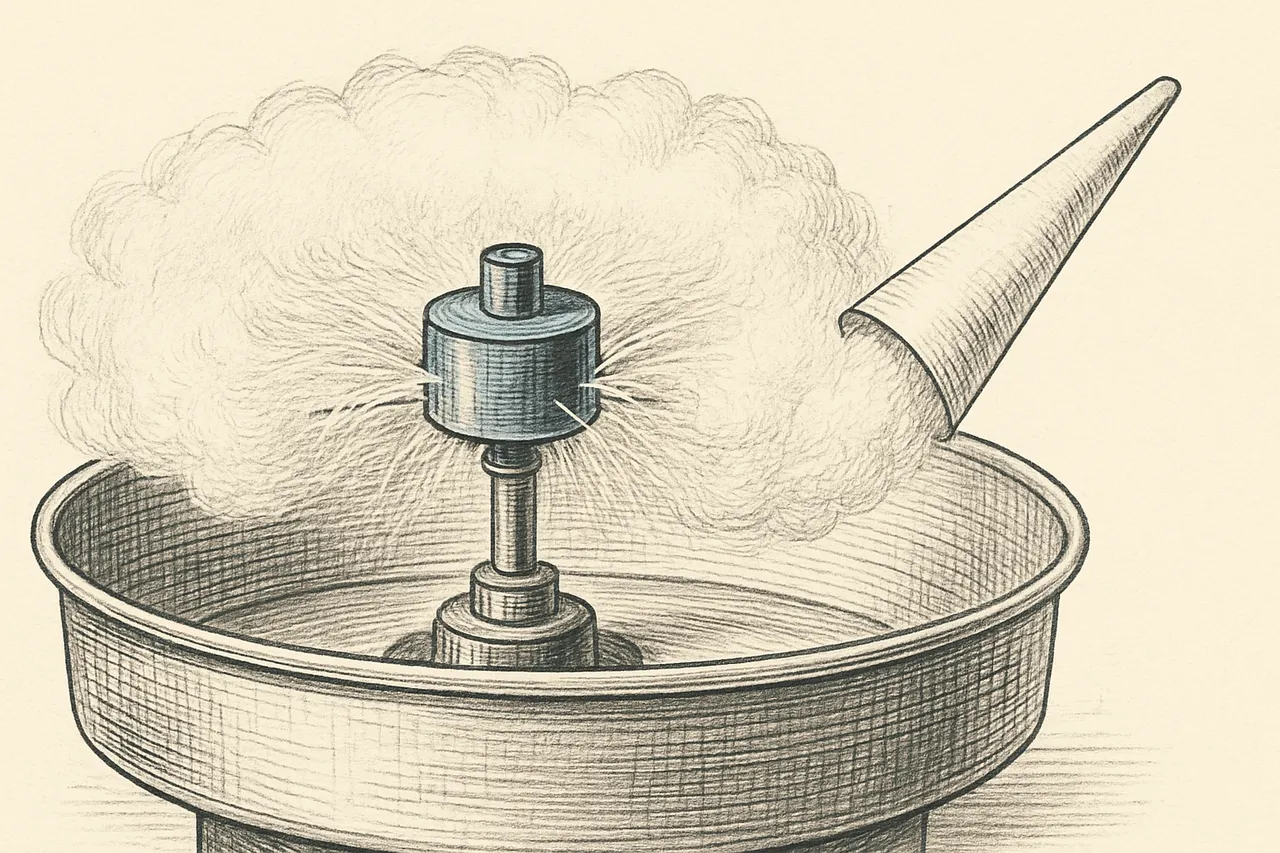
A Dentist Co-Invented the Cotton Candy Machine, and It Was Sold at the 1904 World's Fair as Fairy Floss
William Morrison was a dentist and John Wharton was a candy maker. Their machine melted sugar and flung it through tiny holes so that it cooled into threads finer than hair before it could crystallize. They filed in 1897, and at the St. Louis World's Fair it was a sensation.
Read the story →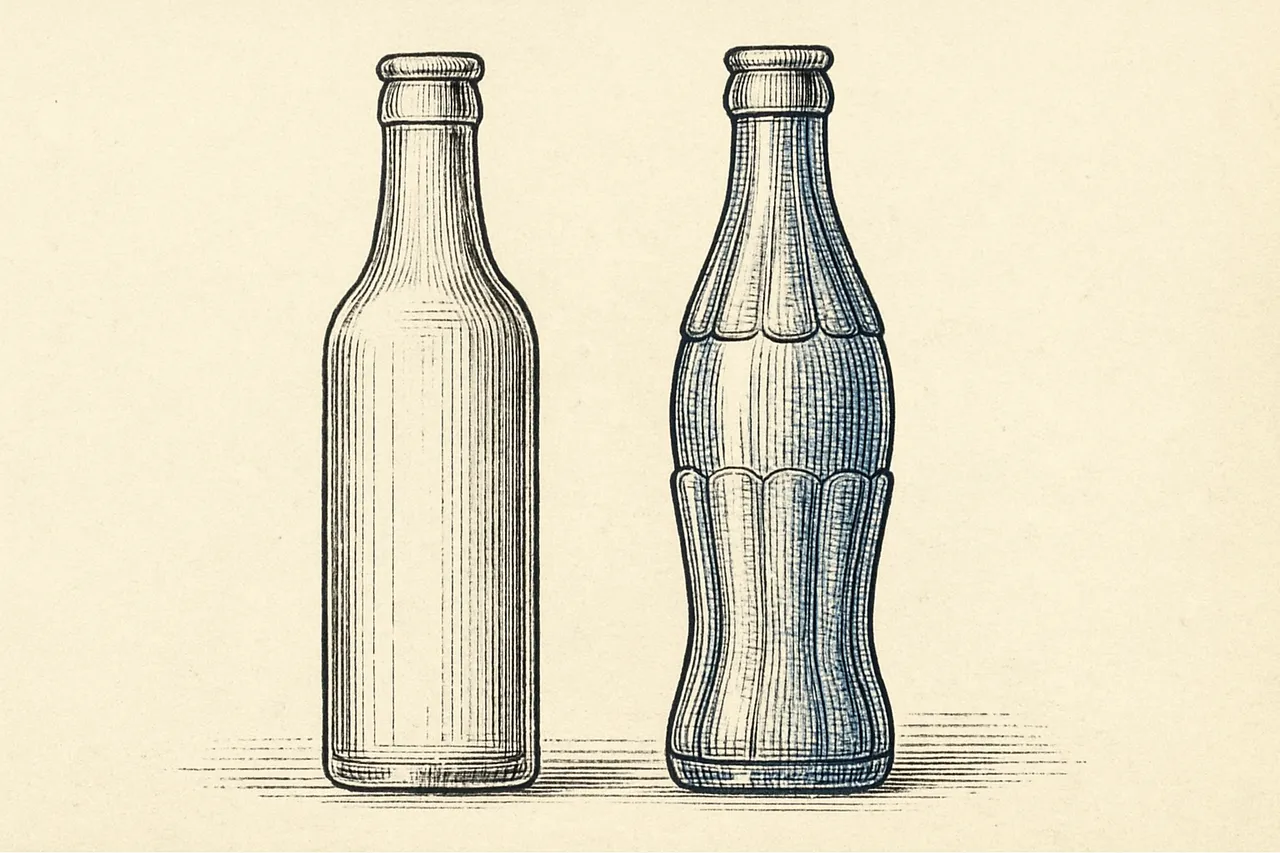
Coca-Cola Asked Glassmakers for a Bottle You Could Recognize in the Dark, or Broken on the Ground
In 1915 Coca-Cola had an imitation problem, since competitors used the same straight-sided bottles and borrowed-sounding names. It challenged glass companies to design a bottle identifiable by touch alone. The winner came from a small glassworks in Terre Haute, Indiana, and the name on the patent is not the name of the man who drew it.
Read the story →