He Patented Video Games in 1971. Nobody Knew What They Were Looking At.
Ralph Baer was a senior engineer at a defense electronics company in New Hampshire when he wrote a four-page memo in 1966 proposing that televisions could be used to play games. His employer was the only one who took him seriously. The patent eventually built a two-hundred-billion-dollar industry.
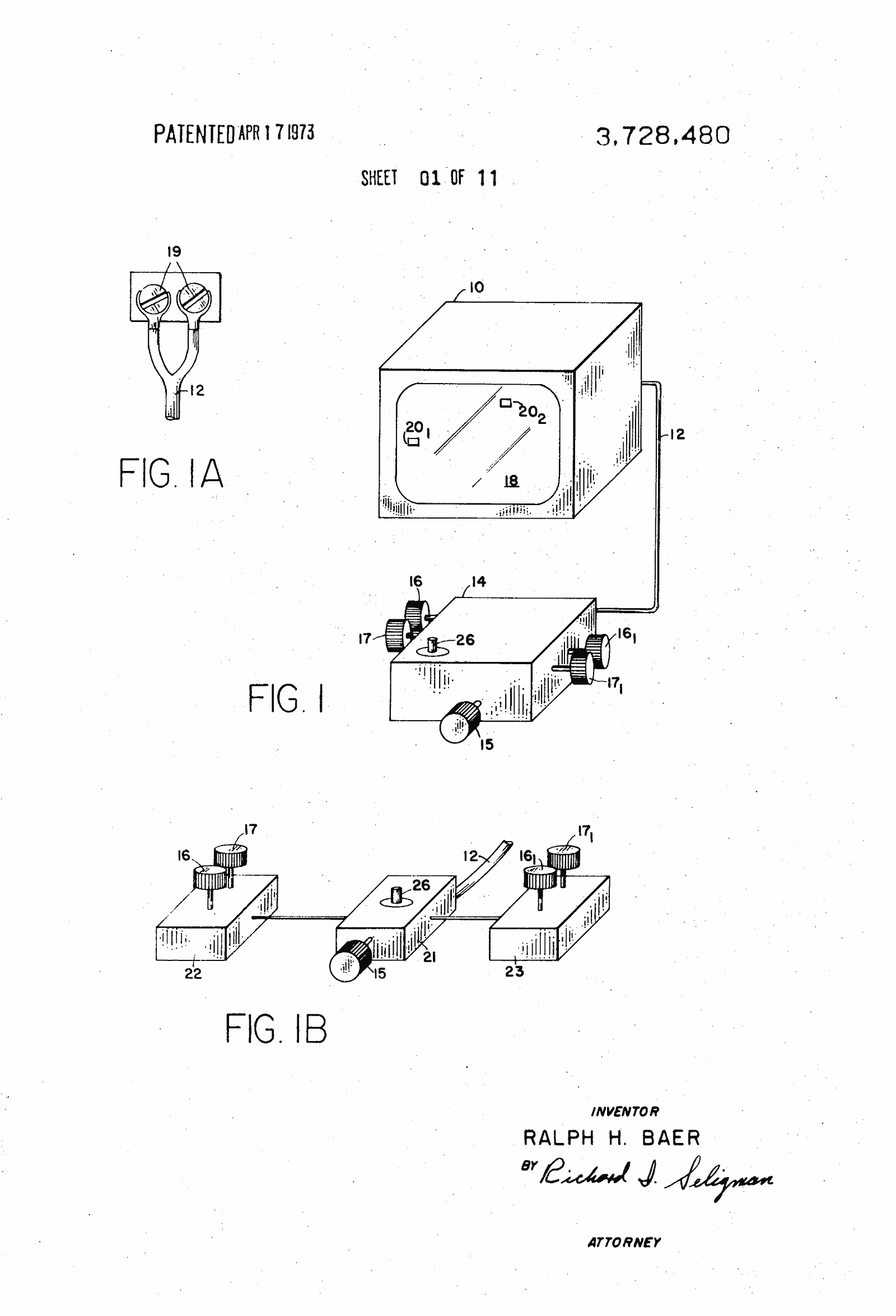
US3728480 was filed by Ralph H. Baer on January 18, 1971, and granted on April 25, 1973. The title — "Television Gaming and Training Apparatus" — captures the cautious dual purpose Baer had to invoke to get the project funded inside his employer, Sanders Associates, a defense electronics contractor in Nashua, New Hampshire. The drawings show a television set, a small box of electronics, two hand-held controllers with knobs, and a light gun.
Baer had been thinking about televisions as something other than a passive medium since 1951, when he had worked briefly on TV manufacturing for a previous employer. He could not get anyone interested. The idea — you could play games on the screen — sounded either absurd or trivial, depending on who you described it to. Most people who heard him talk about it in the early 1960s assumed he meant something like a quiz show, with written questions appearing on the screen.
In August 1966, he wrote a four-page internal memo at Sanders proposing what he actually meant: real-time interactive games where the user controlled an on-screen object using a hand-held device. He requested a small development budget. His division head, Herbert Campman, gave him $2,500 and two engineers, mostly out of bewildered indulgence.
The Brown Box
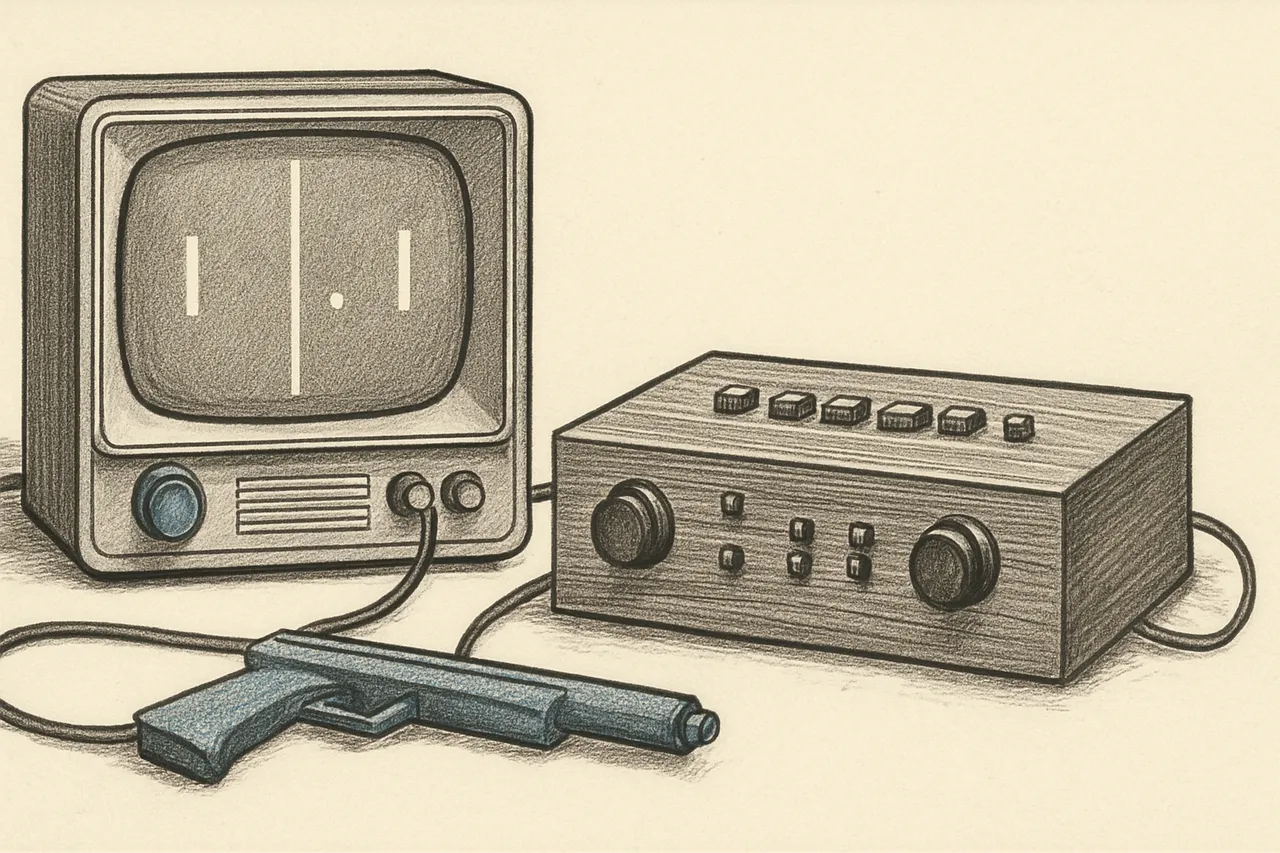
By 1968, Baer's team had a working prototype: a small wooden box, painted brown, containing the entire game console. It could run roughly a dozen games — table tennis, hockey, target shooting with the included light gun, even a primitive form of golf — by swapping plastic overlay cards on the TV screen and adjusting circuit-board settings. The Brown Box is now on permanent display at the Smithsonian's National Museum of American History.
Sanders had no consumer electronics division and no interest in becoming one. The company licensed the technology to Magnavox in 1971. In September 1972, Magnavox released the Odyssey — the first commercial home video game console. It sold about 350,000 units in its first run. Reviews were mixed. The general public was unsure what to do with it.
The lawsuit
Two months later, Nolan Bushnell — who had seen the Odyssey demonstrated at a Magnavox trade show in California — founded Atari and released Pong as an arcade game. Atari's home version followed in 1975. Bushnell had previously been a graduate student in electrical engineering and would later say, accurately, that he had not invented the core idea of TV-based gaming. He had, however, made a much better product.
Magnavox sued. The court proceedings, conducted across multiple lawsuits through the 1970s and 1980s, repeatedly upheld Baer's patent as the foundational invention. Atari settled. Coleco settled. Mattel settled. Nintendo, in 1985, settled for what was at the time the largest patent payment ever made in the video-game industry. Over the life of the patent, Magnavox received well over $100 million in royalties and settlements from companies that had built on Baer's idea.
What he saw early
Baer's patent expired in 1991. By then, home video gaming was a serious consumer industry, generating roughly $4 billion a year in the United States alone. By 2024, the global video-game industry was worth approximately two hundred billion dollars annually, larger than the music and film industries combined.
Baer received the National Medal of Technology from President George W. Bush in 2006. He kept tinkering until the end — his last patents were for handheld electronic educational toys, granted in his late eighties. He died in 2014, at ninety-two, in the same small New Hampshire town where, fifty years earlier, he had typed a four-page memo suggesting that televisions might be good for something besides watching.
See the original
The full text and figures of US3728480 are on Google Patents.
Related stories
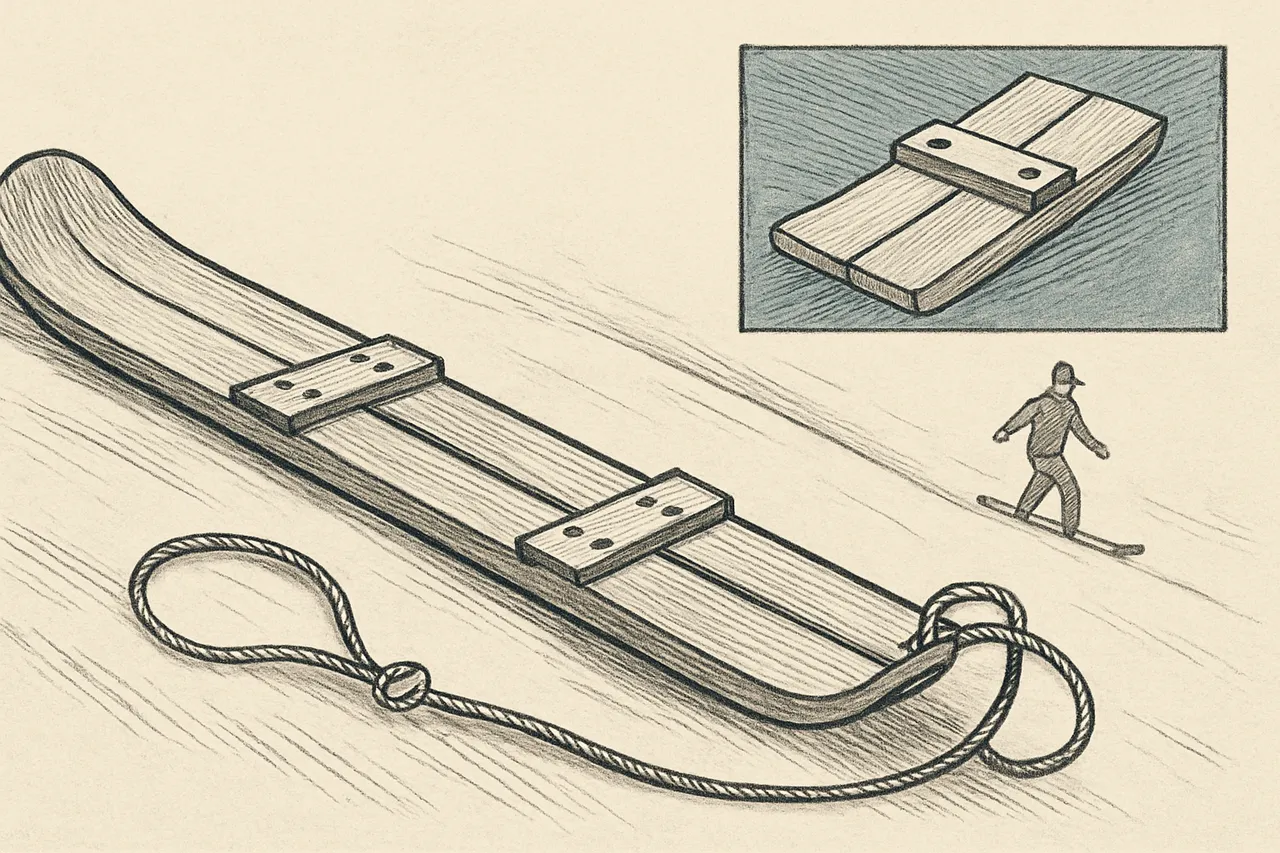
A Father Fastened Two Skis Together for His Daughter at Christmas in 1965. His Wife Named It the Snurfer.
Sherman Poppen was an engineer in Muskegon, Michigan, trying to keep his daughter busy over the holiday. He joined two children's skis side by side and tied a rope to the front. It sold as a toy by the hundreds of thousands, and the people who raced it turned it into a sport.
Read the story →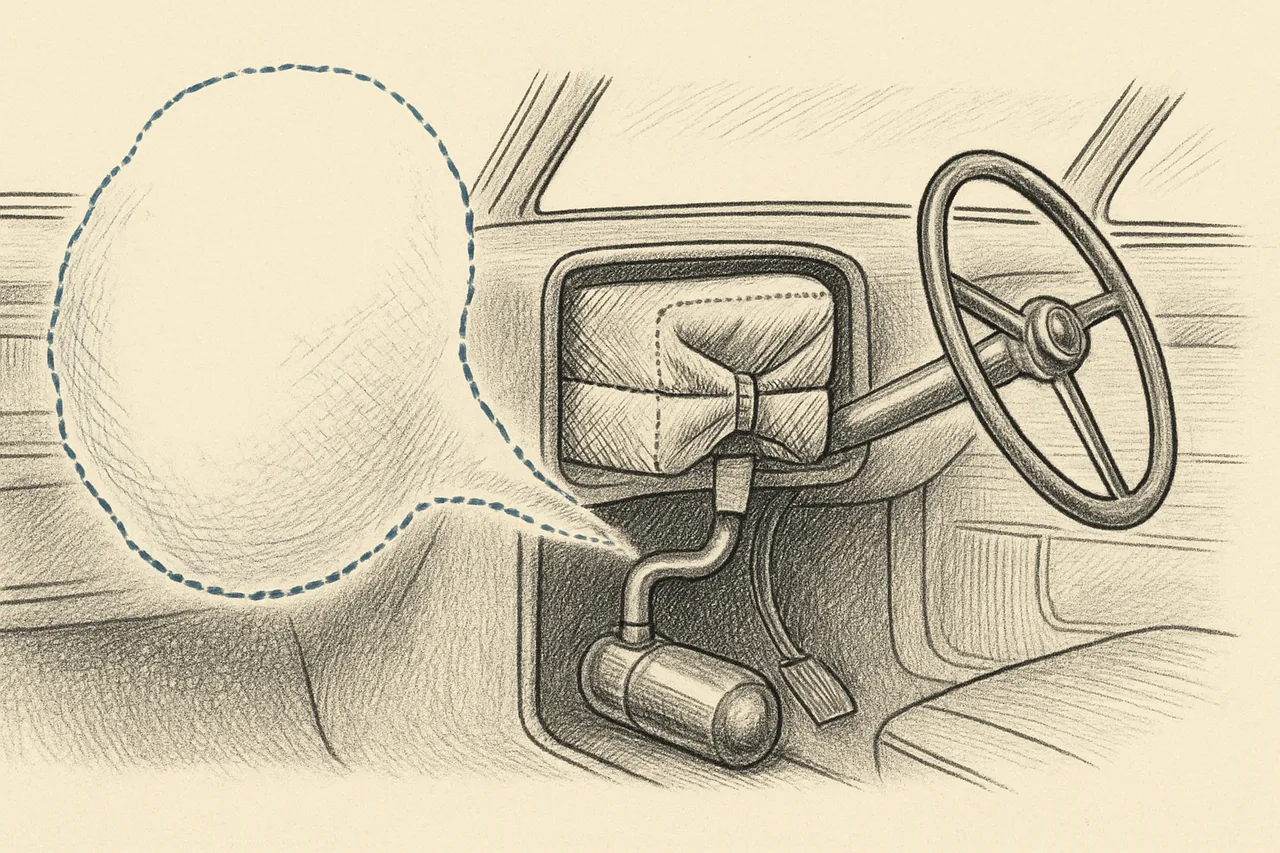
He Swerved to Avoid Something in the Road With His Family in the Car, and Patented the Airbag Three Months Later
John Hetrick was a Navy engineer who had worked with compressed air torpedoes. After a near miss on a Pennsylvania road in 1952, he worked out that a cushion could be inflated faster than a body can travel forward. Then he could not get a single manufacturer to care.
Read the story →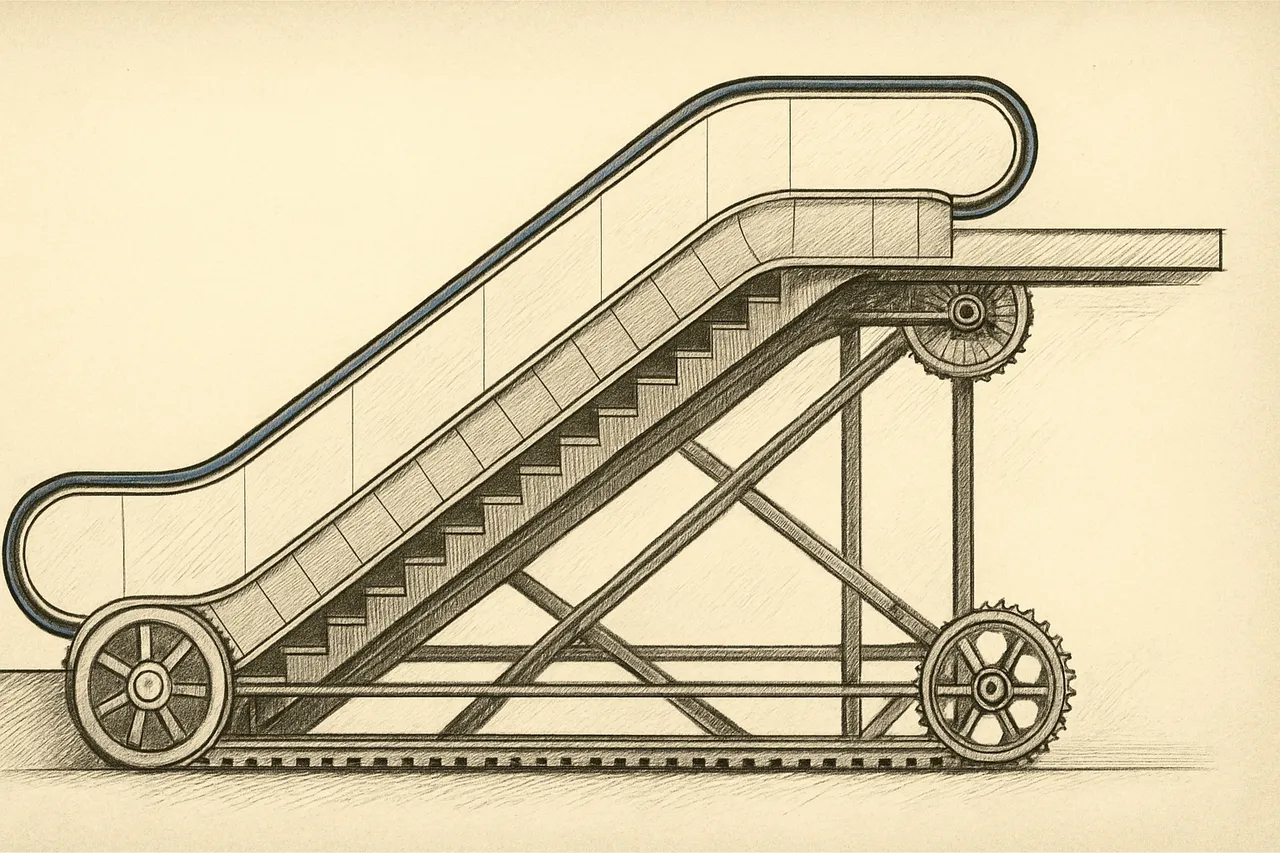
The Escalator Was Patented in 1859. Nobody Built One for Thirty Years.
Nathan Ames patented 'revolving stairs' before the Civil War. He admitted he wasn't sure what would power them, never built one, and died four years later at thirty-nine. The moving staircase arrived a generation after he did.
Read the story →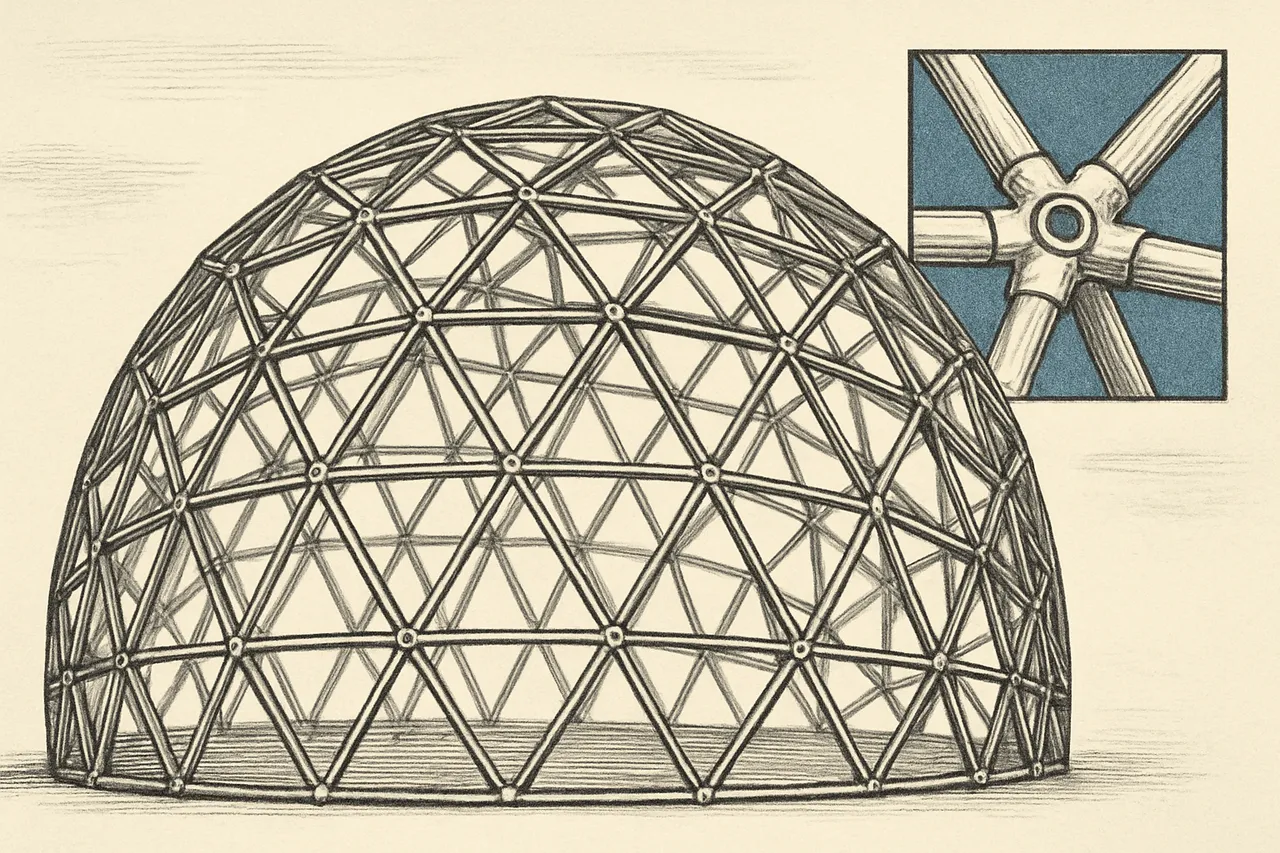
Buckminster Fuller Patented a Dome That Gets Stronger as It Gets Bigger
Most structures get weaker and heavier as they scale up. Buckminster Fuller's geodesic dome does the opposite — it grows more efficient the larger it becomes. It was too strange for mainstream architecture, but it went to the South Pole, the World's Fair, and the cover of the future.
Read the story →