He Made the First Cell Phone Call to Gloat at His Rival
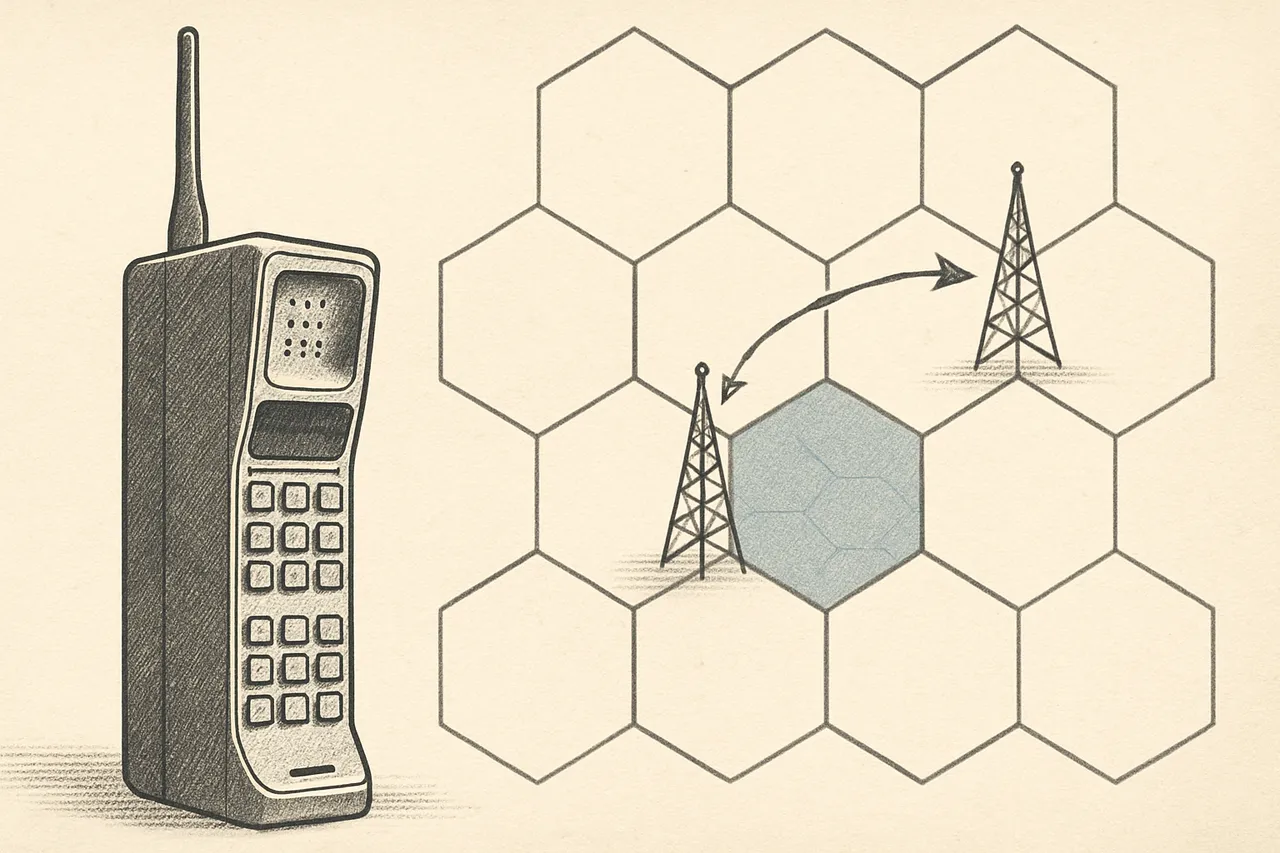
On a Manhattan sidewalk in April 1973, Motorola's Martin Cooper placed the first handheld cellular phone call. He dialed the head of the competing team at Bell Labs — specifically to tell him he'd lost the race. The patent was filed six months later.
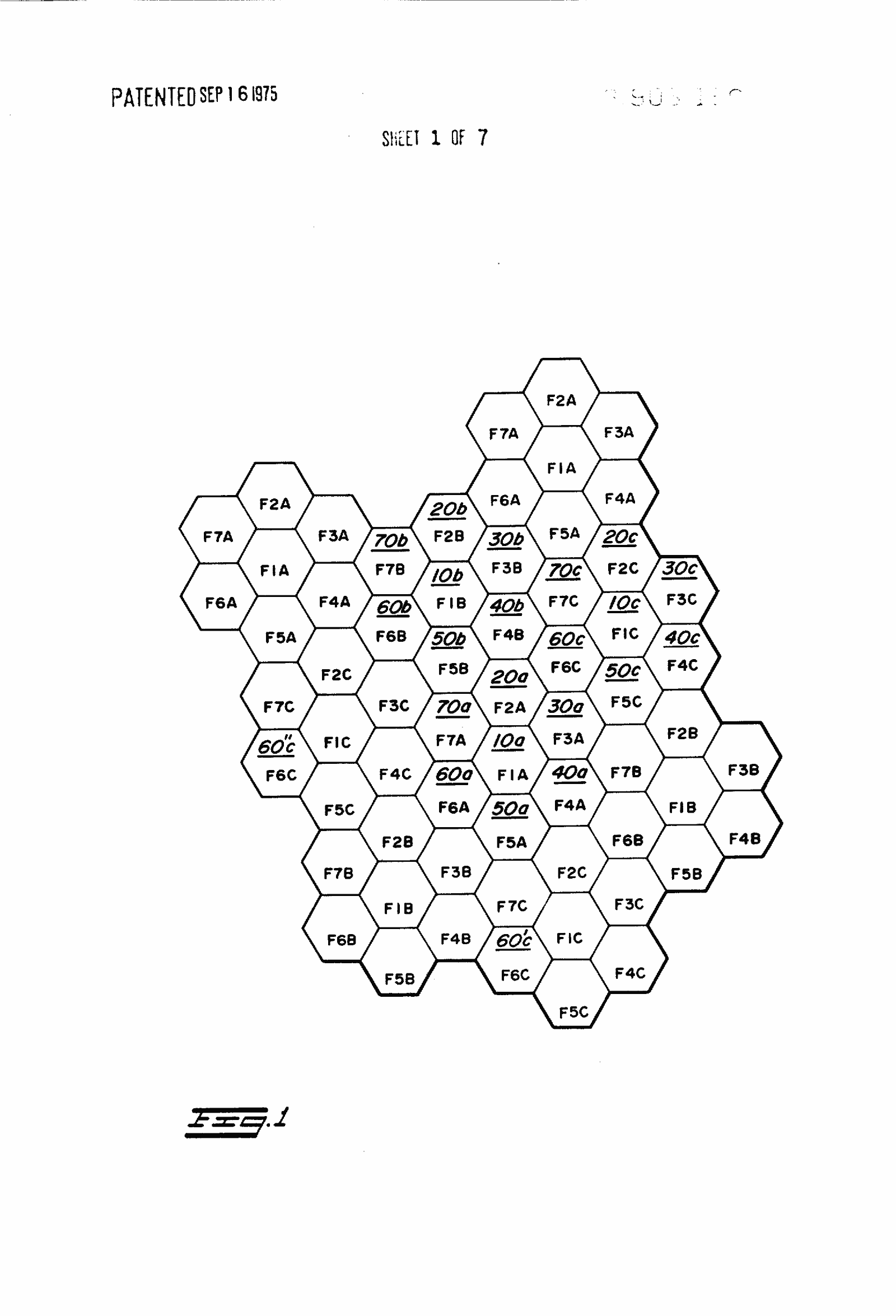
US3906166 was filed on October 17, 1973, and granted on September 16, 1975. The title is "Radio Telephone System." The lead inventor, among a Motorola team, is Martin Cooper.
The patent describes the system that makes a portable cellular telephone actually work — not the handset itself so much as the network logic behind it: dividing a service area into "cells," each served by its own base station, and handing a moving call off from one cell to the next as the user travels, without dropping the connection. This handoff mechanism is the conceptual core of all cellular telephony. Everything since — 1G through 5G — is a refinement of the idea that you can cover a large area with many small overlapping radio zones and pass a conversation between them seamlessly.
The phone call
The competition that drove the invention was between Motorola and AT&T's Bell Labs. Bell Labs had been pursuing cellular technology too, but with a different product vision: car phones, cellular radios installed in automobiles, drawing on the vehicle's battery. Motorola, and Cooper specifically, bet on something more radical — a truly portable handset a person could carry and use anywhere.
On April 3, 1973, six months before the patent filing, Cooper stood on Sixth Avenue in Manhattan holding a Motorola prototype and placed what is recognized as the first public handheld cellular phone call. He has told the story many times since: he dialed Joel Engel, the head of the rival cellular program at Bell Labs, and informed him — standing on a sidewalk, on a working handheld phone — that Motorola had gotten there first. Cooper recalls that there was a brief silence on the line.
What the prototype cost
The prototype Cooper held that day, the ancestor of the Motorola DynaTAC, weighed about two and a half pounds, was roughly nine inches long (not counting the antenna), took ten hours to charge, and delivered about thirty minutes of talk time. It was not a product. It was a demonstration that the product was possible.
Turning it into something a consumer could buy took another decade and an estimated hundred million dollars in development. The Motorola DynaTAC 8000X finally shipped commercially in 1983 at a price of $3,995 — close to twelve thousand dollars in today's money — for a phone that still weighed nearly two pounds and still gave you about half an hour of talk time. It sold anyway. The pent-up demand for a phone that fit in (a very large) pocket turned out to be enormous.
Martin Cooper, still alive and publicly active well into his nineties, is universally referred to as the father of the cell phone. The patent he and his team filed in 1973 described a world — everyone, everywhere, carrying a phone — that would not fully arrive for another twenty-five years.
See the original
The full text and figures of US3906166 are on Google Patents.
Related stories
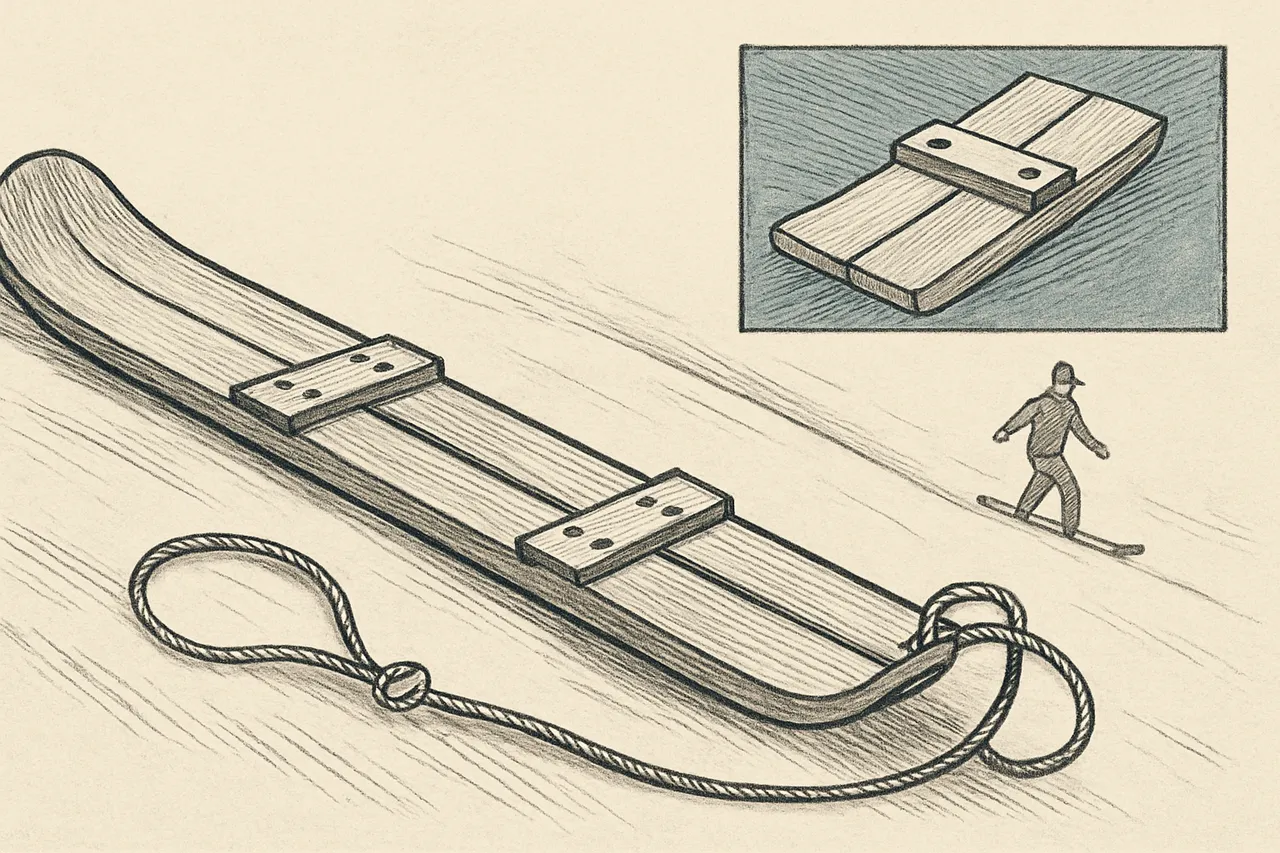
A Father Fastened Two Skis Together for His Daughter at Christmas in 1965. His Wife Named It the Snurfer.
Sherman Poppen was an engineer in Muskegon, Michigan, trying to keep his daughter busy over the holiday. He joined two children's skis side by side and tied a rope to the front. It sold as a toy by the hundreds of thousands, and the people who raced it turned it into a sport.
Read the story →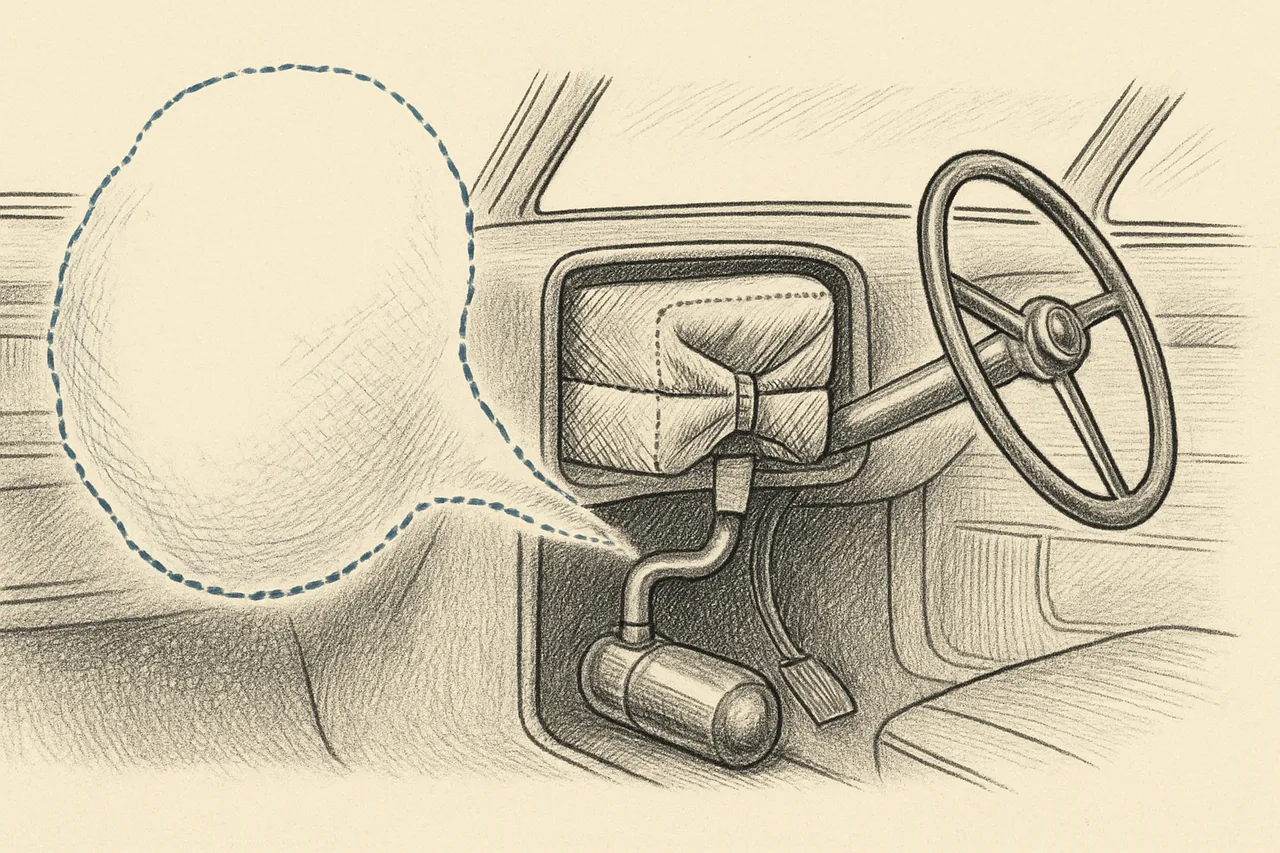
He Swerved to Avoid Something in the Road With His Family in the Car, and Patented the Airbag Three Months Later
John Hetrick was a Navy engineer who had worked with compressed air torpedoes. After a near miss on a Pennsylvania road in 1952, he worked out that a cushion could be inflated faster than a body can travel forward. Then he could not get a single manufacturer to care.
Read the story →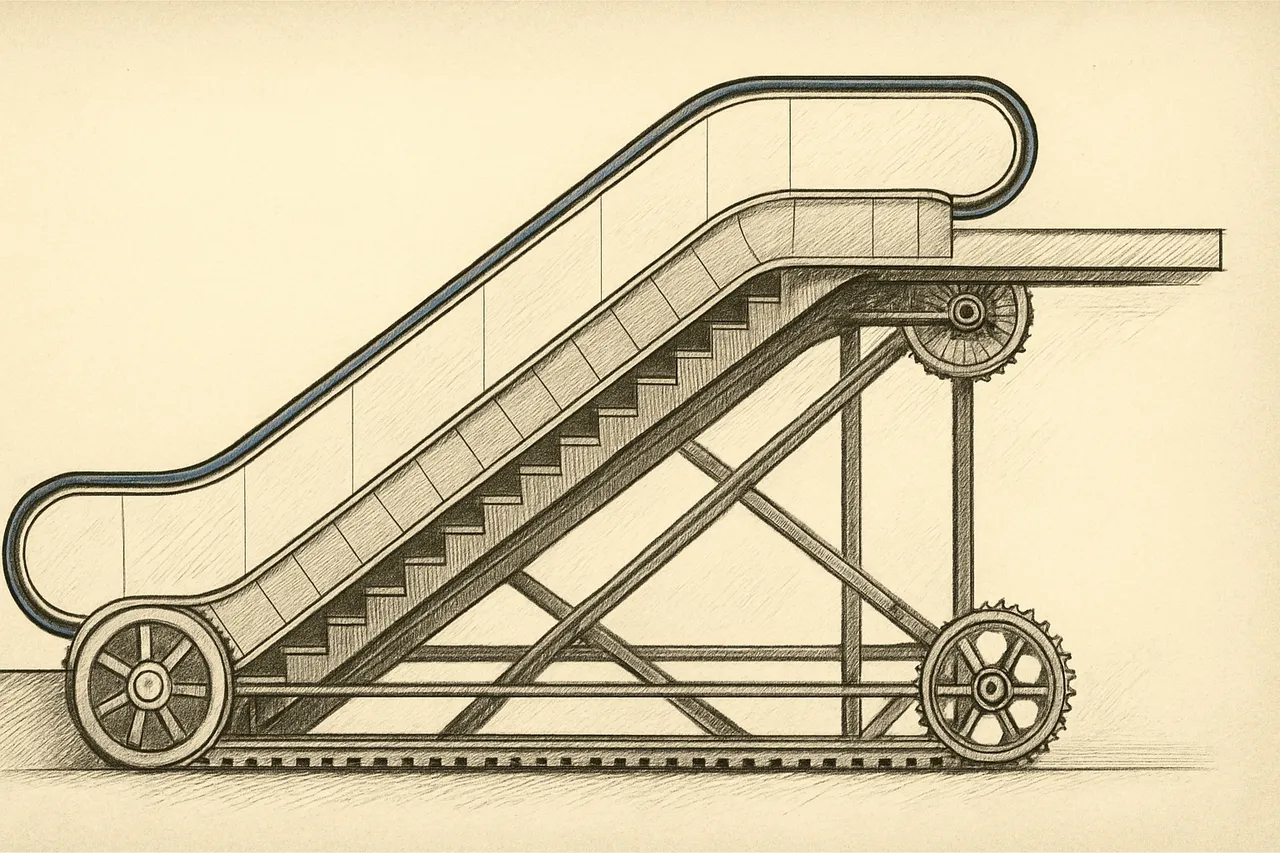
The Escalator Was Patented in 1859. Nobody Built One for Thirty Years.
Nathan Ames patented 'revolving stairs' before the Civil War. He admitted he wasn't sure what would power them, never built one, and died four years later at thirty-nine. The moving staircase arrived a generation after he did.
Read the story →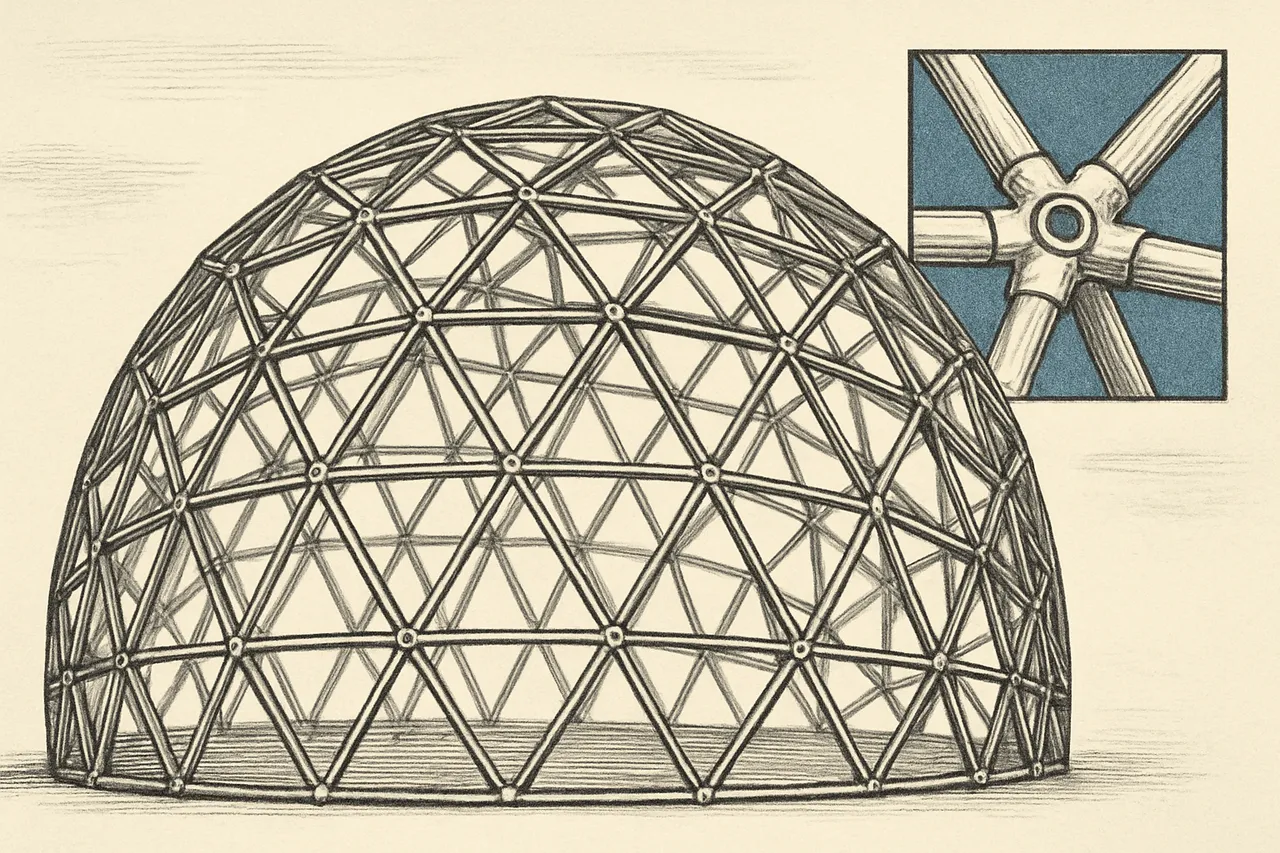
Buckminster Fuller Patented a Dome That Gets Stronger as It Gets Bigger
Most structures get weaker and heavier as they scale up. Buckminster Fuller's geodesic dome does the opposite — it grows more efficient the larger it becomes. It was too strange for mainstream architecture, but it went to the South Pole, the World's Fair, and the cover of the future.
Read the story →