Every Metallurgist Told Gillette His Razor Blade Was Impossible. It Took Six Years and an MIT Machinist.
King Gillette wanted a steel blade thin enough to throw away and hard enough to shave with. Experts at MIT told him it could not be made. He kept at it for six years, sold 51 blades the first year, and 12 million four years later.
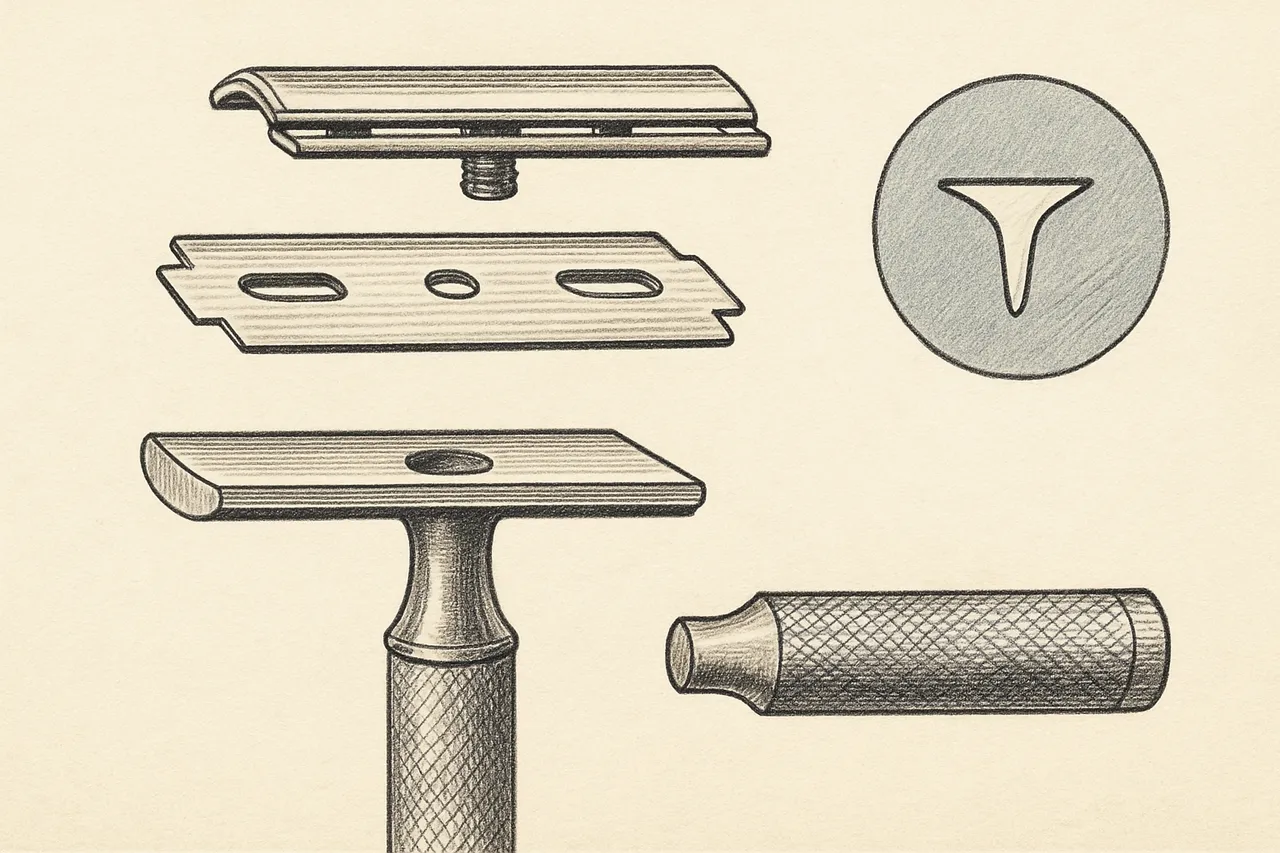
US775134 was granted to King Camp Gillette on November 15, 1904. The title is "Razor." It covers the safety razor with a thin, replaceable, double-edged blade — the object that created both the modern shaving industry and the business model now used to sell printers, game consoles, and coffee machines.
Gillette had the idea around 1895. He had been told by his employer William Painter, inventor of the disposable bottle cap, to find something people would use once and buy again. Shaving fit perfectly: straight razors were expensive, dangerous, and required constant stropping and professional honing.
The concept was simple. Clamp a very thin piece of steel in a holder that exposes only a sliver of edge, so the user cannot cut themselves badly, and make the steel cheap enough to discard when dull rather than sharpen.
Six years of being told no
The manufacturing was not simple at all, and this is the part usually skipped.
A blade that is thin enough to be disposable is thin enough to flex, and a flexing blade does not shave. To hold a keen edge, steel must be hardened — and hardening thin steel warps it. Grinding a hardened, warped ribbon of steel to a uniform edge across its whole length, cheaply, at scale, was beyond the standard practice of the era.
Gillette consulted metallurgists at MIT and elsewhere. He was told repeatedly, by people who knew what they were talking about, that what he wanted could not be manufactured.
He spent roughly six years failing anyway. The breakthrough came through William Nickerson, an MIT-trained engineer and machinist who worked out the processes — hardening, flattening, and grinding the thin stock to a consistent edge — that made mass production possible. Nickerson's contribution is arguably the harder half of the invention.
Fifty-one blades
The first year of sales, 1903, produced numbers that would end most ventures: 51 blades and 168 razors.
The second year they sold about 90,000 blades. By 1908 they were selling in the millions. The economics Painter had described worked exactly as predicted — the razor was a one-time purchase that created a permanent customer for blades.
The First World War accelerated it enormously. The US military issued safety razors to servicemen, partly because gas masks require a clean-shaven face to seal properly. Millions of men came home with the habit and the handle, needing blades.
The model
"Give away the razor, sell the blades" is now taught as a standard business strategy, though the phrase overstates what Gillette actually did — his razors were never free, and were initially quite expensive.
What he genuinely established is subtler and more durable: that the profitable object is not the durable one. It is the consumable that the durable one requires. Every printer cartridge, coffee pod, and game disc sold since is working from the template of a man who spent six years being told his blade could not be made.
See the original
The full text and figures of US775134 are on patents.us.
Related stories
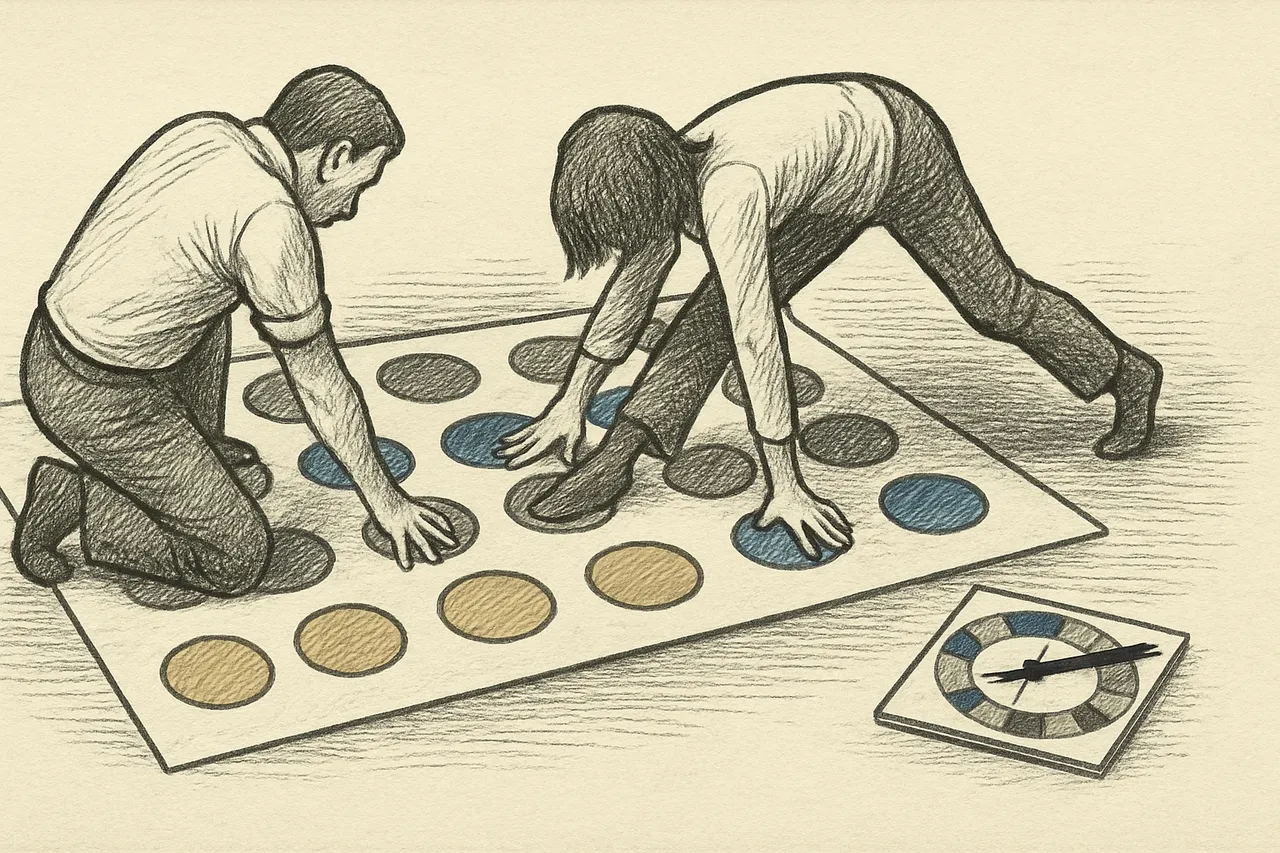
Twister's Patent Is Titled 'Apparatus for Playing a Game Wherein the Players Constitute the Game Pieces'
The patent title is the whole idea: the people are the pieces. Milton Bradley released the game in 1966, some retailers were wary of it, and critics found it a little too intimate. Then Johnny Carson played it on television with Eva Gabor, and the orders poured in.
Read the story →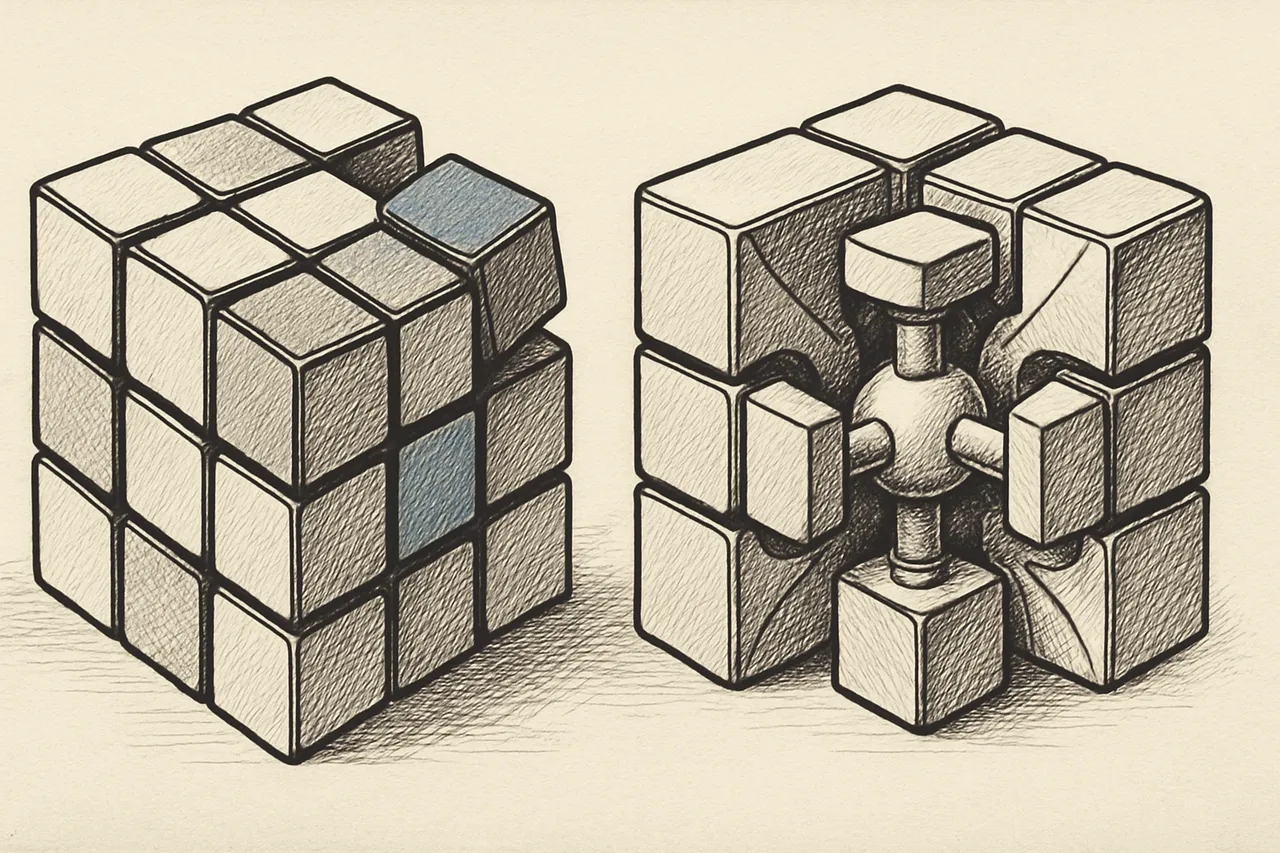
Ernő Rubik Needed About a Month to Solve His Own Cube. An American Court Later Found It Infringed an Earlier US Patent.
Rubik built the first cube in Budapest in 1974 as a way to think about three-dimensional movement. The clever part is how it holds together when most of its pieces are not attached to anything. In the United States, a chemist named Larry Nichols had patented a related puzzle in 1972, and his company sued.
Read the story →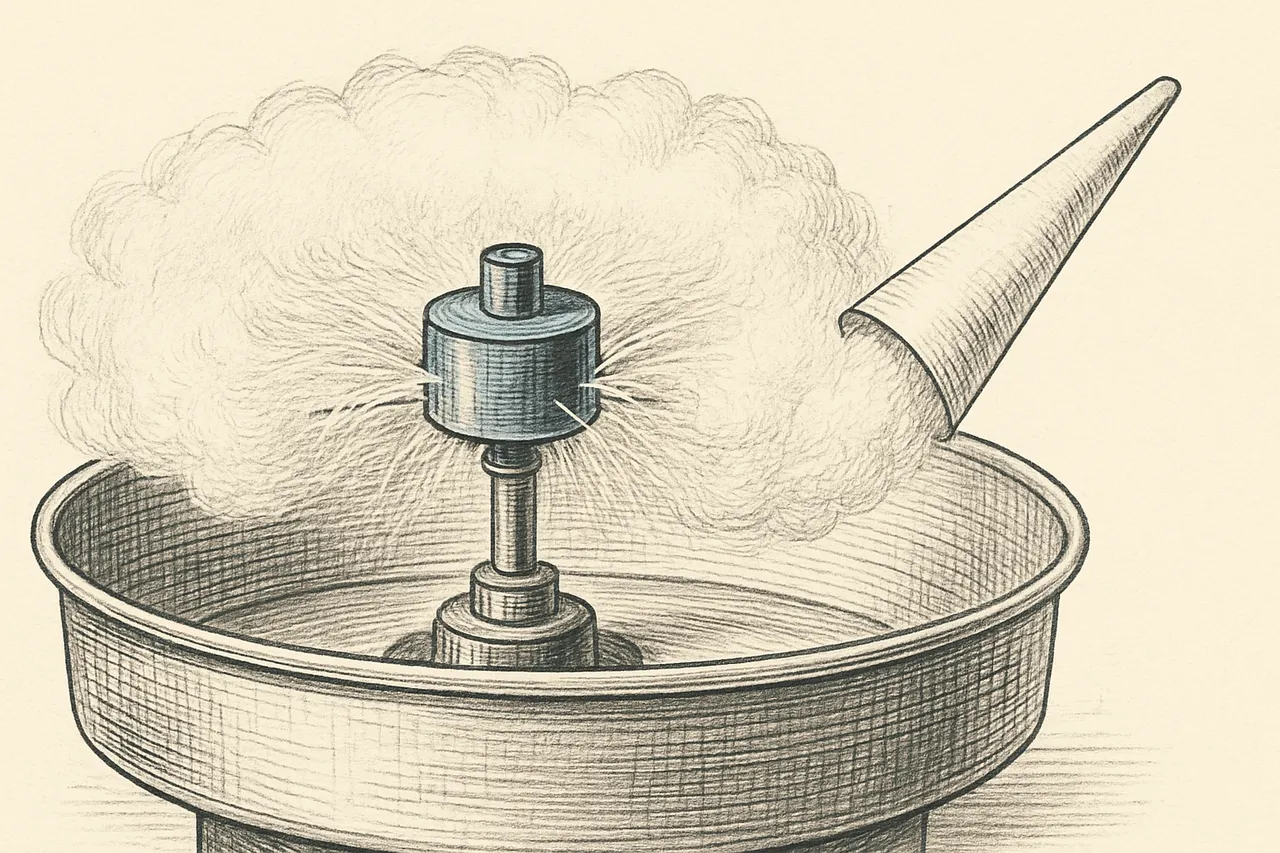
A Dentist Co-Invented the Cotton Candy Machine, and It Was Sold at the 1904 World's Fair as Fairy Floss
William Morrison was a dentist and John Wharton was a candy maker. Their machine melted sugar and flung it through tiny holes so that it cooled into threads finer than hair before it could crystallize. They filed in 1897, and at the St. Louis World's Fair it was a sensation.
Read the story →
Coca-Cola Asked Glassmakers for a Bottle You Could Recognize in the Dark, or Broken on the Ground
In 1915 Coca-Cola had an imitation problem, since competitors used the same straight-sided bottles and borrowed-sounding names. It challenged glass companies to design a bottle identifiable by touch alone. The winner came from a small glassworks in Terre Haute, Indiana, and the name on the patent is not the name of the man who drew it.
Read the story →