Garrett Morgan Walked Into a Collapsed Tunnel Wearing His Own Invention
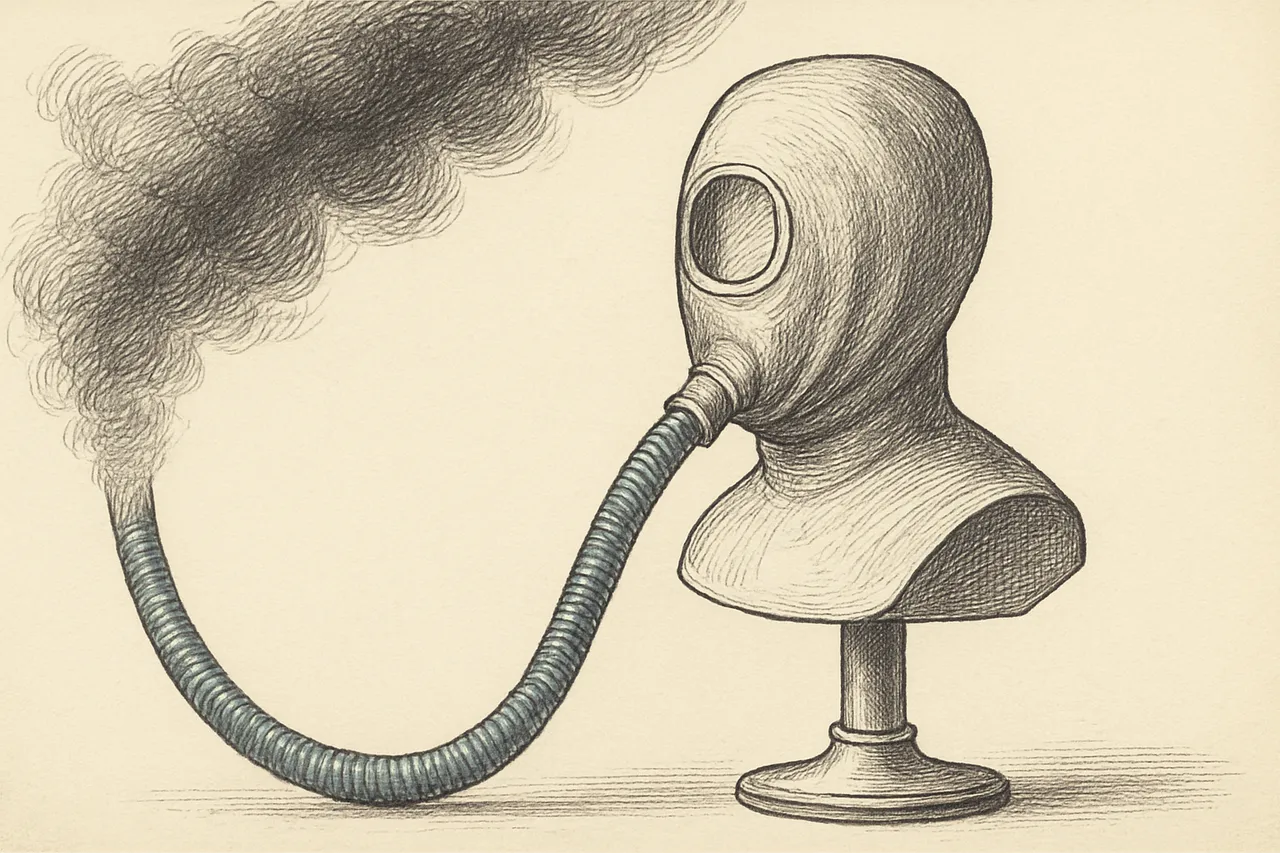
In 1914, Garrett Morgan patented a 'safety hood' — a primitive gas mask. Two years later, when an explosion trapped workers in a tunnel under Lake Erie, he put one on and went in himself.
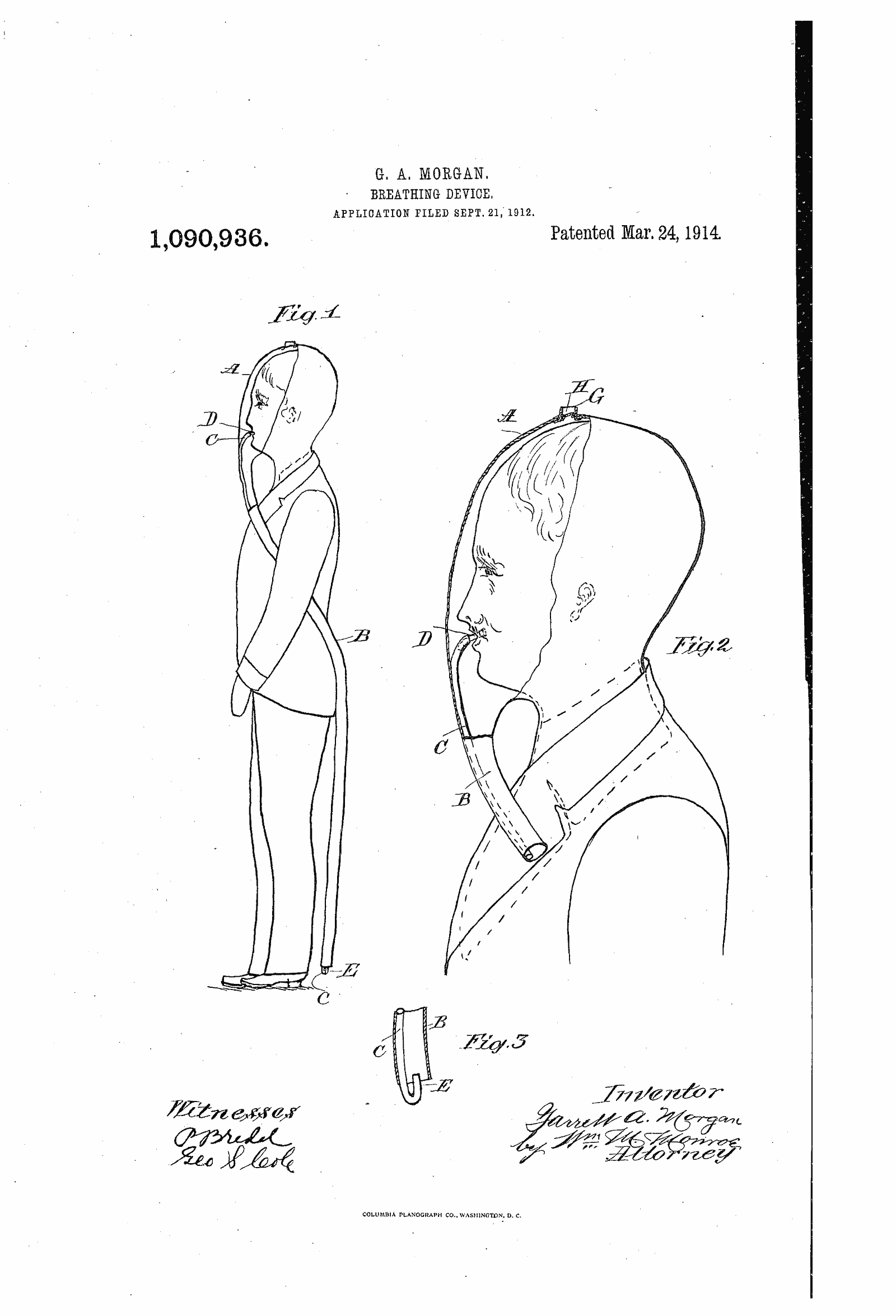
US1090936 was issued on August 11, 1914, three weeks after the start of World War I in Europe. The patent is titled, plainly, "Breathing Device." It describes a hood that fits over the head, with a long flexible tube reaching down to the wearer's waist or to the floor. A wet sponge inside the tube filters smoke and ash. The principle is simple: in a fire or a gas leak, breathable air settles near the floor while smoke rises. Drop the intake low enough and you can keep breathing.
The applicant was Garrett A. Morgan, a Black inventor in Cleveland who had grown up in post-Civil-War Kentucky and worked his way north through a series of small-shop businesses — barbershops, sewing-machine repair, a hair-care company. The breathing device was his fourth or fifth notable invention. He demonstrated it to fire departments across the country, often at his own expense.
Sales were slow. When potential buyers arrived at demonstrations and discovered the inventor was Black, orders were quietly canceled or never placed. Morgan adapted: he hired a white actor to play "the inventor" at demonstrations, while he himself was introduced as "the assistant." Sales picked up.
The Cleveland tunnel
On July 25, 1916, an explosion in a water-supply tunnel five miles out under Lake Erie trapped a crew of workers. Methane and other gases filled the tunnel. The first wave of rescuers, sent in without protection, were killed. The second wave was killed too.
Morgan and his brother Frank were called to the scene shortly after midnight. They arrived with several of his safety hoods, put them on, and went into the tunnel. Over the course of the night they brought out two living men, recovered the bodies of others, and made multiple trips into the gas-filled passage that had killed the previous rescuers. The Cleveland press initially praised the rescue in extensive detail, with photographs of the equipment.
Then the press learned that Morgan was Black. The coverage went quiet. Morgan was passed over for the Carnegie Medal that he was, by every account, plainly owed.
What it became
The US Army adapted the design for chlorine and mustard gas during the second half of World War I. The basic principle Morgan had patented in 1914 — separate the breathing intake from the wearer's mouth, filter through a wet medium, draw from cooler air closer to the ground — went into millions of military gas masks over the following decade. Industrial respirators in mining, chemical plants, and emergency services trace, more or less directly, to the same patent.
Morgan went on to file the three-position traffic signal in 1923 (US1475024), the mechanical ancestor of every modern stoplight in the world. He sold the rights to General Electric for $40,000. He died in 1963 at age eighty-six, having built and preserved a small fortune through inventions whose recognition arrived, in most cases, only after he had stopped expecting it.
See the original
The full text and drawings of US1090936 are on Google Patents.
Related stories
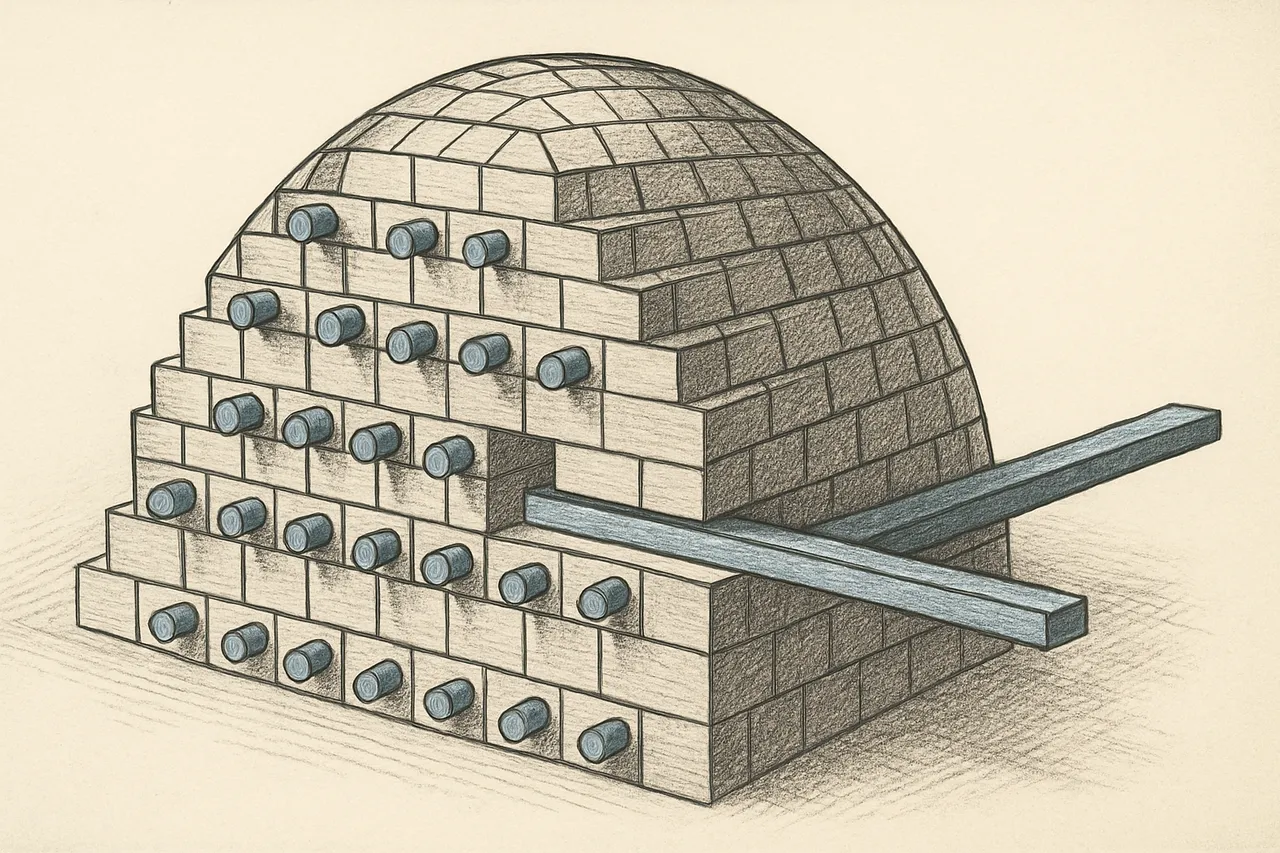
Fermi and Szilard Filed a Patent on the Nuclear Reactor in 1944. It Stayed Secret for More Than Ten Years.
The patent is titled Neutronic Reactor, which is a very flat name for the machine that produced the first controlled nuclear chain reaction. It was filed during the Manhattan Project, buried under a secrecy order, and not published until 1955, six months after Enrico Fermi died.
Read the story →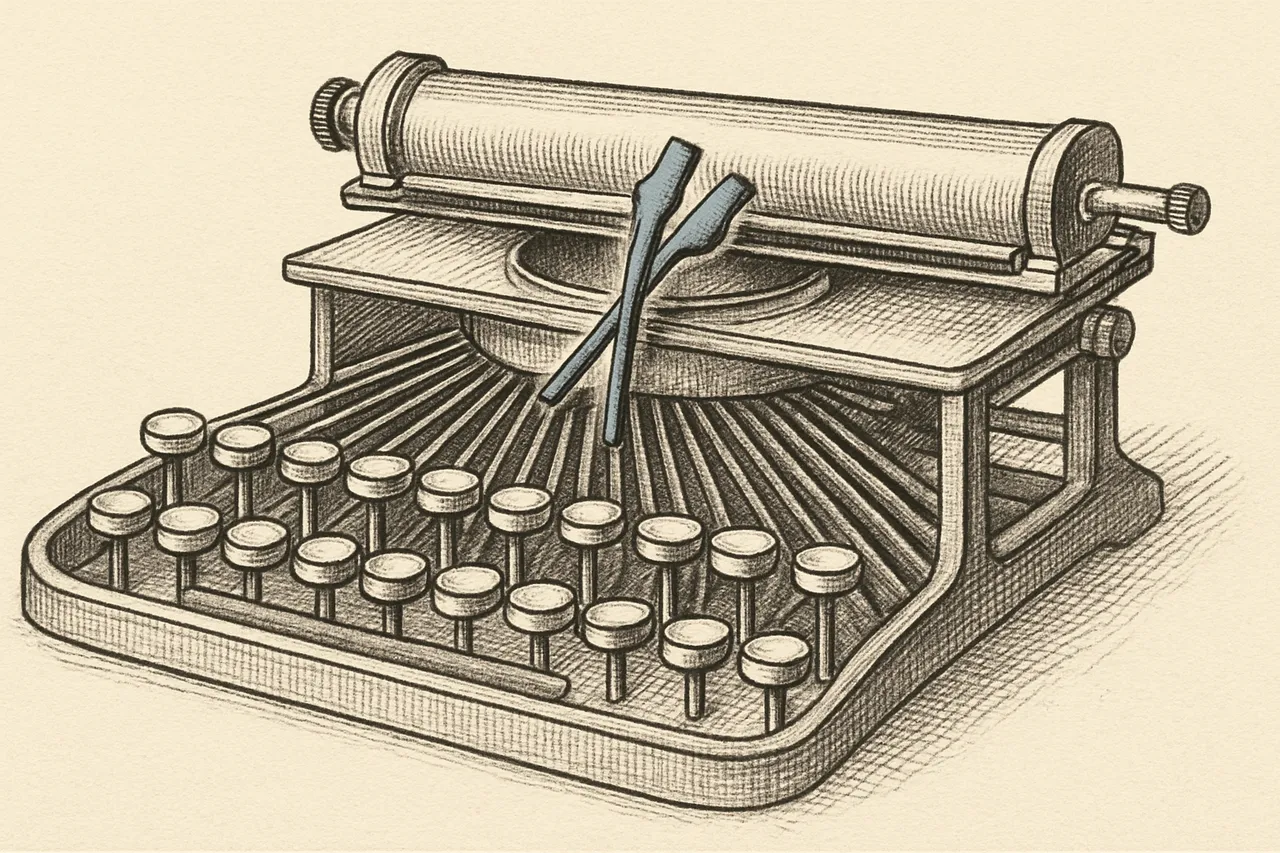
The 1868 Patent Behind the First Successful Typewriter Had Its Keys in Alphabetical Order. QWERTY Came Later, and Nobody Fully Agrees Why.
Christopher Latham Sholes and two partners patented a typewriter in Milwaukee in 1868 with keys arranged like a piano, roughly in alphabetical order. Over the next several years the letters were shuffled into QWERTY. The popular explanation for that is a distortion of a better one.
Read the story →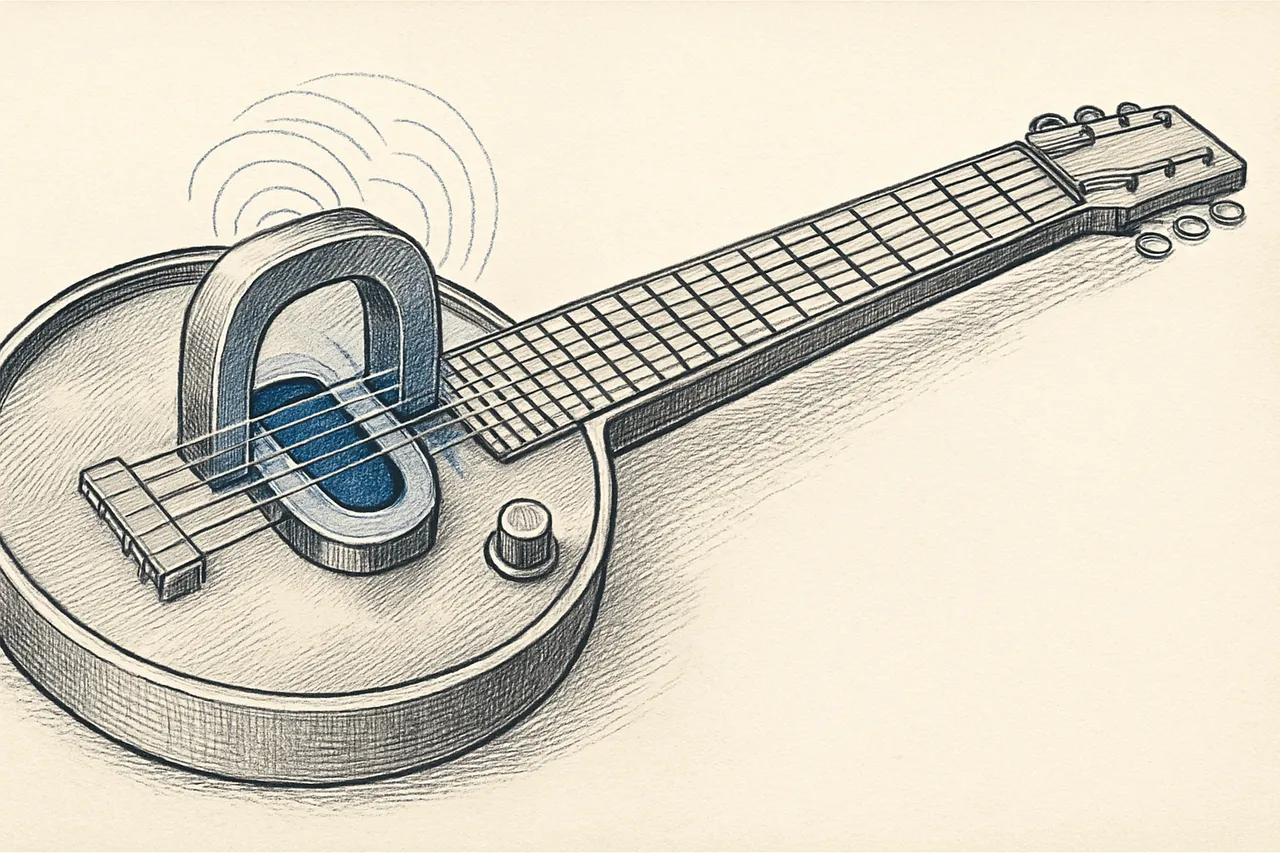
The First Electric Guitar You Could Buy Was Nicknamed the Frying Pan, and Its Patent Took Three Years
In the big band era, guitarists could not be heard over the horns. George Beauchamp set the strings inside a pair of horseshoe magnets, wound a coil beneath them, and mounted it all on a round aluminum body with a long neck. It looked like cookware, and the magnetic pickup it used is still how electric guitars work.
Read the story →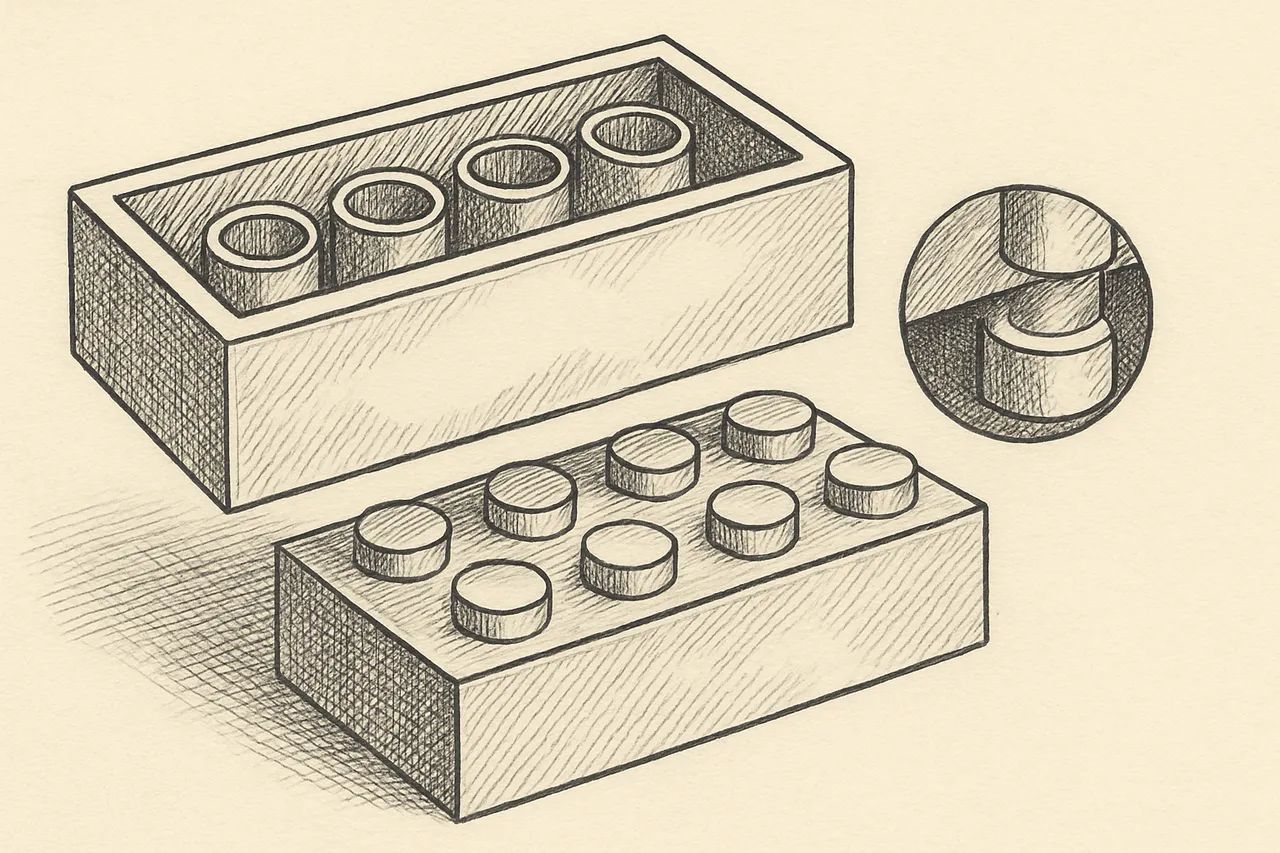
LEGO Bricks Were on Sale for Nine Years Before They Held Together Properly. The Fix Was a Row of Hollow Tubes.
The first LEGO bricks had studs on top and an empty space underneath, so models tended to come apart when you picked them up. Godtfred Kirk Christiansen's 1958 design put tubes inside the brick, and a brick molded that year still fits one molded today.
Read the story →