Fermi and Szilard Filed a Patent on the Nuclear Reactor in 1944. It Stayed Secret for More Than Ten Years.
The patent is titled Neutronic Reactor, which is a very flat name for the machine that produced the first controlled nuclear chain reaction. It was filed during the Manhattan Project, buried under a secrecy order, and not published until 1955, six months after Enrico Fermi died.
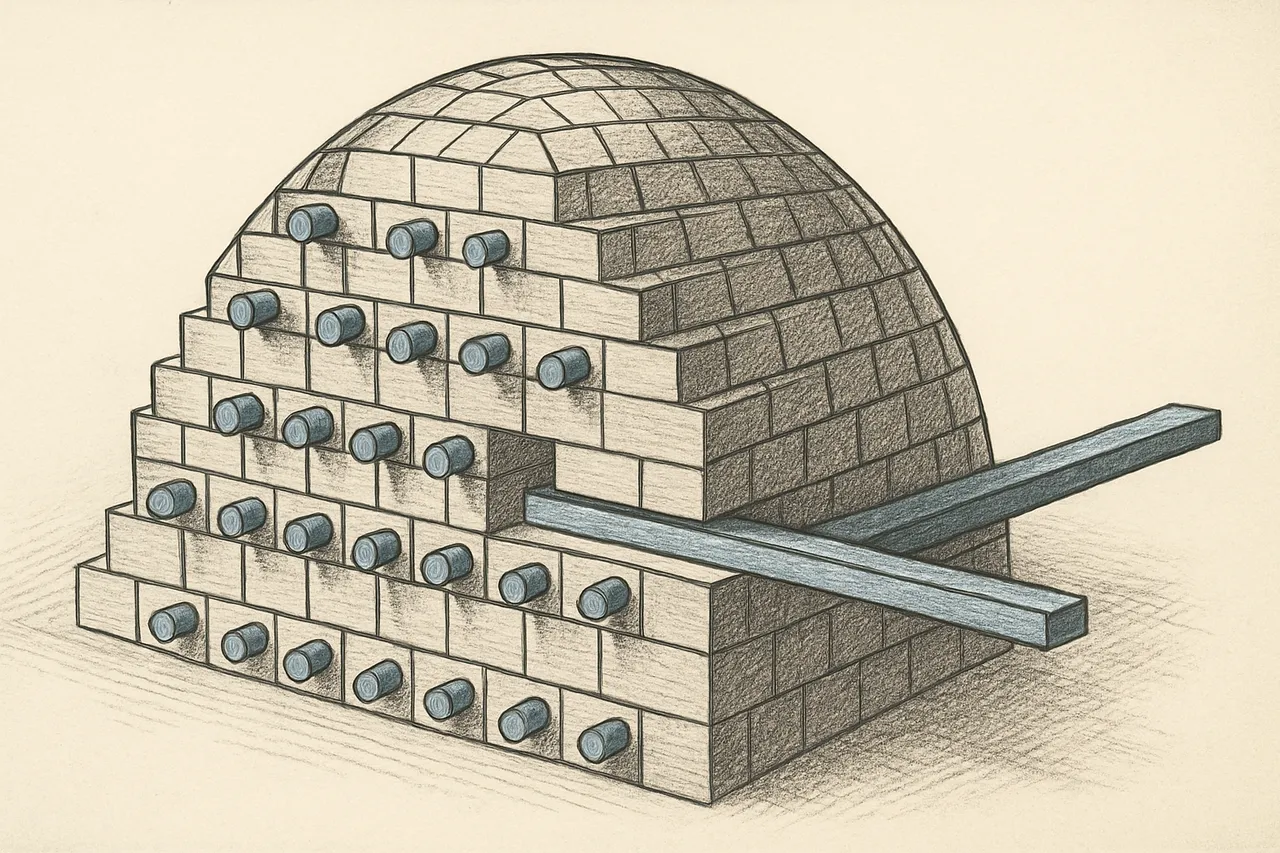
US2708656 is titled Neutronic Reactor. The named inventors are Enrico Fermi and Leo Szilard. It was filed on December 19, 1944, and it was not published until May 17, 1955.
That gap of more than ten years is the story. The patent describes the machine that produced the first controlled, self-sustaining nuclear chain reaction, and it sat sealed in the Patent Office for a decade because the government had classified the thing it described.
The idea came first, and it was British
Leo Szilard, a Hungarian physicist living in London, worked out the concept of a nuclear chain reaction in 1933. The insight is simple to state: if an element could be found that emits two neutrons for every one it absorbs, then a reaction in one atom could trigger reactions in others, and the process would sustain and multiply itself.
Szilard filed for a British patent on the chain reaction in 1934. He then did something unusual with it. In 1936 he assigned the patent to the British Admiralty, specifically so that it would be held in secret rather than published. He had understood early what the idea might be used for, and he wanted it out of general circulation.
The physics was ahead of the materials. Szilard did not yet know which element would work. That answer arrived in late 1938, when nuclear fission was demonstrated in uranium in Germany.
Chicago
Szilard came to the United States and eventually to the University of Chicago, where he worked with Enrico Fermi. Fermi had won the Nobel Prize in 1938 and used the trip to Stockholm to leave fascist Italy rather than return, since his wife Laura was Jewish and Italy had begun enacting racial laws.
The two men built a device that has become one of the most famous objects of the twentieth century despite being, physically, a pile of bricks. Chicago Pile-1 was a lattice of graphite blocks with lumps of uranium and uranium oxide set into it at regular spacing, assembled in a squash court under the stands at Stagg Field.
The design is in the patent. Graphite is the moderator. Neutrons thrown off by fission come out fast, and fast neutrons are inefficient at causing further fission in uranium. Bouncing them through graphite slows them down and makes them far more likely to be captured and to split another nucleus. The uranium is distributed through the moderator in a lattice rather than massed together, so the neutrons spend time in the graphite between encounters with fuel.
Control comes from rods of a neutron-absorbing material, cadmium, that slide into channels through the pile. Push them in and they soak up neutrons and the reaction dies down. Pull them out and the reaction builds. The pile is steered by regulating how many neutrons are permitted to survive.
On December 2, 1942, the rods were withdrawn far enough for the reaction to sustain itself, and Fermi let it run for about half an hour before shutting it down. The chain reaction Szilard had imagined crossing a London street in 1933 had been produced deliberately and held steady.
The secrecy order
The patent application was filed two years later, in the middle of the Manhattan Project.
The United States has a mechanism for exactly this situation. Under the law governing invention secrecy, the government can order that a patent application be kept from publication if disclosing it would harm national security. The application is examined normally, but nothing is issued and nothing is published. The inventor keeps the filing date and gets none of the disclosure.
The reactor application sat under that kind of restriction for years. The rights ended up with the United States government rather than with the two physicists.
Fermi died of cancer in November 1954, at the age of 53. The patent published the following May. He never saw it issue.
The bomb itself was a different question
It is worth being precise, since this is the part people usually assume. This patent covers a reactor, which is a device for producing and controlling a chain reaction. It is not a patent on a weapon.
Atomic weapons were placed outside the patent system entirely. The Atomic Energy Act of 1946 prohibited patents on inventions useful solely in the production of atomic weapons or fissionable material for them. Congress decided that this category of invention would not be private property and would not be published in exchange for a monopoly, which is the bargain a patent normally represents.
That is a striking exception to how the system works. The entire premise of a patent is disclosure: you tell the public how your invention works, in enough detail that someone skilled in the field could build it, and in return you get exclusive rights for a limited period. For nuclear weapons, the disclosure half of the deal was judged unacceptable at any price.
Szilard afterward
Szilard spent the rest of his life on the consequences. He had drafted the 1939 letter that Albert Einstein signed and sent to President Roosevelt, warning that Germany might be pursuing a nuclear weapon, which helped start the American program.
In July 1945 he circulated a petition among Manhattan Project scientists urging that the bomb not be used on Japan without a demonstration and a chance to surrender. It did not reach the President before the decision. He moved to biology and to arms control advocacy and spent his remaining years arguing against the thing he had helped set in motion.
The patent record holds all of this in a single flat line. Neutronic Reactor, filed December 19, 1944, published May 17, 1955. Everything that made those dates ten years apart is somewhere else.
For a different case of foundational science running into the patent system, see the Cohen and Boyer patents that built biotech.
See the original
The full text and figures of US2708656 are on patents.us.
Related stories
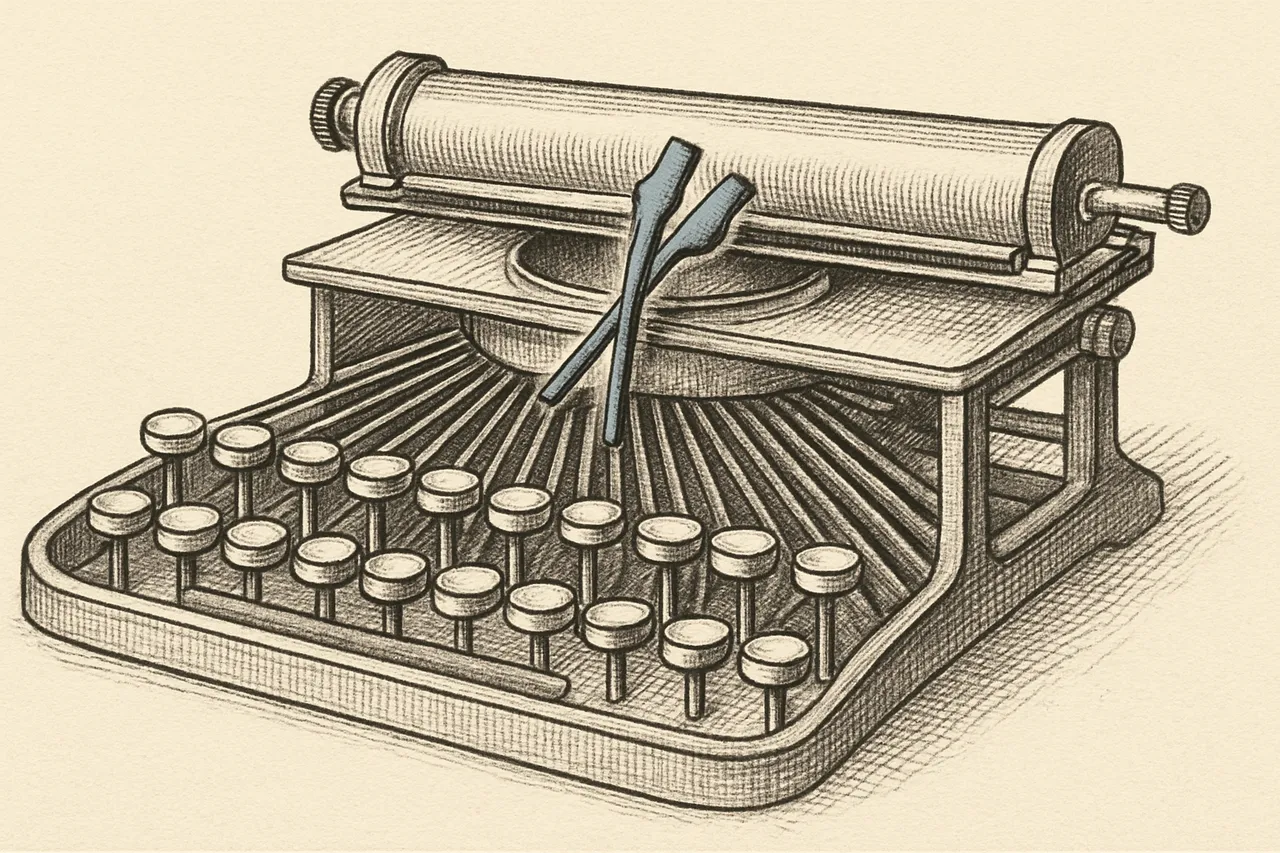
The 1868 Patent Behind the First Successful Typewriter Had Its Keys in Alphabetical Order. QWERTY Came Later, and Nobody Fully Agrees Why.
Christopher Latham Sholes and two partners patented a typewriter in Milwaukee in 1868 with keys arranged like a piano, roughly in alphabetical order. Over the next several years the letters were shuffled into QWERTY. The popular explanation for that is a distortion of a better one.
Read the story →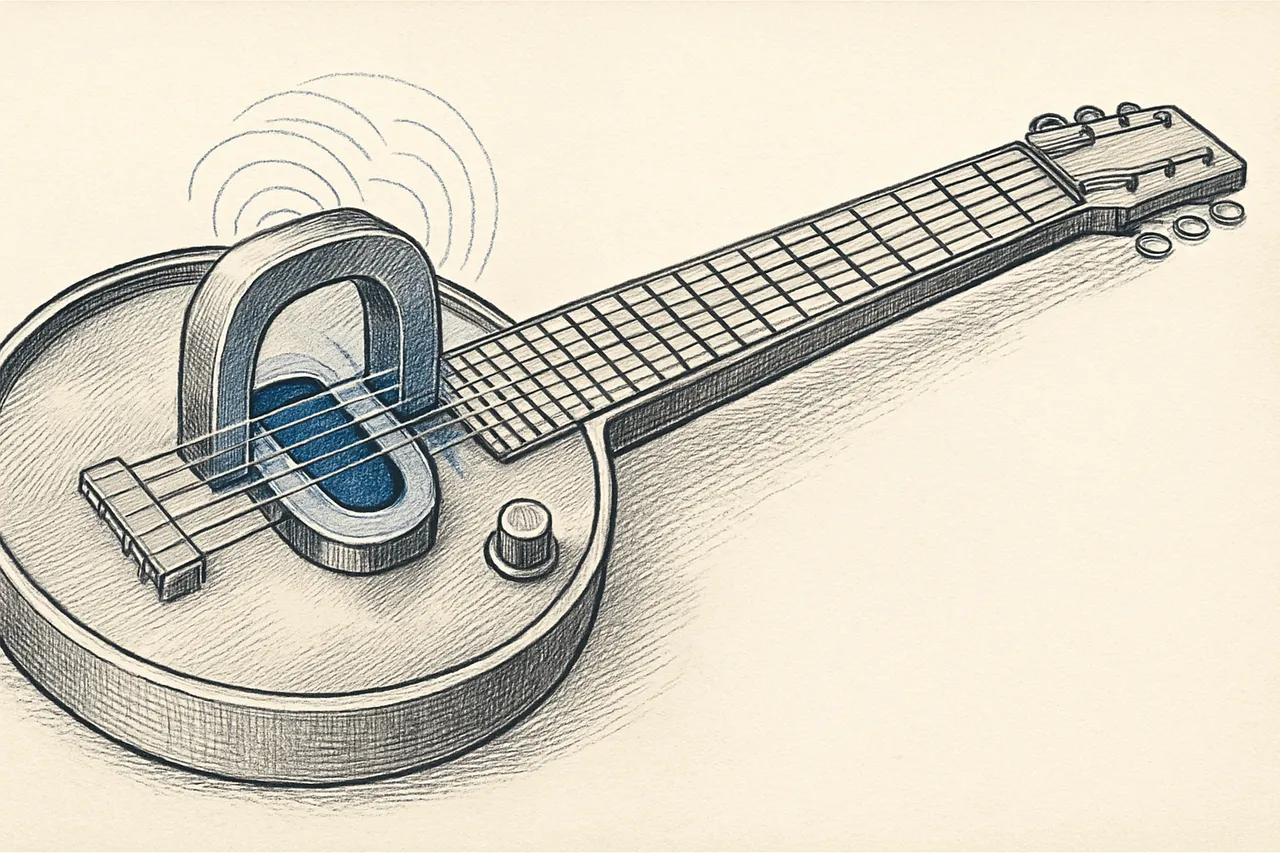
The First Electric Guitar You Could Buy Was Nicknamed the Frying Pan, and Its Patent Took Three Years
In the big band era, guitarists could not be heard over the horns. George Beauchamp set the strings inside a pair of horseshoe magnets, wound a coil beneath them, and mounted it all on a round aluminum body with a long neck. It looked like cookware, and the magnetic pickup it used is still how electric guitars work.
Read the story →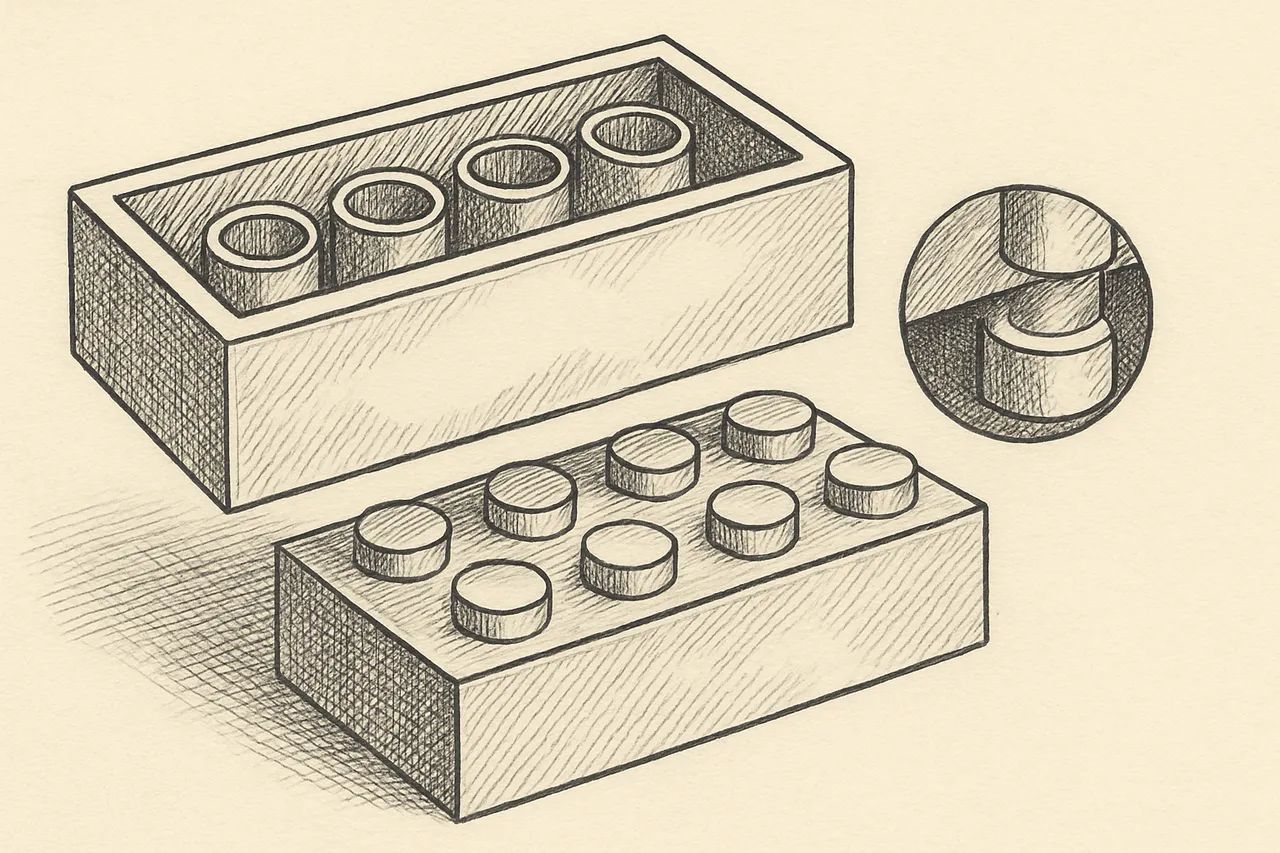
LEGO Bricks Were on Sale for Nine Years Before They Held Together Properly. The Fix Was a Row of Hollow Tubes.
The first LEGO bricks had studs on top and an empty space underneath, so models tended to come apart when you picked them up. Godtfred Kirk Christiansen's 1958 design put tubes inside the brick, and a brick molded that year still fits one molded today.
Read the story →
He Reached Into the Wrong Bin, Soldered in the Wrong Resistor, and Built the First Implantable Pacemaker
Wilson Greatbatch was building a device to record heart sounds. He grabbed a resistor of the wrong value, and the circuit started pulsing instead of recording. He recognized the rhythm immediately, because he already knew what problem it solved.
Read the story →