Cohen and Boyer Patented the Tools That Built Biotech
In 1980, Stanford University was granted a patent for a method of splicing DNA from one organism into another. The patent generated roughly $255 million in licensing fees before it expired — and made every recombinant drug in modern medicine legally possible.
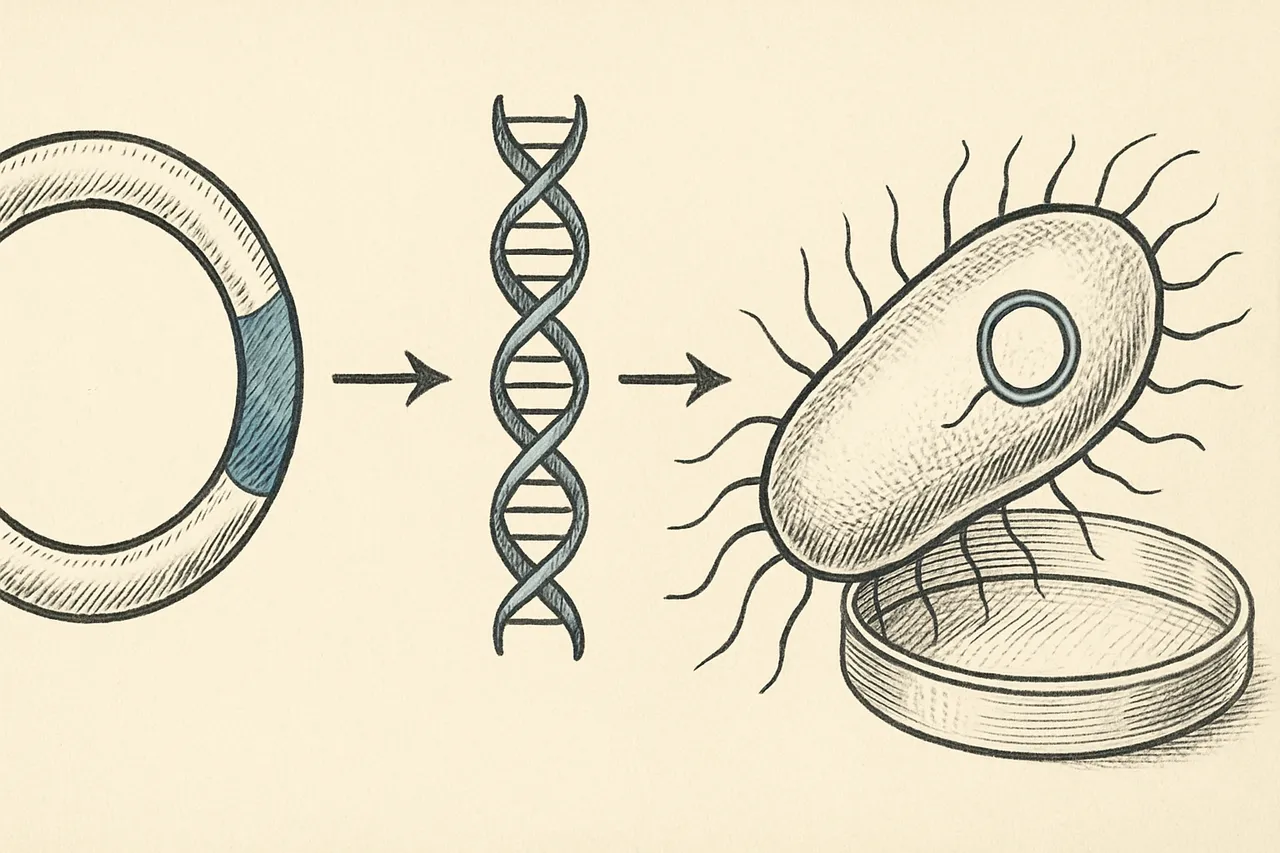
US4237224 was filed on November 4, 1974, and granted on December 2, 1980, after a six-year examination that the Patent Office took its time over because the underlying technology was, in every meaningful sense, brand new. The title is "Process for Producing Biologically Functional Molecular Chimeras." The inventors named on the patent are Stanley N. Cohen of Stanford University and Herbert W. Boyer of the University of California, San Francisco. The patent rights were assigned to the Trustees of Stanford on Cohen's behalf and to the Regents of the University of California on Boyer's.
The mechanism described in the patent is now in every introductory biology textbook. Take a circular piece of bacterial DNA — a plasmid. Cut it open at a specific recognition site using a restriction enzyme. Insert a fragment of DNA from a different organism (a frog, a human, anything) at the cut site. Use a ligase enzyme to seal the plasmid back into a complete loop. Reintroduce the plasmid into a bacterium. The bacterium will now reproduce, and every daughter cell will contain a working copy of the inserted foreign gene. The foreign gene will be expressed. The bacterium will produce the protein the foreign gene codes for.
You have just turned a bacterium into a factory for producing whatever the inserted gene tells it to produce. Insulin. Human growth hormone. Clotting factor. A monoclonal antibody. The active ingredient in a vaccine.
The breakfast
The widely-told version of how the work began involves a delicatessen in Hawaii. Cohen and Boyer met at a conference in November 1972 and continued the discussion afterward at a deli, sketching diagrams on napkins. Each had been working on a piece of the problem — Cohen on plasmid biology at Stanford, Boyer on restriction enzymes at UCSF. Their tools combined obviously and decisively. By March 1973 they had cloned the first recombinant DNA molecule in Cohen's lab. By November 1973 they had used the system to clone a frog gene into a bacterium and shown that the bacterium expressed the frog protein.
The patent application was filed a year later, in November 1974. The decision to file at all was contentious. Cohen and Boyer were academic scientists; the prevailing view at the time was that publicly funded research belonged in the public domain. Stanford's technology-licensing office argued strenuously the other way: that without patent protection, no commercial entity would invest the capital required to translate the technique into pharmaceuticals, and without commercial translation, the discovery would benefit no one. Cohen and Boyer agreed to the filing, with the condition that their personal share of any royalties be donated to research.
$255 million
Stanford's licensing strategy was unusually pragmatic. Rather than litigate to extract maximum royalties from a small number of licensees, Stanford set the per-license fee extremely low — initially around ten thousand dollars per company, with single-digit percentage royalties on resulting products. By the time the patent expired in 1997, roughly 460 companies had licensed it, including every major pharmaceutical company in the world. Stanford and UC together received approximately $255 million over the patent's seventeen-year term. Cohen and Boyer themselves received standard inventor shares; Boyer used some of his to co-found Genentech, the first commercial recombinant- DNA pharmaceutical company, in 1976.
The drugs the patent made possible include essentially every recombinant pharmaceutical on the modern market: human insulin (Humulin, 1982), human growth hormone (1985), tissue plasminogen activator (1987), erythropoietin (1989), and every monoclonal antibody therapy from the late 1980s onward. The current biotech industry, worth something like $1.5 trillion annually, traces — almost in a single direct line — to the 1974 filing and the 1980 grant.
See the original
The full text of US4237224 is on Google Patents.
Related stories
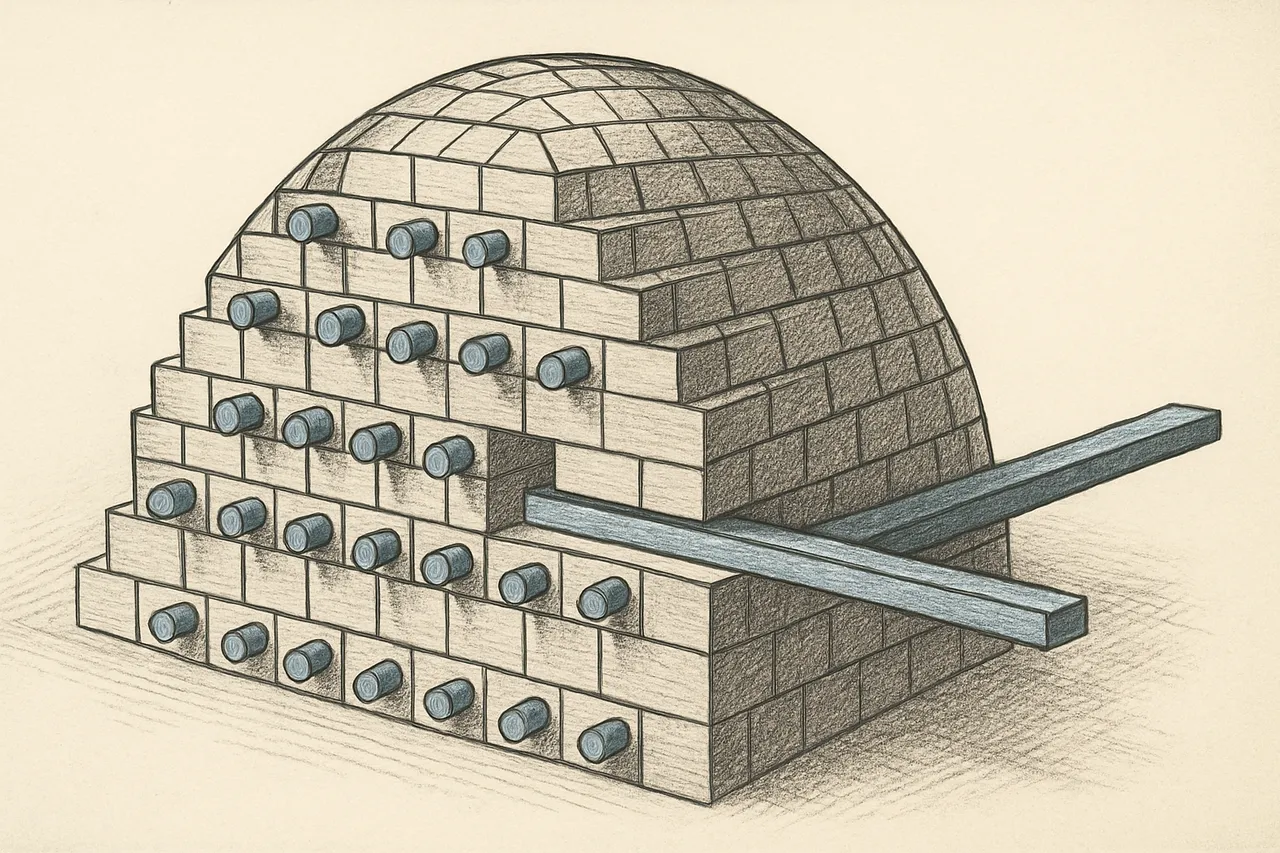
Fermi and Szilard Filed a Patent on the Nuclear Reactor in 1944. It Stayed Secret for More Than Ten Years.
The patent is titled Neutronic Reactor, which is a very flat name for the machine that produced the first controlled nuclear chain reaction. It was filed during the Manhattan Project, buried under a secrecy order, and not published until 1955, six months after Enrico Fermi died.
Read the story →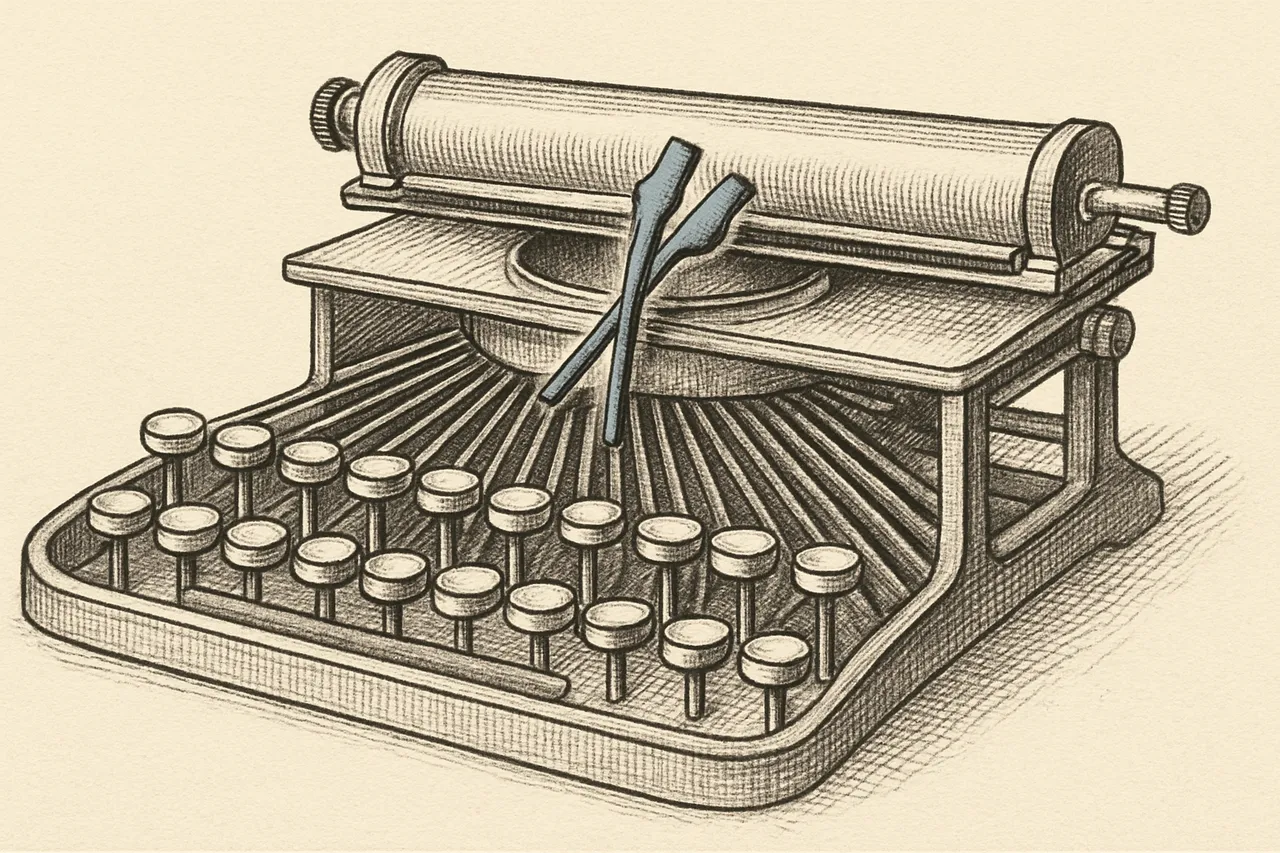
The 1868 Patent Behind the First Successful Typewriter Had Its Keys in Alphabetical Order. QWERTY Came Later, and Nobody Fully Agrees Why.
Christopher Latham Sholes and two partners patented a typewriter in Milwaukee in 1868 with keys arranged like a piano, roughly in alphabetical order. Over the next several years the letters were shuffled into QWERTY. The popular explanation for that is a distortion of a better one.
Read the story →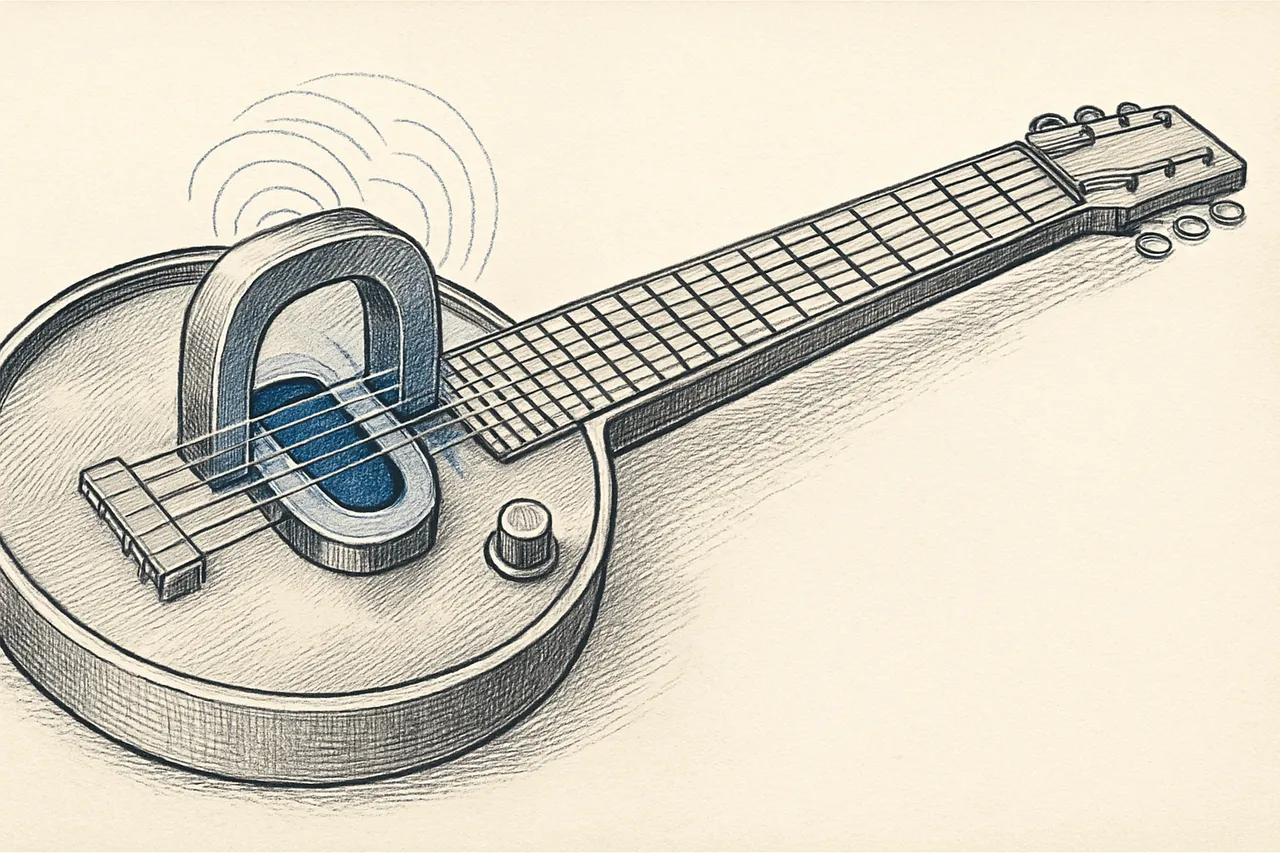
The First Electric Guitar You Could Buy Was Nicknamed the Frying Pan, and Its Patent Took Three Years
In the big band era, guitarists could not be heard over the horns. George Beauchamp set the strings inside a pair of horseshoe magnets, wound a coil beneath them, and mounted it all on a round aluminum body with a long neck. It looked like cookware, and the magnetic pickup it used is still how electric guitars work.
Read the story →
LEGO Bricks Were on Sale for Nine Years Before They Held Together Properly. The Fix Was a Row of Hollow Tubes.
The first LEGO bricks had studs on top and an empty space underneath, so models tended to come apart when you picked them up. Godtfred Kirk Christiansen's 1958 design put tubes inside the brick, and a brick molded that year still fits one molded today.
Read the story →