Burroughs Built an Adding Machine That Printed, Then Smashed the First Fifty With a Window
Bank clerks added long columns by hand and had no way to check their work except doing it again. William Burroughs built a machine that printed every entry and the total. The first production run only worked for him, so he threw them out a window.
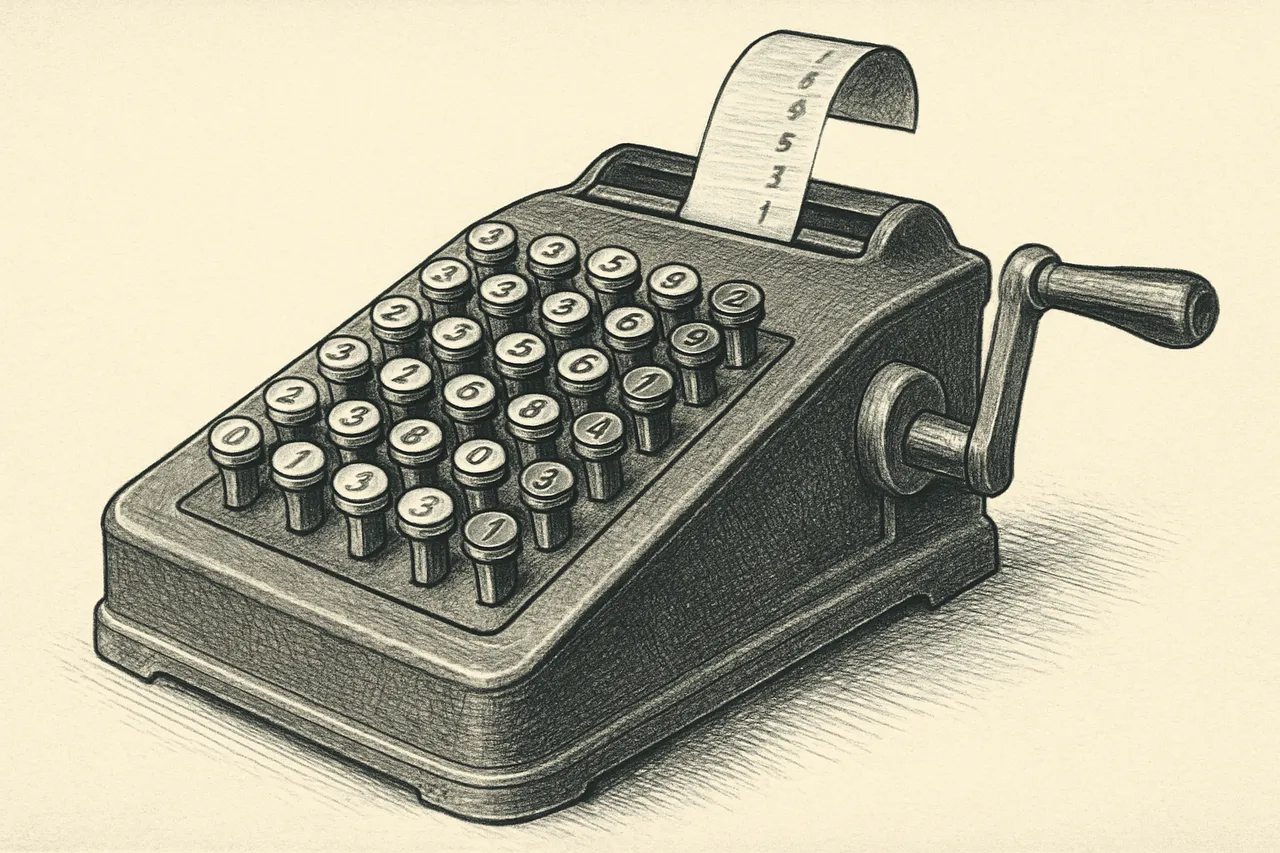
US388116 was granted to William Seward Burroughs on August 21, 1888, for a calculating machine. It printed what it added, which is the part that mattered.
Burroughs had worked as a bank clerk in Auburn, New York. The job was adding long columns of figures by hand, all day, and the working conditions gave him a specific grievance: an error anywhere in a column produces a wrong total with no indication of where it went wrong. The only remedy was to add the whole column again and hope the second attempt disagreed in a useful way.
Mechanical calculators already existed. Most of them displayed a result on dials, which solves the arithmetic and not the auditing. A dial shows you a number. It does not show you the entries that produced it.
Printing the tape
Burroughs built a key-driven machine that recorded each entry on a paper tape as it was made, then printed the total at the bottom.
That changes what the machine is for. A printed tape can be checked line by line against the source documents, filed as a record, handed to a supervisor, or produced in an audit. The clerk no longer has to trust the machine or their own memory, because the machine leaves evidence.
This is the same idea James Ritty had used a decade earlier when he made the cash register display a running total where the customer could see it. Both machines are as much about verification as calculation.
The window
The first production run went badly.
Burroughs had built the prototype himself and had, without realizing it, compensated for the machine's sensitivity with his own touch. The mechanism responded differently depending on how hard and how fast the operator pulled the handle. In his hands the machines worked. In anyone else's they gave wrong answers.
Roughly fifty units had been built. The account passed down in the company is that Burroughs had them brought to him and threw them one by one out of a second-story window of the factory.
He then designed the fix, an oil-filled dashpot that governs the speed of the operating stroke regardless of how the operator yanks the handle. The machine became insensitive to the user, which is what made it sellable.
What it became
The American Arithmometer Company, which Burroughs founded with backers in St. Louis, sold the machines to banks and businesses in large numbers and later renamed itself after him. Burroughs Corporation went on to be one of the major American business machine companies of the twentieth century, eventually merging with Sperry in 1986 to form Unisys.
Burroughs himself did not see much of it. He died in 1898 at forty-one, shortly after the machine became a commercial success.
See the original
The full text and figures of US388116 are on patents.us.
Related stories
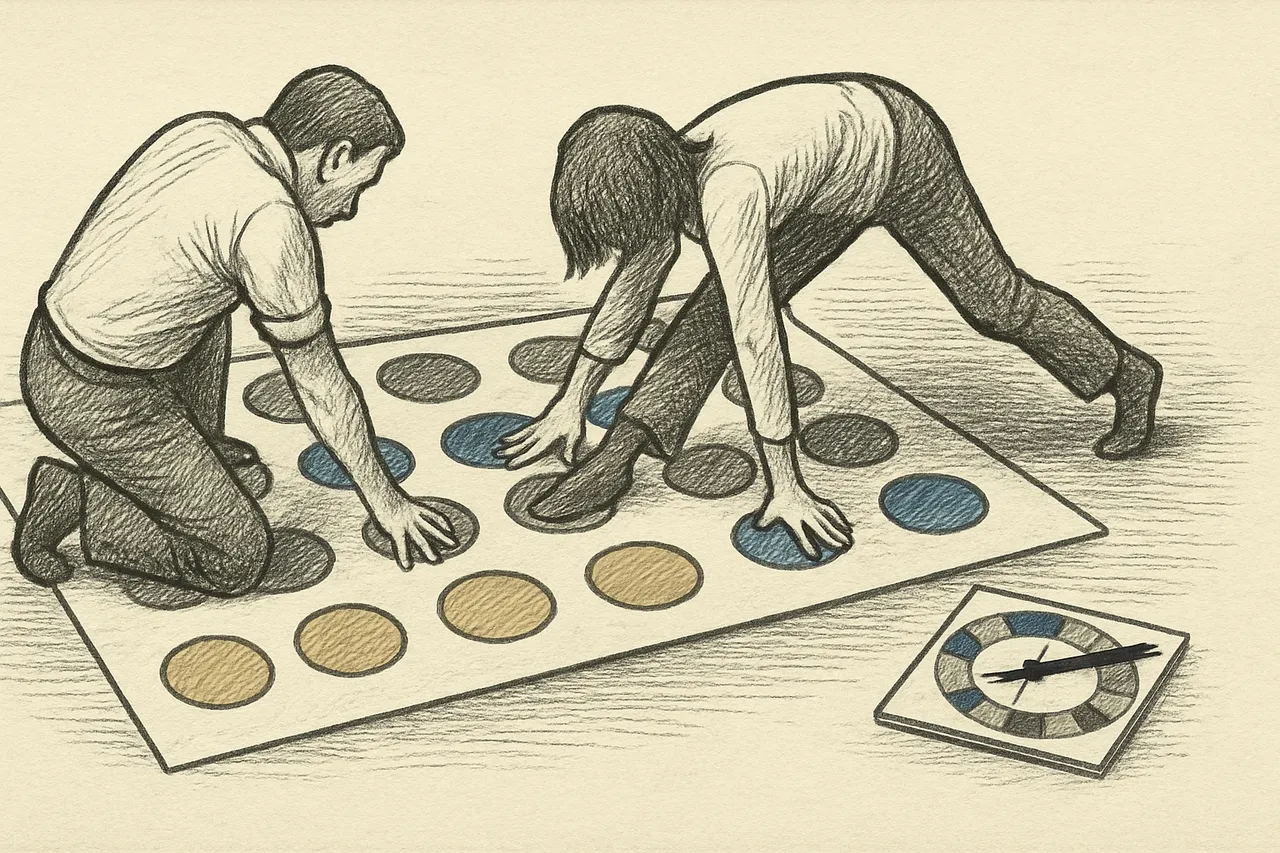
Twister's Patent Is Titled 'Apparatus for Playing a Game Wherein the Players Constitute the Game Pieces'
The patent title is the whole idea: the people are the pieces. Milton Bradley released the game in 1966, some retailers were wary of it, and critics found it a little too intimate. Then Johnny Carson played it on television with Eva Gabor, and the orders poured in.
Read the story →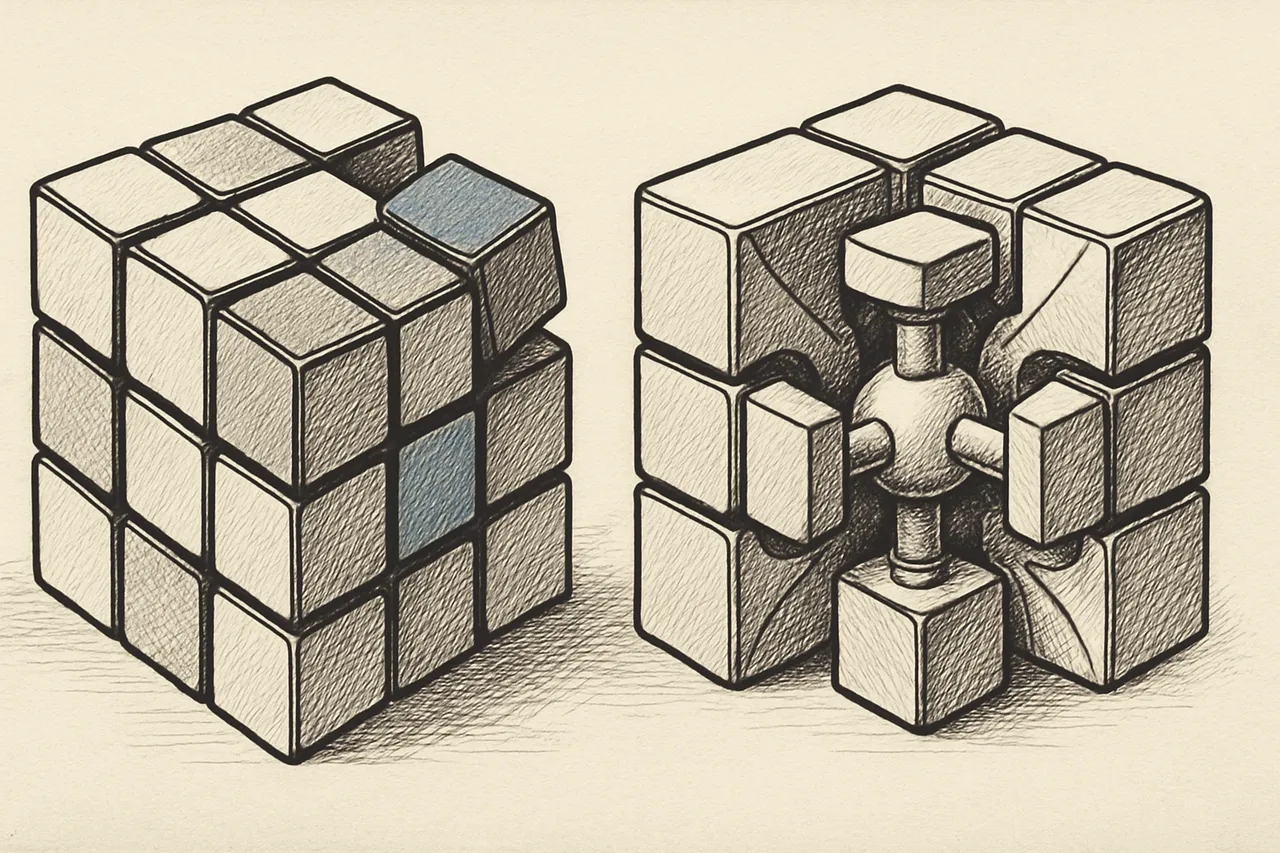
Ernő Rubik Needed About a Month to Solve His Own Cube. An American Court Later Found It Infringed an Earlier US Patent.
Rubik built the first cube in Budapest in 1974 as a way to think about three-dimensional movement. The clever part is how it holds together when most of its pieces are not attached to anything. In the United States, a chemist named Larry Nichols had patented a related puzzle in 1972, and his company sued.
Read the story →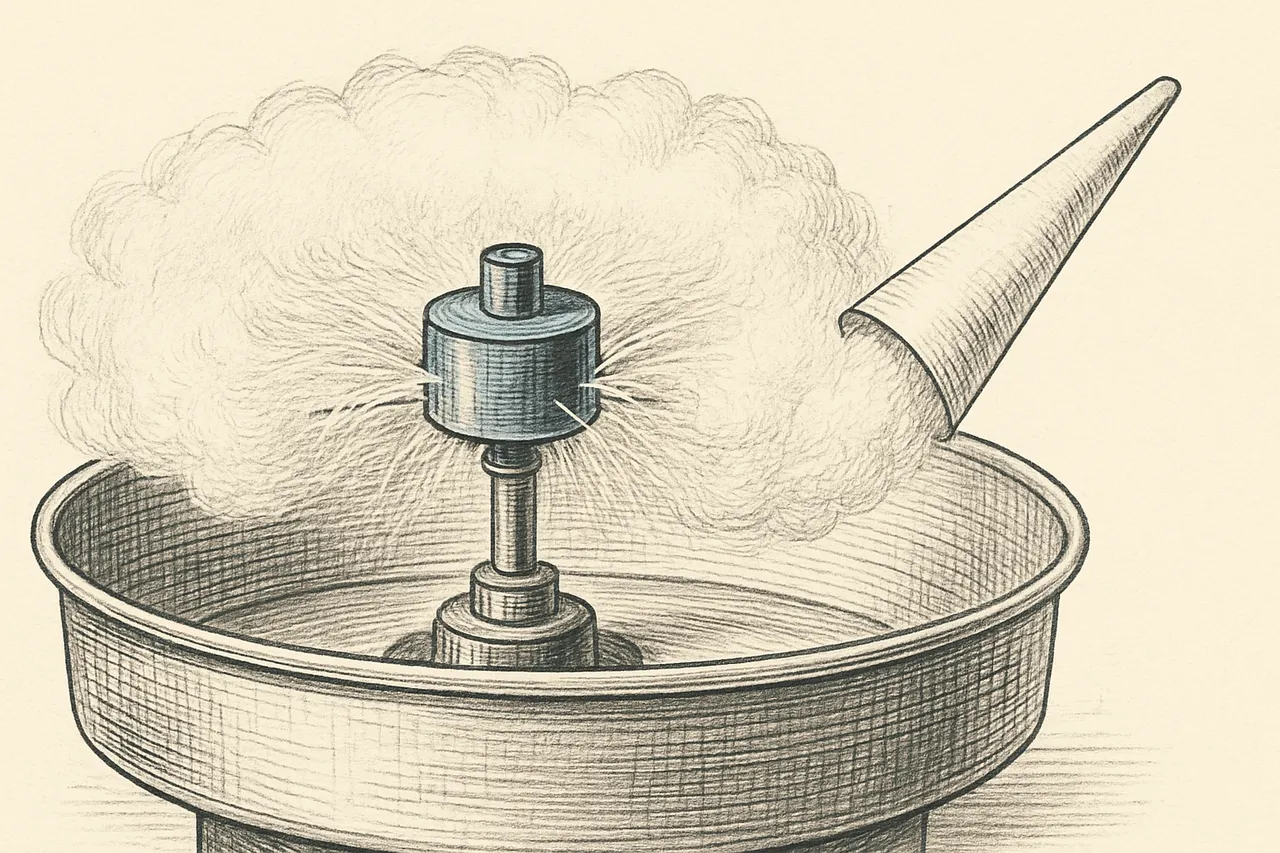
A Dentist Co-Invented the Cotton Candy Machine, and It Was Sold at the 1904 World's Fair as Fairy Floss
William Morrison was a dentist and John Wharton was a candy maker. Their machine melted sugar and flung it through tiny holes so that it cooled into threads finer than hair before it could crystallize. They filed in 1897, and at the St. Louis World's Fair it was a sensation.
Read the story →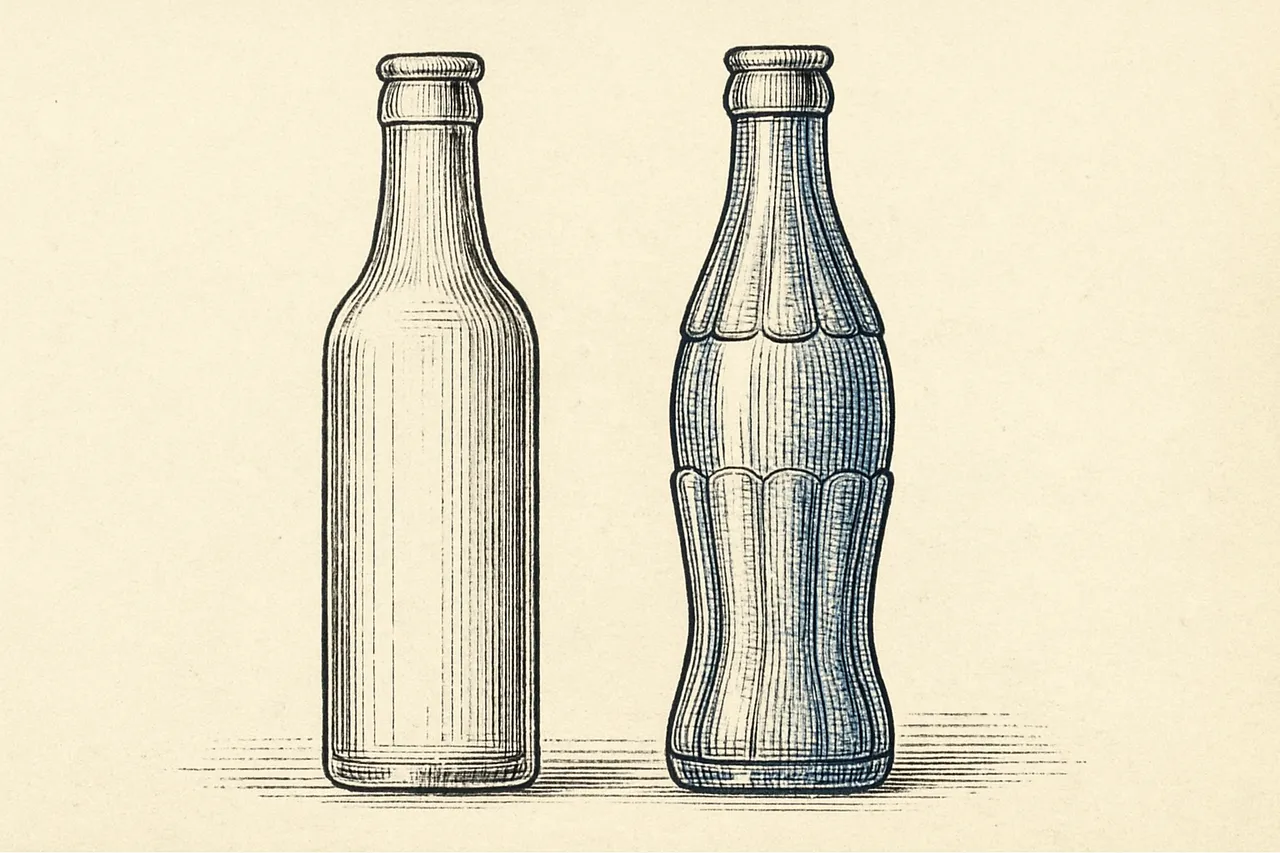
Coca-Cola Asked Glassmakers for a Bottle You Could Recognize in the Dark, or Broken on the Ground
In 1915 Coca-Cola had an imitation problem, since competitors used the same straight-sided bottles and borrowed-sounding names. It challenged glass companies to design a bottle identifiable by touch alone. The winner came from a small glassworks in Terre Haute, Indiana, and the name on the patent is not the name of the man who drew it.
Read the story →