A NASA Engineer Invented the Super Soaker While Trying to Build a Better Refrigerator
Lonnie Johnson was working on an environmentally friendly heat pump that used water instead of Freon. He hooked a prototype nozzle to a bathroom sink, fired a stream of water across the room, and thought: this would make a great water gun.
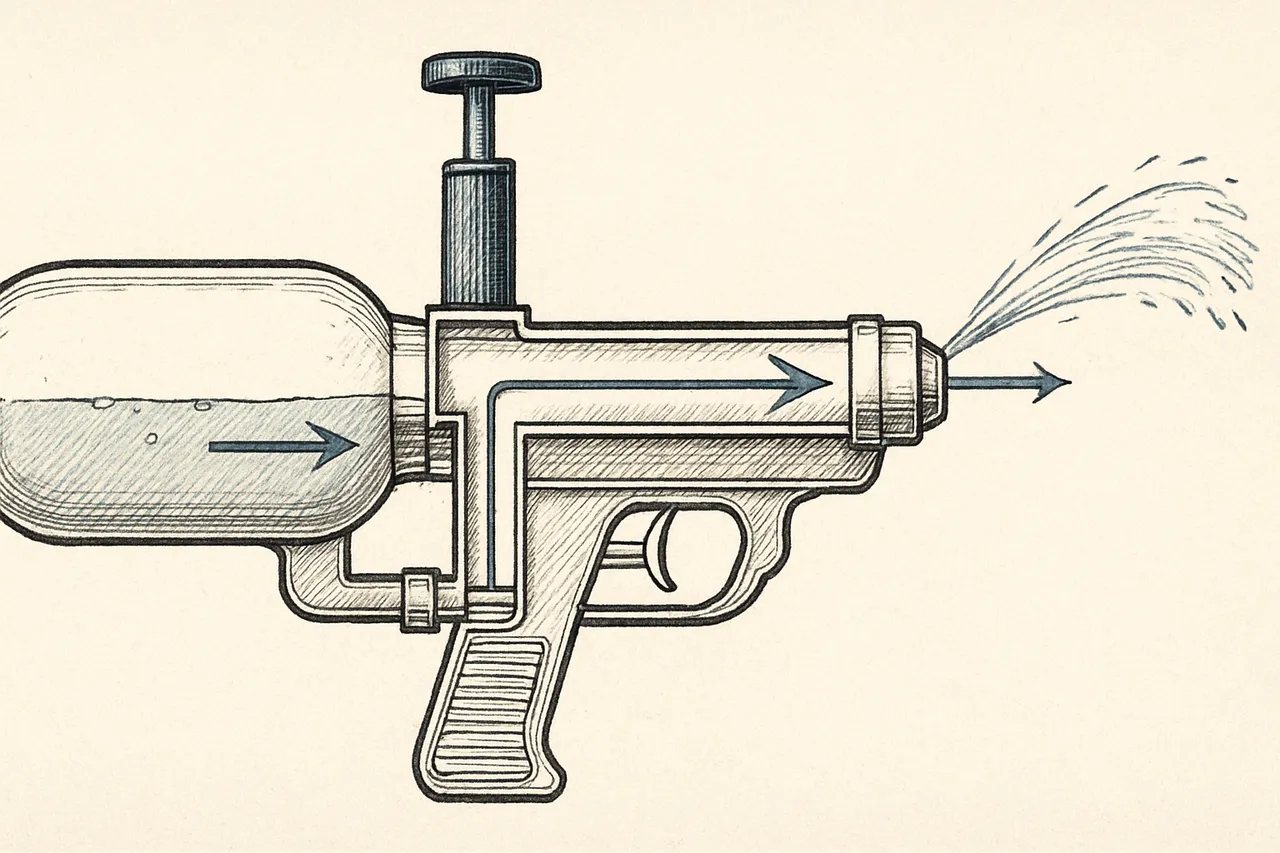
US4591071 was granted to Lonnie G. Johnson on May 27, 1986. The title is "Squirt gun." It is the patent behind the Super Soaker, and it came out of a serious piece of thermodynamics research that Johnson was doing in his spare time.
Johnson is a genuine rocket scientist. He served in the Air Force, worked on the nuclear power source for the Galileo mission to Jupiter at NASA's Jet Propulsion Laboratory, and worked on the Cassini mission to Saturn. He holds well over a hundred patents.
In 1982 he was working at home on an idea for a heat pump that would use water as its working fluid instead of chlorofluorocarbons like Freon, which were then being identified as a serious threat to the ozone layer. Testing a prototype nozzle, he attached it to his bathroom sink and let it go.
The jet of water shot across the bathroom with startling force. Johnson's reaction, by his own account many times since, was not about refrigeration. He looked at the stream and thought that it would make a fantastic water gun.
Why it works
Ordinary squirt guns of the era used a simple trigger-driven piston: each pull of the trigger pushed out one small squirt. Range was a few feet, and volume was trivial.
Johnson's design separated the pumping from the firing. The user works a hand pump to compress air inside a sealed chamber, storing energy. When the trigger opens the valve, that stored pressure drives water out continuously in a heavy, long-range stream, rather than in a single weak pulse. It is a pressurized-reservoir system, essentially the same principle as a garden sprayer, applied to a toy.
The difference in performance was not incremental. It was a different category of object.
Seven years to sell it
Having the patent did not mean having a product. Johnson spent years pitching toy companies without success, and at one point looked into manufacturing it himself, only to find the tooling costs prohibitive.
The turn came in 1989, when he demonstrated the prototype to executives at the Larami Corporation. The often-told version of the meeting is that Johnson opened a case, pumped the device, and fired a stream of water clear across the conference room — at which point the negotiation was effectively over.
Larami released it in 1990, first as the Power Drencher and then, renamed, as the Super Soaker. It was the best-selling toy in America in 1991 and has generated, by widely cited estimates, well over a billion dollars in sales. Johnson's royalties reportedly ran into the tens of millions.
What he did with the money
Johnson used the proceeds to fund his own research laboratory in Atlanta, where he has spent the decades since working on energy technology — including the Johnson Thermo-Electrochemical Converter, an attempt to convert heat directly into electricity at high efficiency, and work on solid-state and advanced batteries.
Which means the arc is unusually neat: an engineer trying to build a cleaner refrigerator accidentally invented a water gun, and used the water gun money to go back to work on clean energy.
See the original
The full text and figures of US4591071 are on patents.us.
Related stories
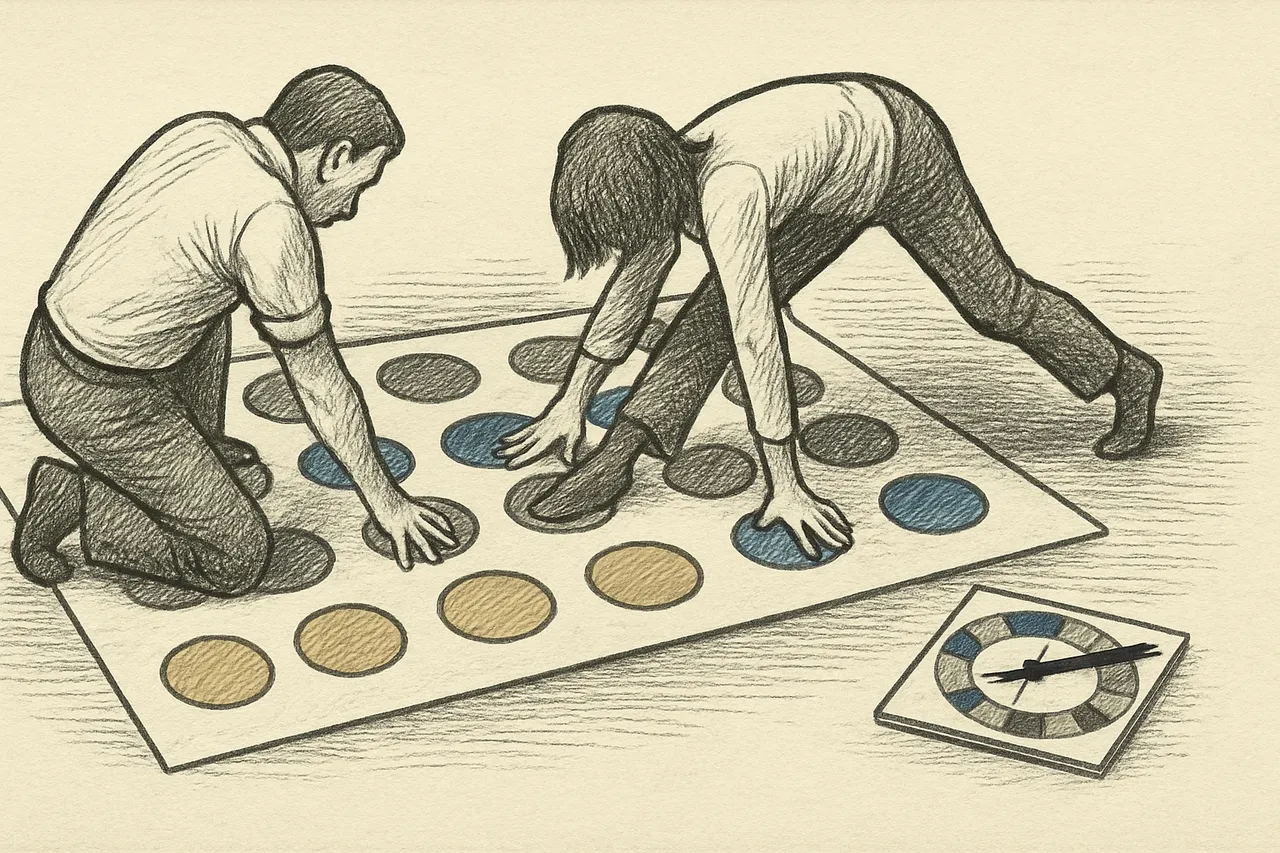
Twister's Patent Is Titled 'Apparatus for Playing a Game Wherein the Players Constitute the Game Pieces'
The patent title is the whole idea: the people are the pieces. Milton Bradley released the game in 1966, some retailers were wary of it, and critics found it a little too intimate. Then Johnny Carson played it on television with Eva Gabor, and the orders poured in.
Read the story →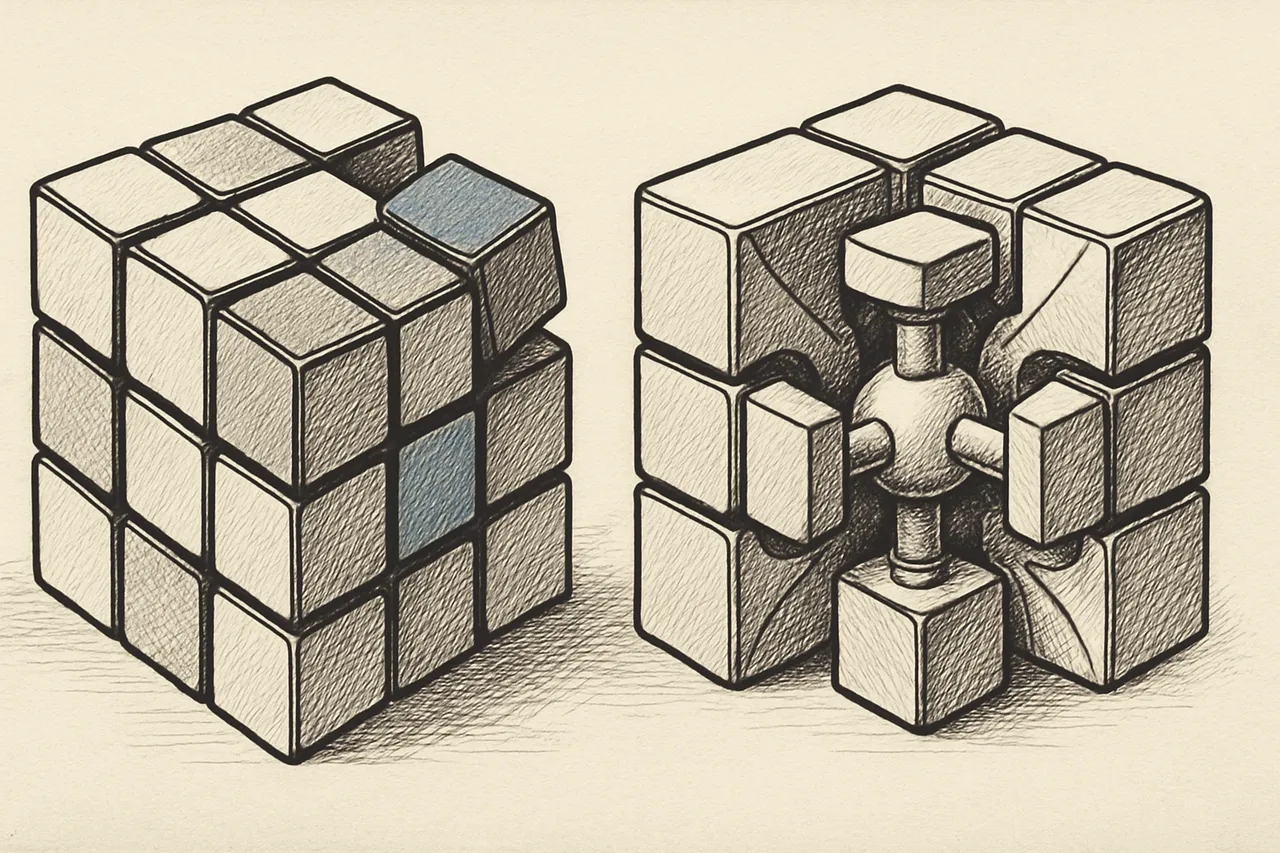
Ernő Rubik Needed About a Month to Solve His Own Cube. An American Court Later Found It Infringed an Earlier US Patent.
Rubik built the first cube in Budapest in 1974 as a way to think about three-dimensional movement. The clever part is how it holds together when most of its pieces are not attached to anything. In the United States, a chemist named Larry Nichols had patented a related puzzle in 1972, and his company sued.
Read the story →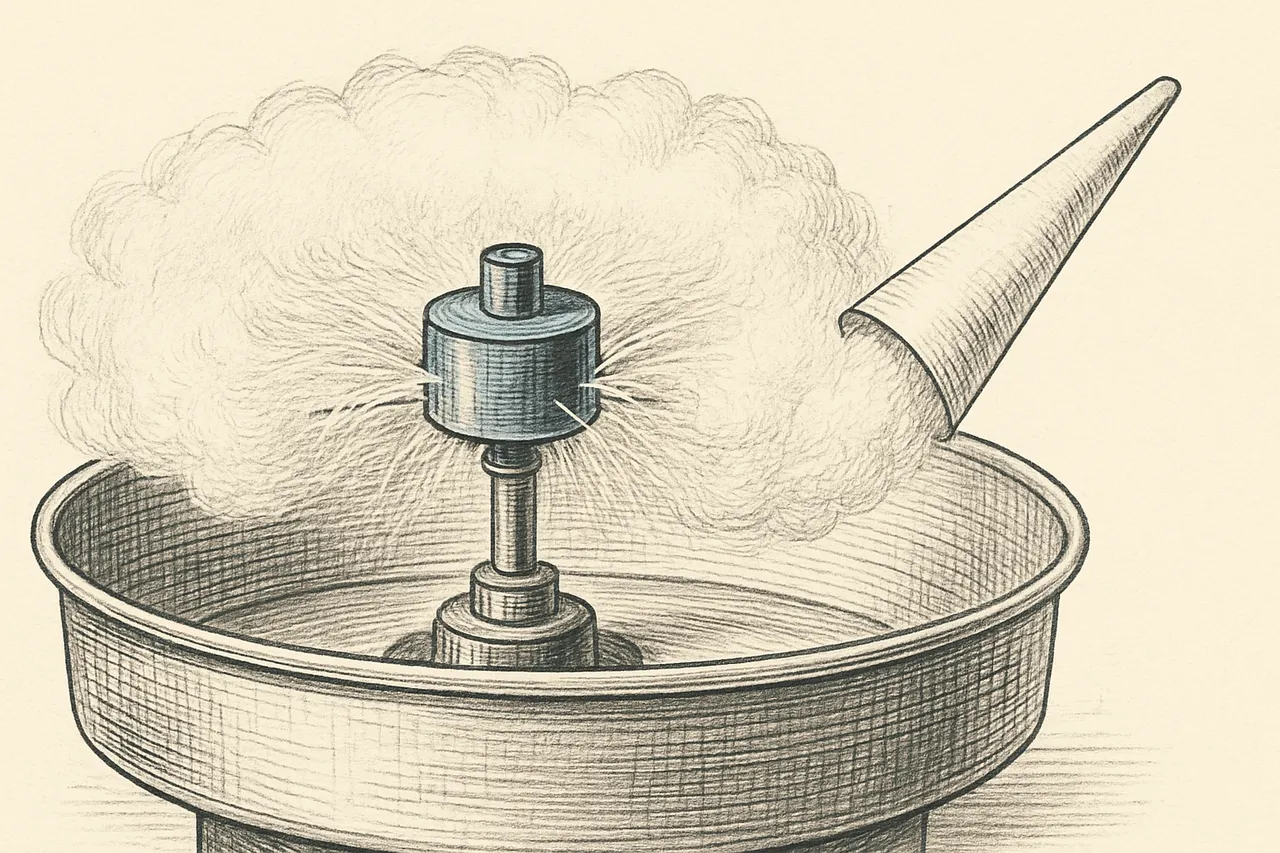
A Dentist Co-Invented the Cotton Candy Machine, and It Was Sold at the 1904 World's Fair as Fairy Floss
William Morrison was a dentist and John Wharton was a candy maker. Their machine melted sugar and flung it through tiny holes so that it cooled into threads finer than hair before it could crystallize. They filed in 1897, and at the St. Louis World's Fair it was a sensation.
Read the story →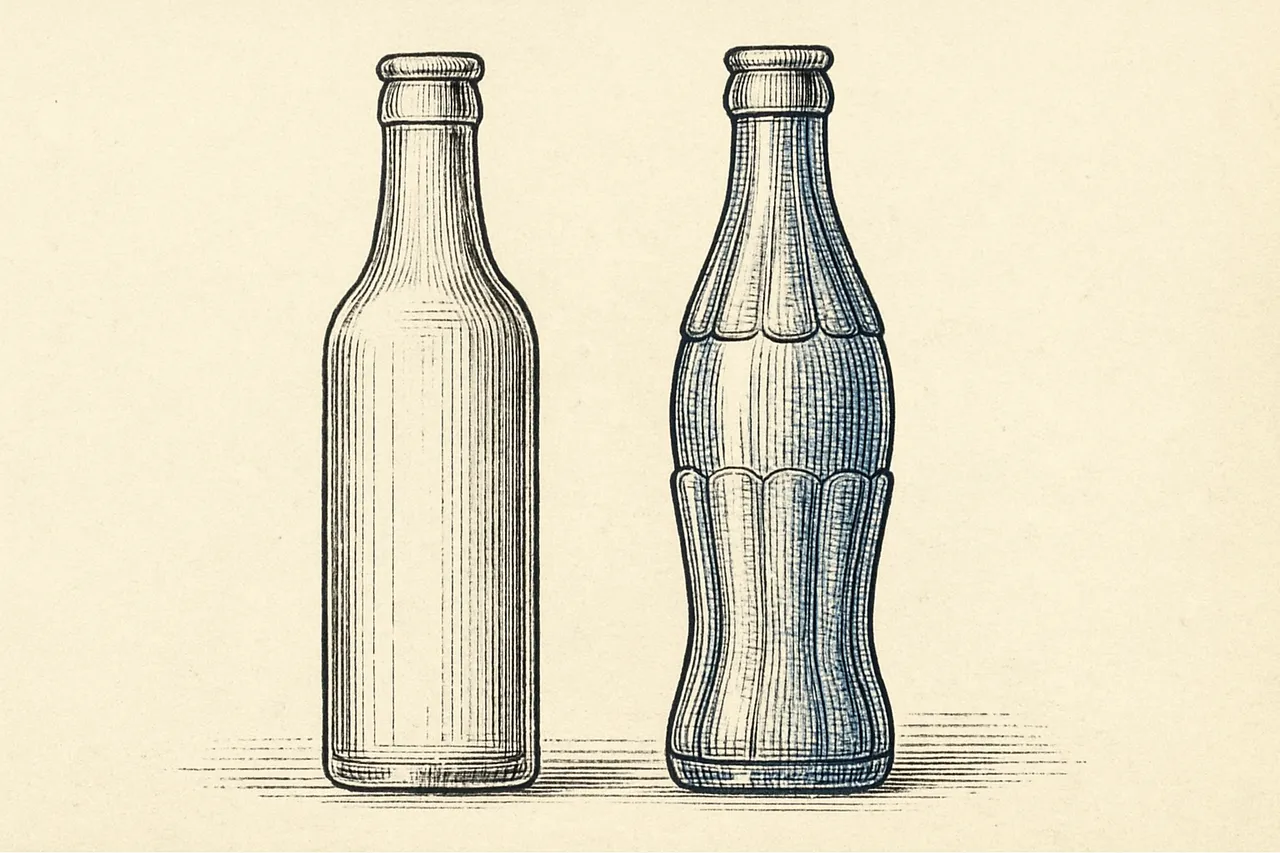
Coca-Cola Asked Glassmakers for a Bottle You Could Recognize in the Dark, or Broken on the Ground
In 1915 Coca-Cola had an imitation problem, since competitors used the same straight-sided bottles and borrowed-sounding names. It challenged glass companies to design a bottle identifiable by touch alone. The winner came from a small glassworks in Terre Haute, Indiana, and the name on the patent is not the name of the man who drew it.
Read the story →