The US Government Banned Sliced Bread in 1943. The Public Revolted.
Bakers told Otto Rohwedder that pre-sliced bread would go stale and nobody would buy it. It took him sixteen years and a fire that destroyed his prototype. Fifteen years after that, Washington outlawed it — and had to back down in under two months.
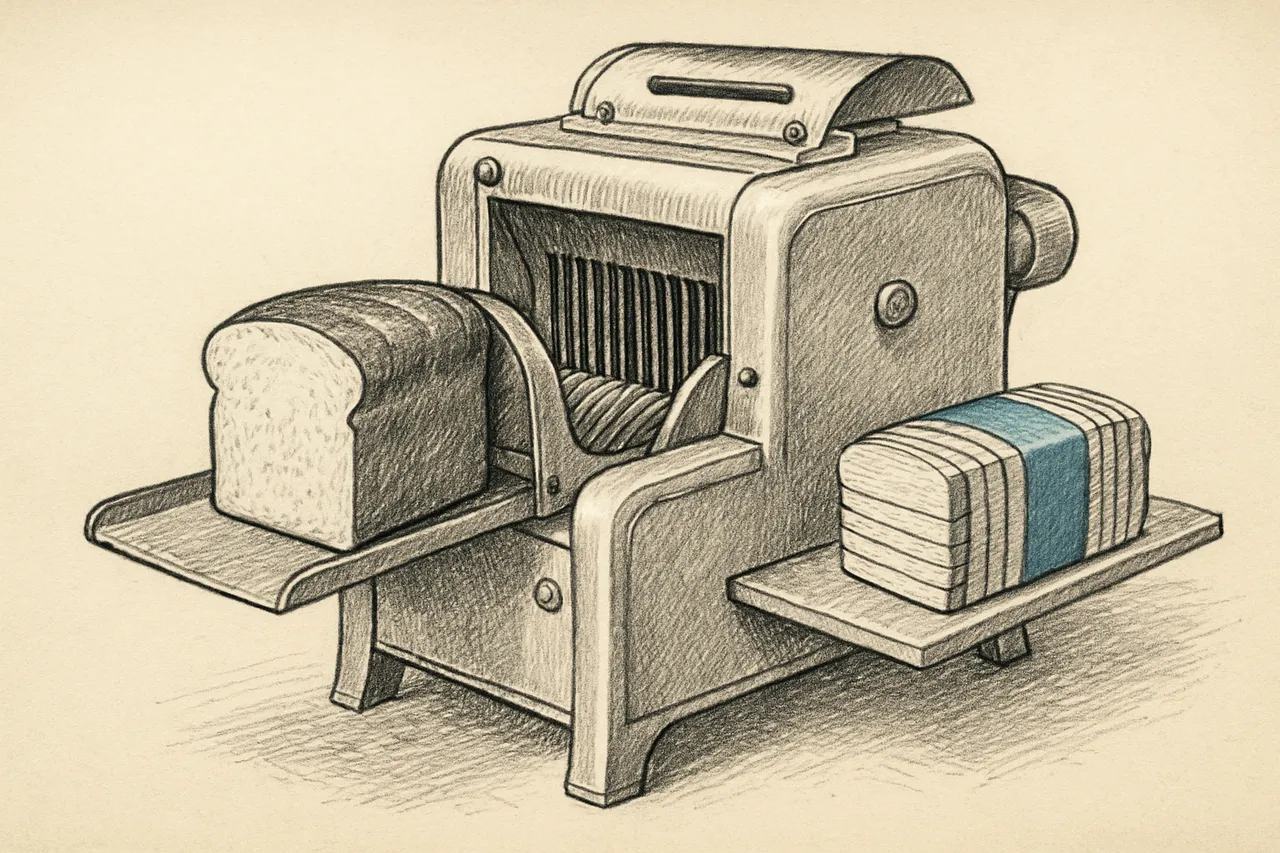
US1867377 was granted to Otto Frederick Rohwedder for his machine that sliced an entire loaf of bread in a single operation and wrapped it to hold the slices together. The first commercial machine went to work in Chillicothe, Missouri, in July 1928, at the Chillicothe Baking Company, and the resulting product was advertised as "the greatest forward step in the baking industry since bread was wrapped."
That advertising line is the likely origin of the phrase people still use — the greatest thing since sliced bread — for any obviously good idea. Which is ironic, because for sixteen years almost everyone told Rohwedder his idea was terrible.
Sixteen years and a fire
Rohwedder was a jeweler in Missouri who sold his three jewelry stores to fund the project. He began work around 1912. Bakers he consulted were uniformly discouraging, and their objection was legitimate: a sliced loaf goes stale far faster than a whole one, because you have exposed an enormous amount of surface area to the air. It would also, they pointed out, fall apart on the shelf. Nobody would buy a bag of dried-out crumbs.
Rohwedder's early answer — holding the slices together with hat pins — did not work; the pins fell out. Then in 1917 a fire at the factory in Monmouth, Illinois, destroyed his prototype machine and his blueprints together, and he had to start over. Ill health slowed him further.
The eventual solution was not a better slicer but a better wrapper: slice the loaf and immediately encase it, so the wrapping holds the slices in shape and slows the staling. The machine that appeared in 1928 did both jobs in one pass.
Sales at the Chillicothe bakery reportedly rose sharply within weeks. Within five years, the large majority of bread sold in the United States was pre-sliced. It also, not incidentally, drove the popularity of the automatic pop-up toaster, which had been invented a few years earlier and suddenly had uniform slices to work with.
The ban
On January 18, 1943, in the middle of the Second World War, the United States banned the sale of pre-sliced bread.
The reasoning was wartime conservation, and the details are still debated: the stated concern involved the heavier waxed paper that sliced loaves required, along with arguments about conserving steel used in the slicing machines and about holding down bread prices. Claude Wickard, head of the War Foods Administration, signed the order.
The public response was immediate and loud. Newspapers ran indignant letters. One frequently quoted complaint, published in the New York Times, came from a homemaker describing the sheer daily labor of hand-slicing loaves for a family's sandwiches and toast. The ban was widely mocked, widely ignored, and difficult to enforce.
It was rescinded on March 8, 1943 — less than two months after it took effect. Wickard acknowledged that the savings had not materialized as expected.
It remains one of the clearest demonstrations in American history of how quickly a convenience becomes a necessity. Sliced bread had existed for fifteen years. Taking it away for seven weeks was politically intolerable.
See the original
The full text and figures of US1867377 are on patents.us.
Related stories
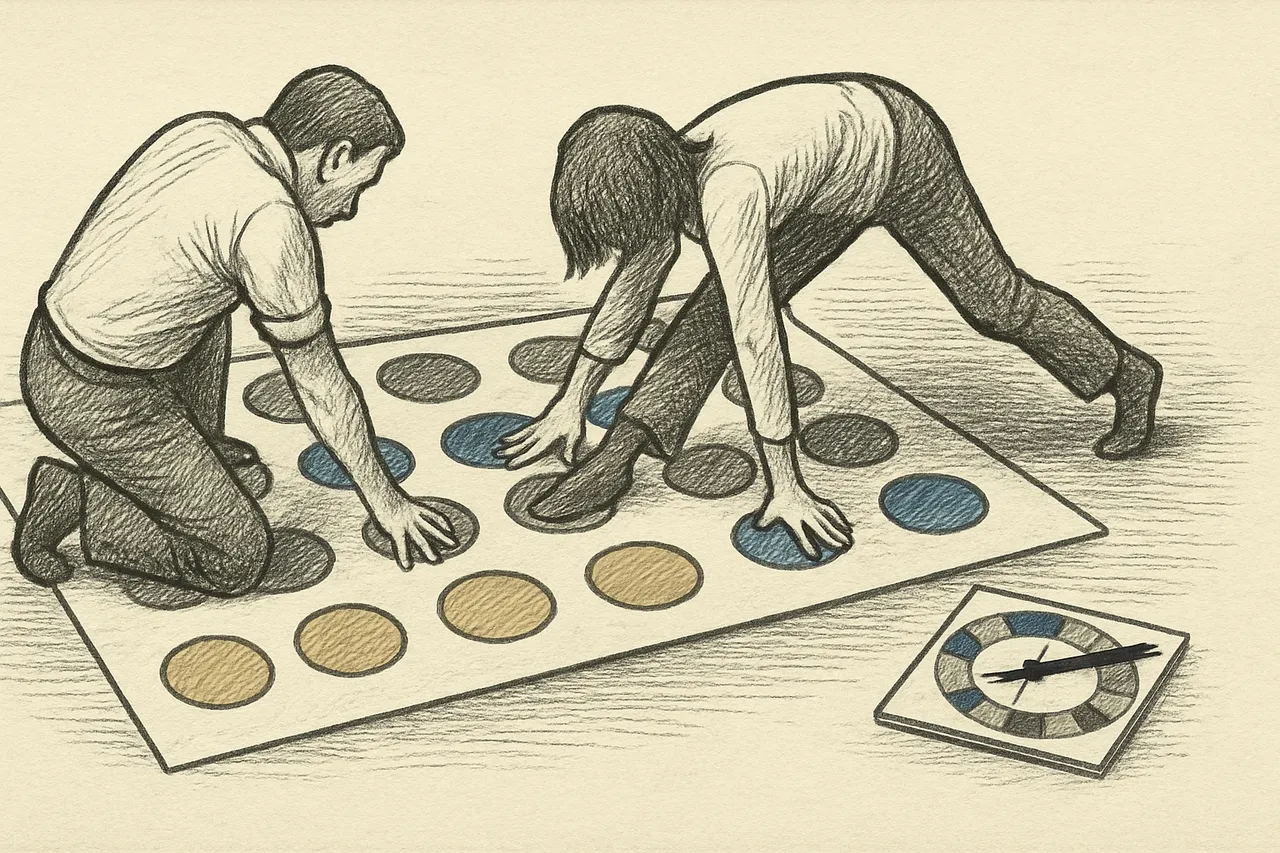
Twister's Patent Is Titled 'Apparatus for Playing a Game Wherein the Players Constitute the Game Pieces'
The patent title is the whole idea: the people are the pieces. Milton Bradley released the game in 1966, some retailers were wary of it, and critics found it a little too intimate. Then Johnny Carson played it on television with Eva Gabor, and the orders poured in.
Read the story →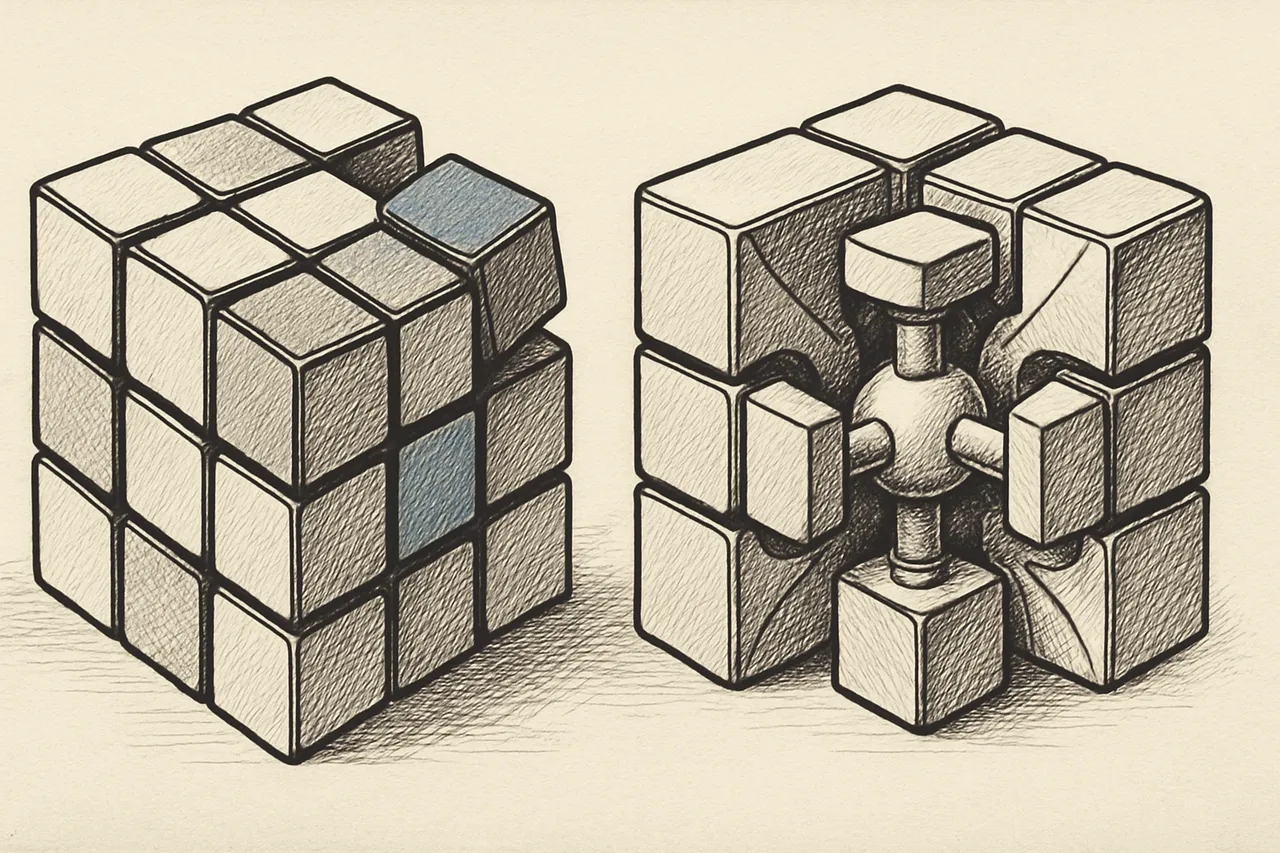
Ernő Rubik Needed About a Month to Solve His Own Cube. An American Court Later Found It Infringed an Earlier US Patent.
Rubik built the first cube in Budapest in 1974 as a way to think about three-dimensional movement. The clever part is how it holds together when most of its pieces are not attached to anything. In the United States, a chemist named Larry Nichols had patented a related puzzle in 1972, and his company sued.
Read the story →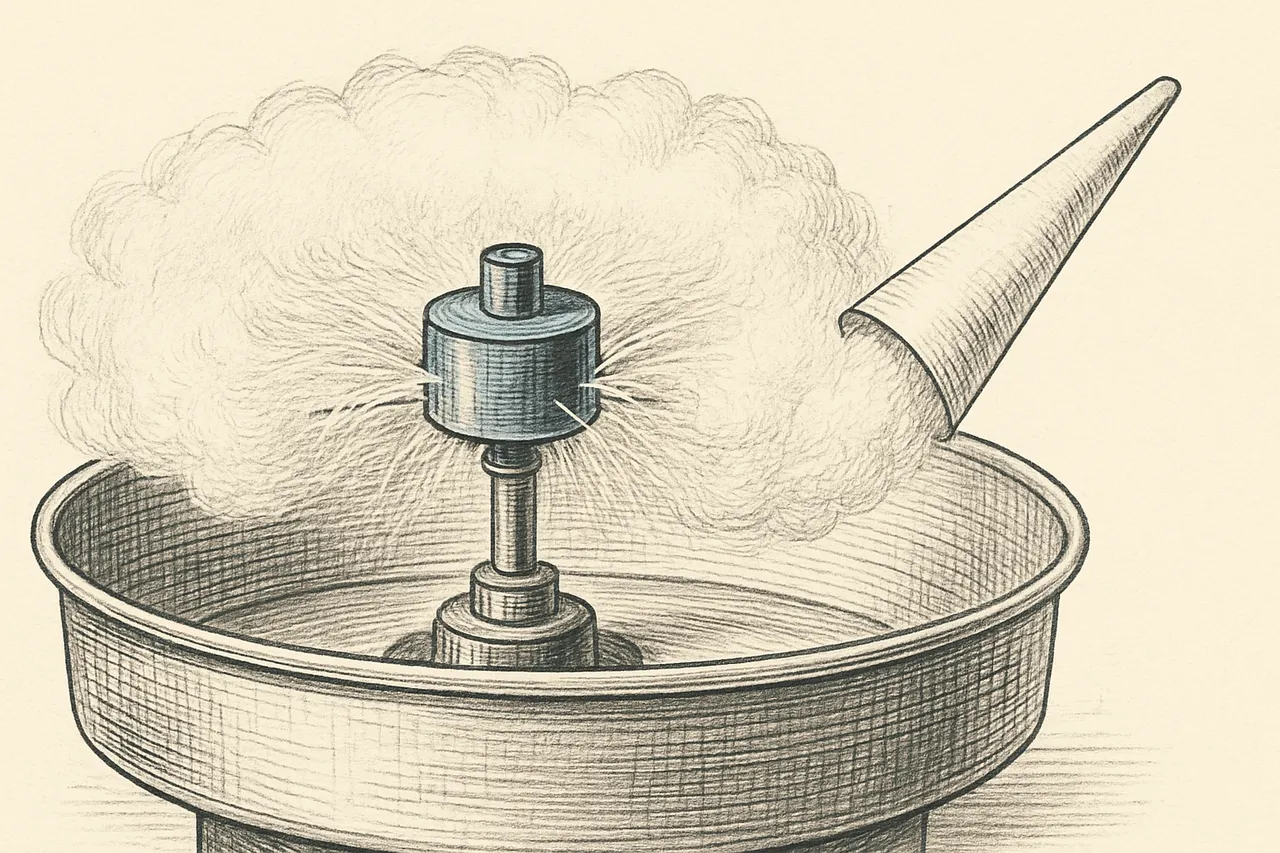
A Dentist Co-Invented the Cotton Candy Machine, and It Was Sold at the 1904 World's Fair as Fairy Floss
William Morrison was a dentist and John Wharton was a candy maker. Their machine melted sugar and flung it through tiny holes so that it cooled into threads finer than hair before it could crystallize. They filed in 1897, and at the St. Louis World's Fair it was a sensation.
Read the story →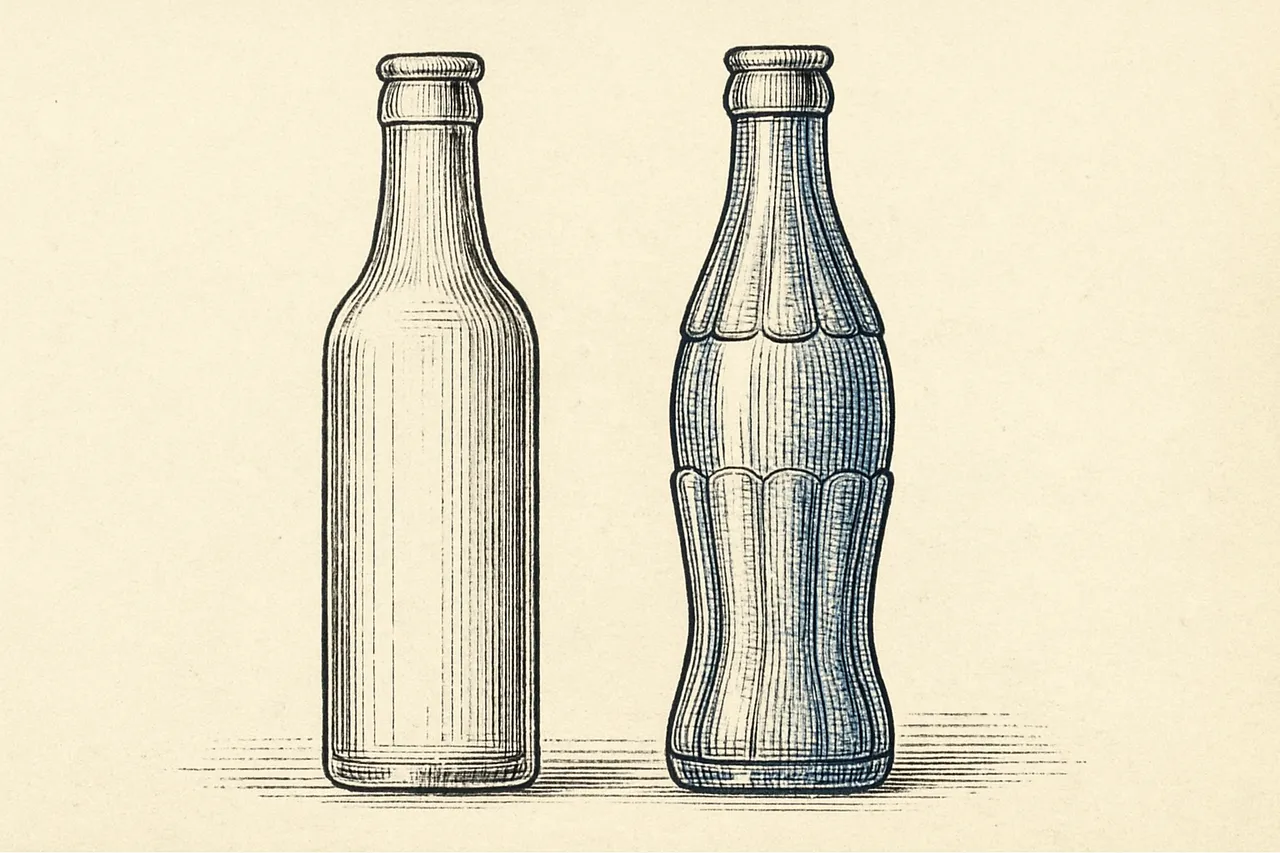
Coca-Cola Asked Glassmakers for a Bottle You Could Recognize in the Dark, or Broken on the Ground
In 1915 Coca-Cola had an imitation problem, since competitors used the same straight-sided bottles and borrowed-sounding names. It challenged glass companies to design a bottle identifiable by touch alone. The winner came from a small glassworks in Terre Haute, Indiana, and the name on the patent is not the name of the man who drew it.
Read the story →