The Safety Pin Was Invented in Three Hours to Pay Off a $15 Debt
Walter Hunt owed a friend fifteen dollars. He sat down with a piece of brass wire, twisted it into a coil with a clasp that covered the point, and had the safety pin in about three hours. He sold the rights for four hundred dollars and walked away.
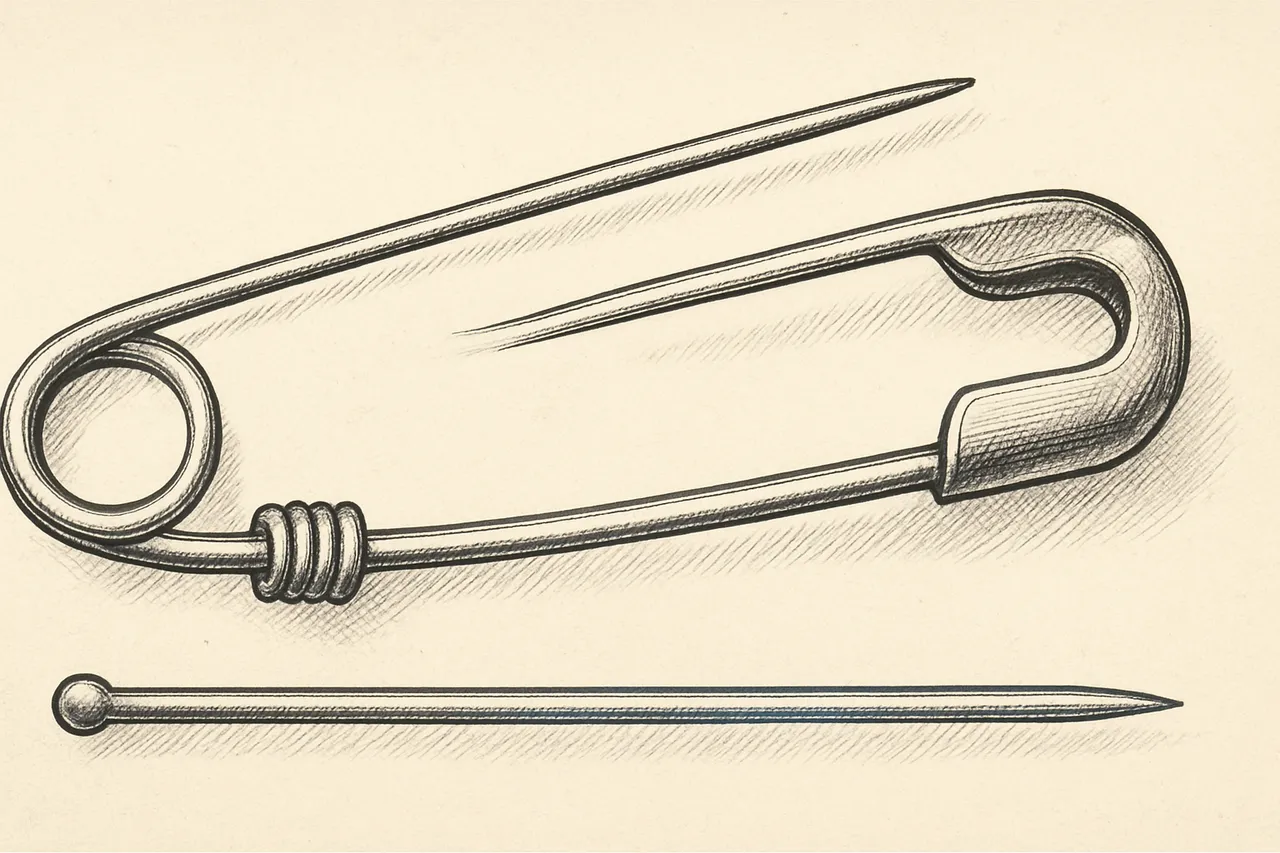
US6281 was granted to Walter Hunt on April 10, 1849. The title is "Improvement in the Make of Dress-Pins." Hunt called it the dress pin. Everyone since has called it the safety pin, and it has barely changed in the 175 years since.
The design solves a problem that had bedeviled ordinary pins forever. A straight pin fastens things, but it also sticks people — dropped in a rug, worn in a garment, handed to a child. Hunt's pin took a single length of wire and did three things with it at once: he coiled the middle into a spring, which gave the pin its tension and made it self-opening; he sharpened one end; and he bent the other end into a clasp that captured and covered the point when closed. The spring holds it shut. The clasp makes it safe. One piece of wire, no assembly.
Three hours
The circumstances of the invention are the part people remember, and they appear to be substantially true. Hunt owed a draftsman friend fifteen dollars. Sitting in his shop, twisting a piece of brass wire while thinking about how to raise the money, he worked out the coil-and-clasp design in a matter of hours — most accounts say about three.
He patented it, and then he sold the rights outright, for four hundred dollars, to the firm that had lent him the money. He paid his debt, kept the balance, and moved on to the next thing.
The safety pin went on to be manufactured in the billions. It is one of the most universally distributed manufactured objects on Earth, found in every sewing kit, every laundry room, every hospital, every diaper bag of the pre-adhesive era. The four hundred dollars was, by any measure ever applied to it, one of the worst trades in the history of American invention.
The man who kept walking away
What makes Hunt more than a cautionary anecdote is that the safety pin was not his only near-miss. He was a genuinely prolific inventor with a persistent habit of solving a problem brilliantly and then failing to pursue it.
Most strikingly, around 1833 — more than a decade before Elias Howe and Isaac Singer — Hunt built a working lockstitch sewing machine, using an eye-pointed needle and a shuttle, the essential mechanism of every sewing machine since. He did not patent it. The usual explanation, given by his own family, is that he worried the machine would put seamstresses out of work. By the time he attempted to claim priority in the 1850s, Howe's patent was established and the courts were unmoved.
He also worked on a repeating rifle whose design fed into what became the Winchester, an ice plow, a fountain pen, a streetcar bell, and a knife sharpener. He held dozens of patents and died in 1859 without ever having become wealthy from any of them.
The safety pin holding your fabric together was made by a man who invented the sewing machine and let it go, and who sold the pin itself for four hundred dollars because he needed fifteen.
See the original
The full text and figures of US6281 are on patents.us.
Related stories
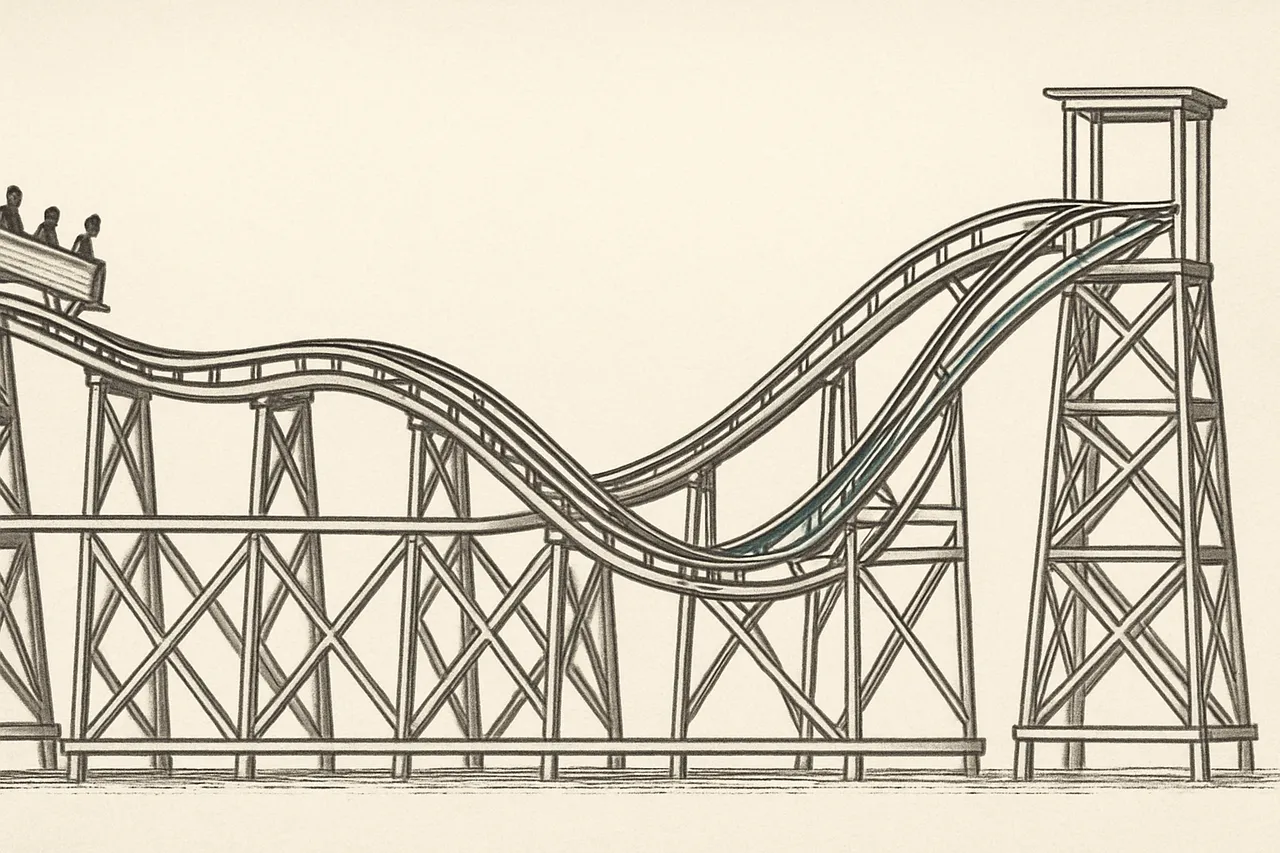
The First American Roller Coaster Ran at Six Miles an Hour, and Its Inventor Built It to Lure People Away From Saloons
LaMarcus Thompson's Switchback Railway opened at Coney Island in 1884. Riders sat sideways on a bench, coasted down a gentle undulating track, then got out while attendants pushed the car over a switch so they could coast back the other way. It cost a nickel and it made a fortune.
Read the story →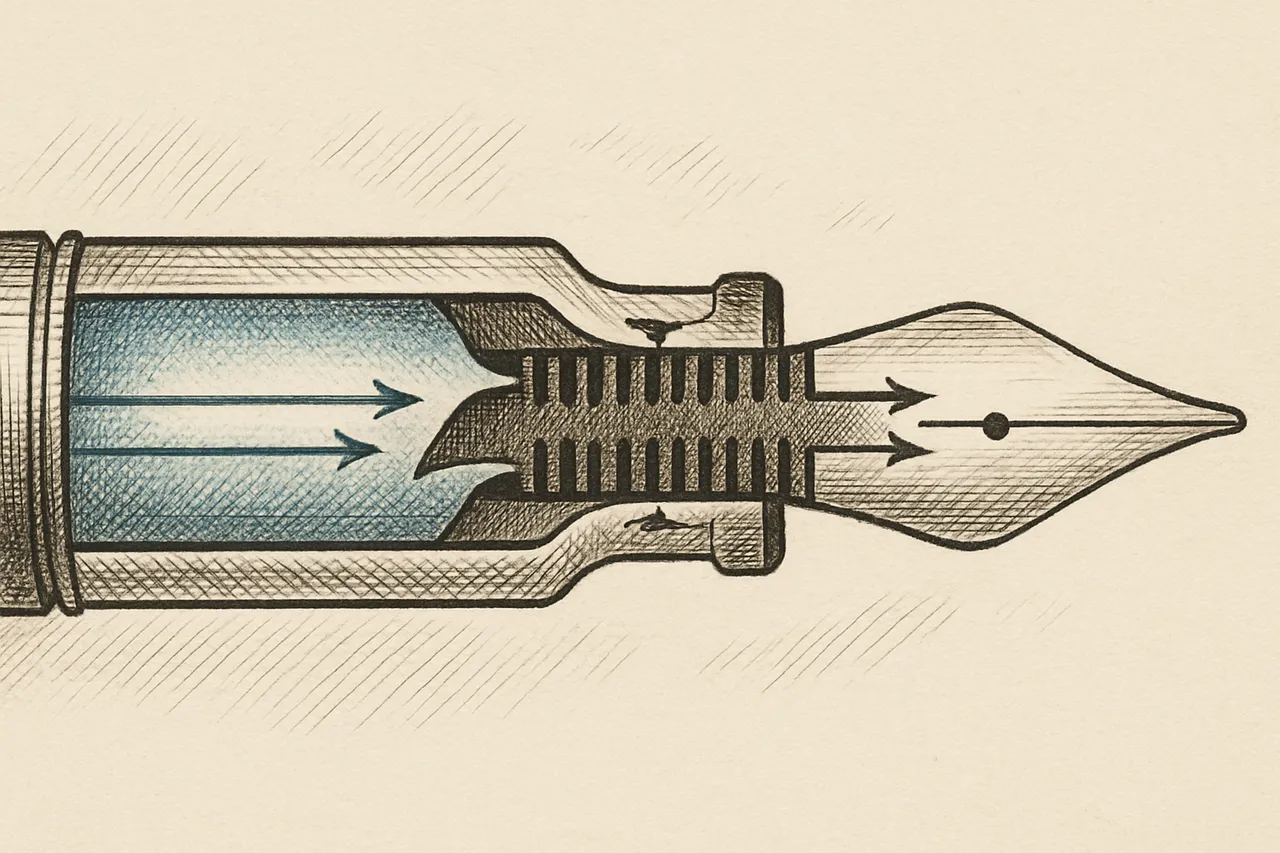
Lewis Waterman Did Not Invent the Fountain Pen. He Invented the Small Part That Stopped It Blotting.
Fountain pens existed for decades before 1884 and most of them were awful, flooding the page one moment and running dry the next. Waterman's patent fixes the reason why, and the fix is a set of narrow grooves cut into a piece of hard rubber.
Read the story →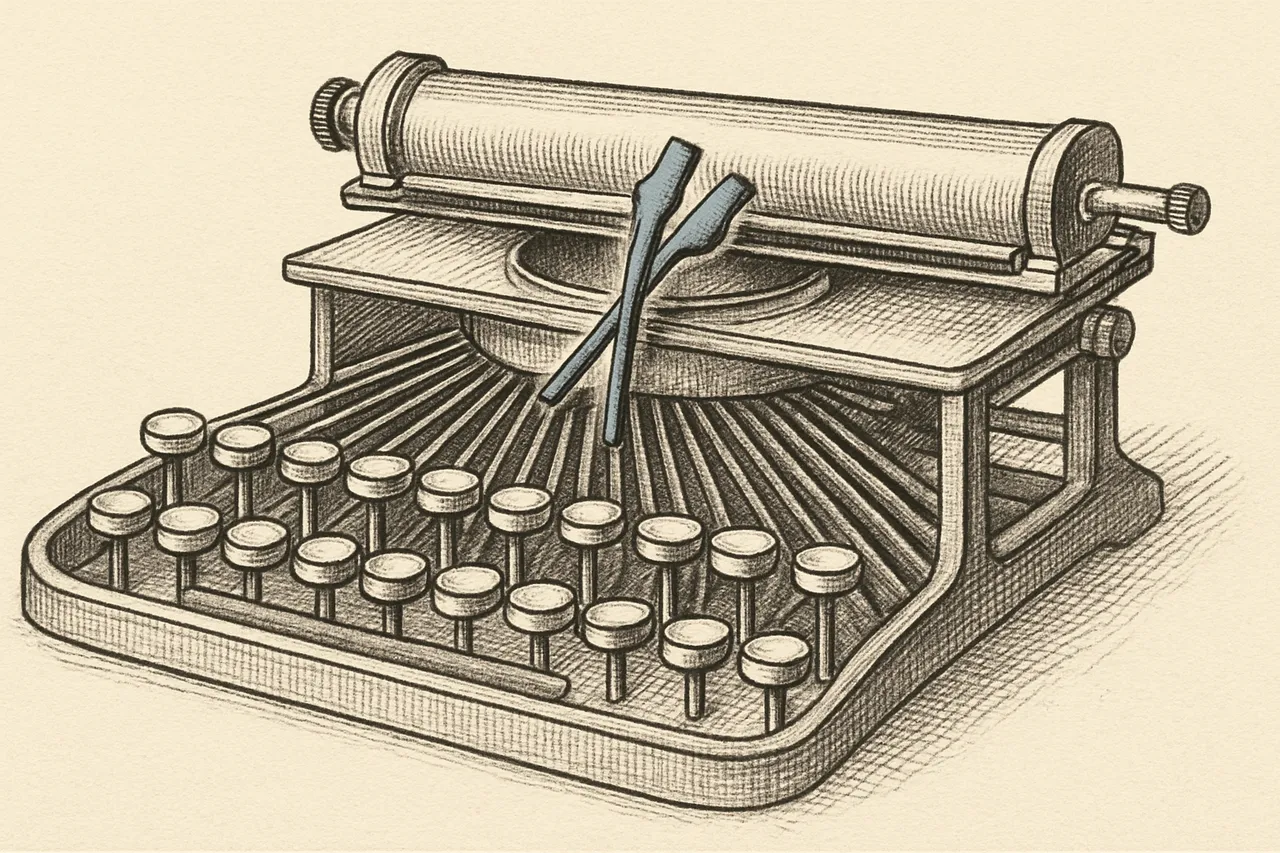
The 1868 Patent Behind the First Successful Typewriter Had Its Keys in Alphabetical Order. QWERTY Came Later, and Nobody Fully Agrees Why.
Christopher Latham Sholes and two partners patented a typewriter in Milwaukee in 1868 with keys arranged like a piano, roughly in alphabetical order. Over the next several years the letters were shuffled into QWERTY. The popular explanation for that is a distortion of a better one.
Read the story →
Frank Zamboni Spent Years Building a Machine So His Ice Rink Didn't Need a Crew of Men With Scrapers
Frank Zamboni ran an ice rink in Southern California, and resurfacing the ice by hand took several workers more than an hour. His machine did the whole job in a single pass. Its most important trick is the one people least expect: it lays down warm water, not cold.
Read the story →