The Revolving Door Was Patented as a Storm Door. It Was Built to Stop Air, Not Move People.
Theophilus Van Kannel's 1888 patent is titled 'Storm-Door Structure,' and that title explains the whole design. The revolving door exists because a hinged door on a tall building leaks heat every time it opens, and Van Kannel worked out a door that is never actually open.
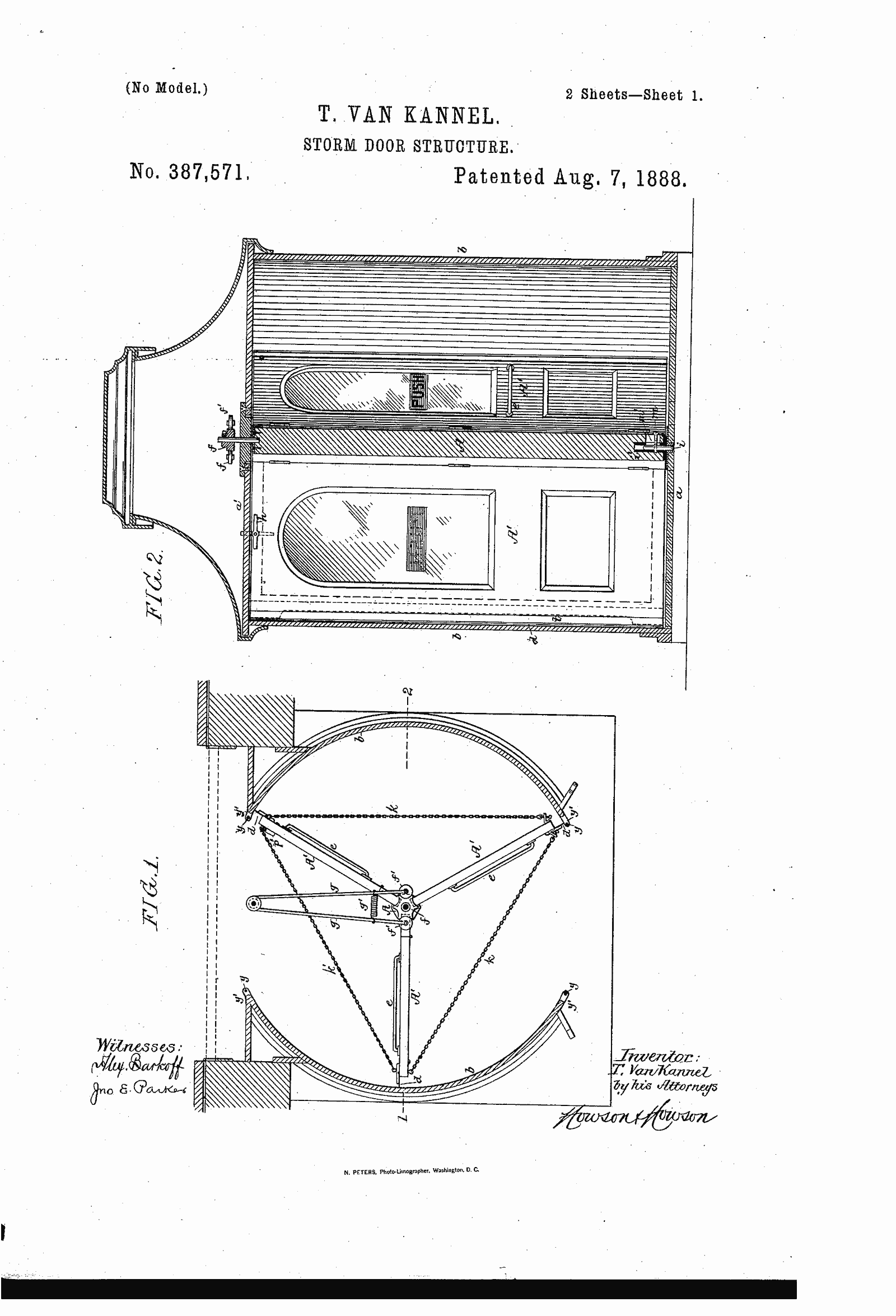
US387571 was granted to Theophilus Van Kannel of Philadelphia, Pennsylvania, on August 7, 1888. The Patent Office listed it under the title Storm-Door Structure, which is a far better description of the invention than the name it ended up with.
The revolving door was not designed to move people efficiently. That turned out to be a side effect. It was designed to stop air.
The problem with a hinged door
A hinged door on a tall building has a specific and expensive failure mode. When it opens, the inside of the building is briefly connected to the outside, and in winter the pressure difference between heated interior air and cold outdoor air drives a draft straight through the gap. On a large building this is not a matter of comfort. It is continuous heat loss, every time anyone walks in.
It gets worse the taller the building, because warm air rising through a tall interior pulls cold air in at street level to replace it. In a period when American cities were building upward for the first time, the entrance had stopped being a detail and become an engineering problem.
A hinged street door has a second flaw. It has to be pushed open against the wind by every person who uses it, and a strong gust can either fight you or tear the door out of your hand.
What the patent actually solves
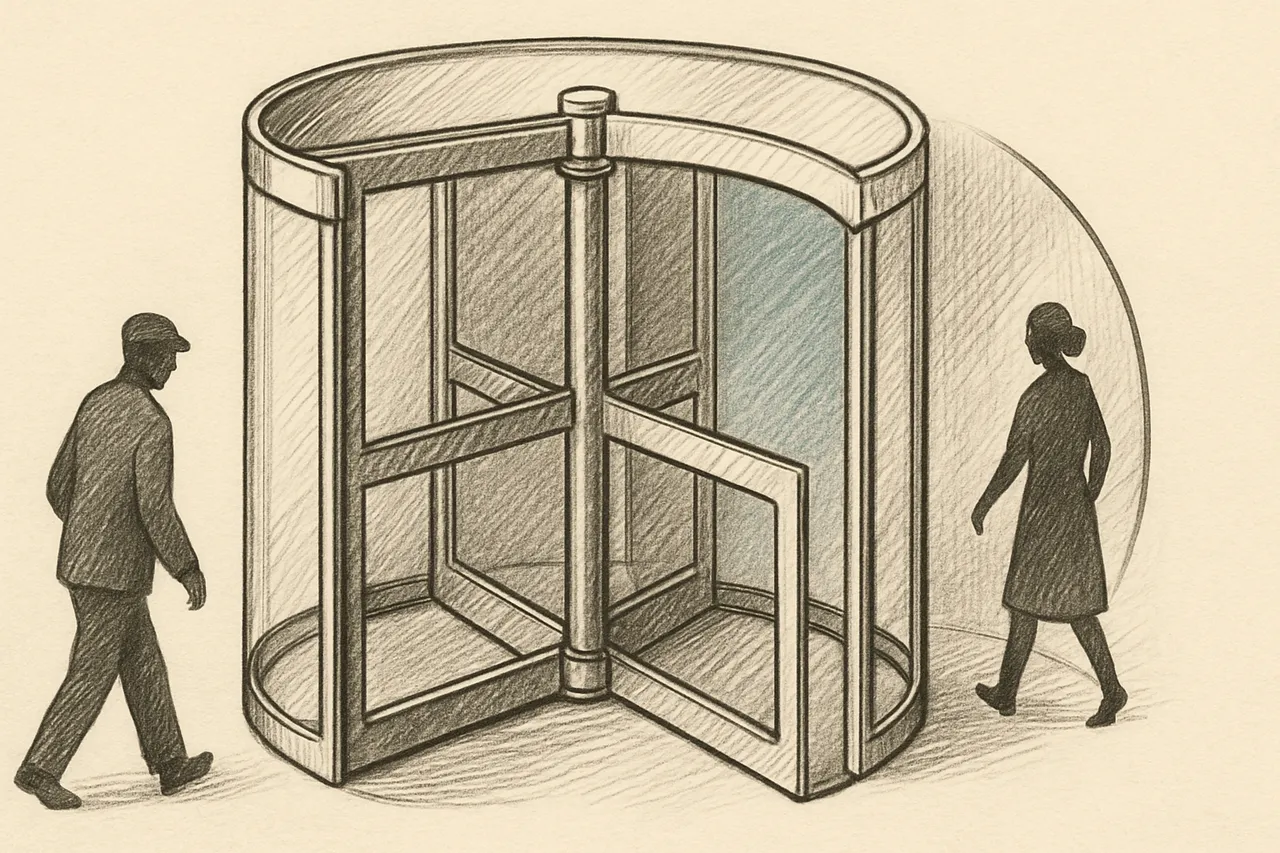
Van Kannel's specification describes a set of flat wings radiating from a central vertical shaft, turning inside a curved enclosure. The geometry is the entire invention.
Because the wings are spaced around the shaft and the enclosure wraps around them, at least two wings are in contact with the enclosure at any moment. There is never a point in the rotation where a straight open channel exists between inside and outside. The door is never open. It passes people through while remaining, in the only terms that matter to a heating bill, closed the whole time.
The patent covers weather strips along the wing edges to seal that contact. That detail is what separates a clever idea from a product that works.
Three further benefits fall out of the same geometry without being designed in. Wind cannot blow the door open or slam it, because pressure on one wing is balanced by pressure on another. Street noise and dust are cut for the same reason the draft is. And the door moves people in both directions at once continuously, which a hinged door cannot do without someone waiting.
A note on the legend
Van Kannel is very widely described as having invented the revolving door because he disliked the etiquette of hinged ones, the small negotiation over who holds the door and who walks through first.
The story is repeated nearly everywhere and it is not supported by the patent or by any contemporary record we can point to. What the documented history shows is that Van Kannel was a working Philadelphia inventor who held other patents and who received the Franklin Institute's John Scott Medal for this one.
The anecdote is worth flagging mainly as an example of a habit this archive runs into constantly. Inventions attract origin myths, and the myths are almost always about personality, because a story about a man's temperament travels better than a story about pressure differentials. The verifiable version is that a well-designed door saved a building a great deal of coal.
The part nobody planned for
Revolving doors became standard in tall buildings for exactly the reason Van Kannel identified, and modern energy studies still measure real heating and cooling savings when people use the revolving door instead of the hinged one next to it.
They also developed a reputation as a hazard in a fire. The Cocoanut Grove nightclub fire in Boston in 1942 killed 492 people, and the revolving door at the main entrance jammed under the crush of people trying to get out. Building codes changed afterward. Revolving doors in the United States are now generally required to have conventional hinged doors beside them, and most modern units are built so the wings fold flat under pressure.
The invention that worked by never being fully open had to be redesigned so that, in an emergency, it could be.
See the original
The full text and figures of US387571 are on Google Patents.
Related stories
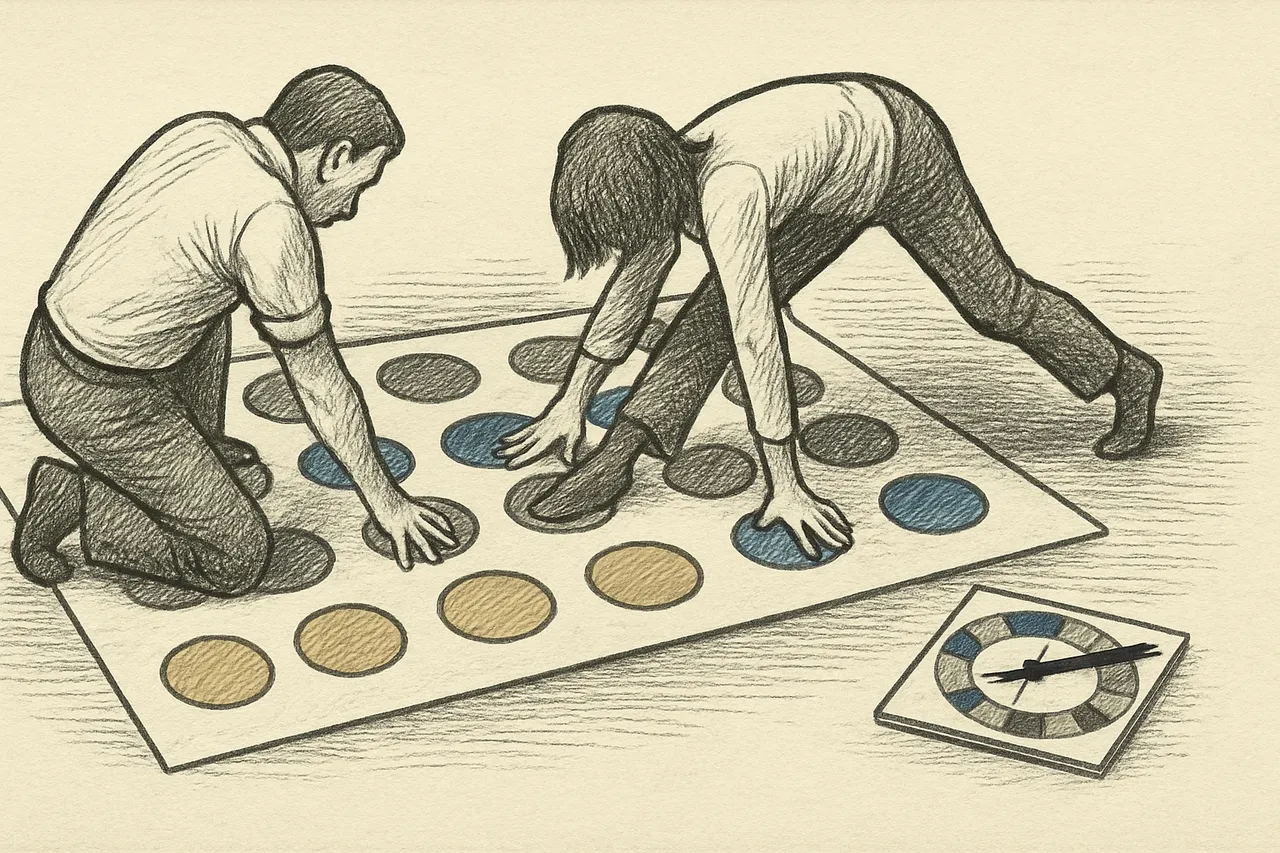
Twister's Patent Is Titled 'Apparatus for Playing a Game Wherein the Players Constitute the Game Pieces'
The patent title is the whole idea: the people are the pieces. Milton Bradley released the game in 1966, some retailers were wary of it, and critics found it a little too intimate. Then Johnny Carson played it on television with Eva Gabor, and the orders poured in.
Read the story →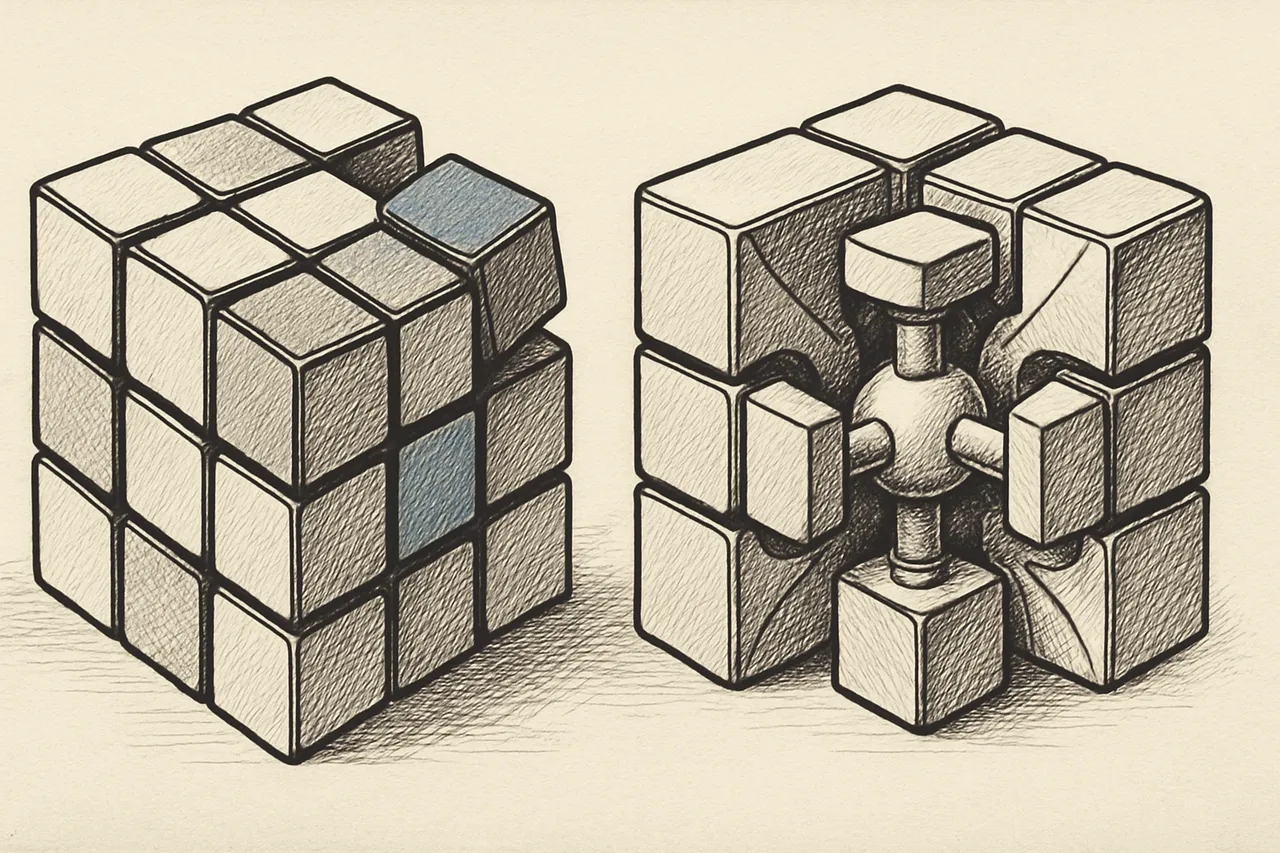
Ernő Rubik Needed About a Month to Solve His Own Cube. An American Court Later Found It Infringed an Earlier US Patent.
Rubik built the first cube in Budapest in 1974 as a way to think about three-dimensional movement. The clever part is how it holds together when most of its pieces are not attached to anything. In the United States, a chemist named Larry Nichols had patented a related puzzle in 1972, and his company sued.
Read the story →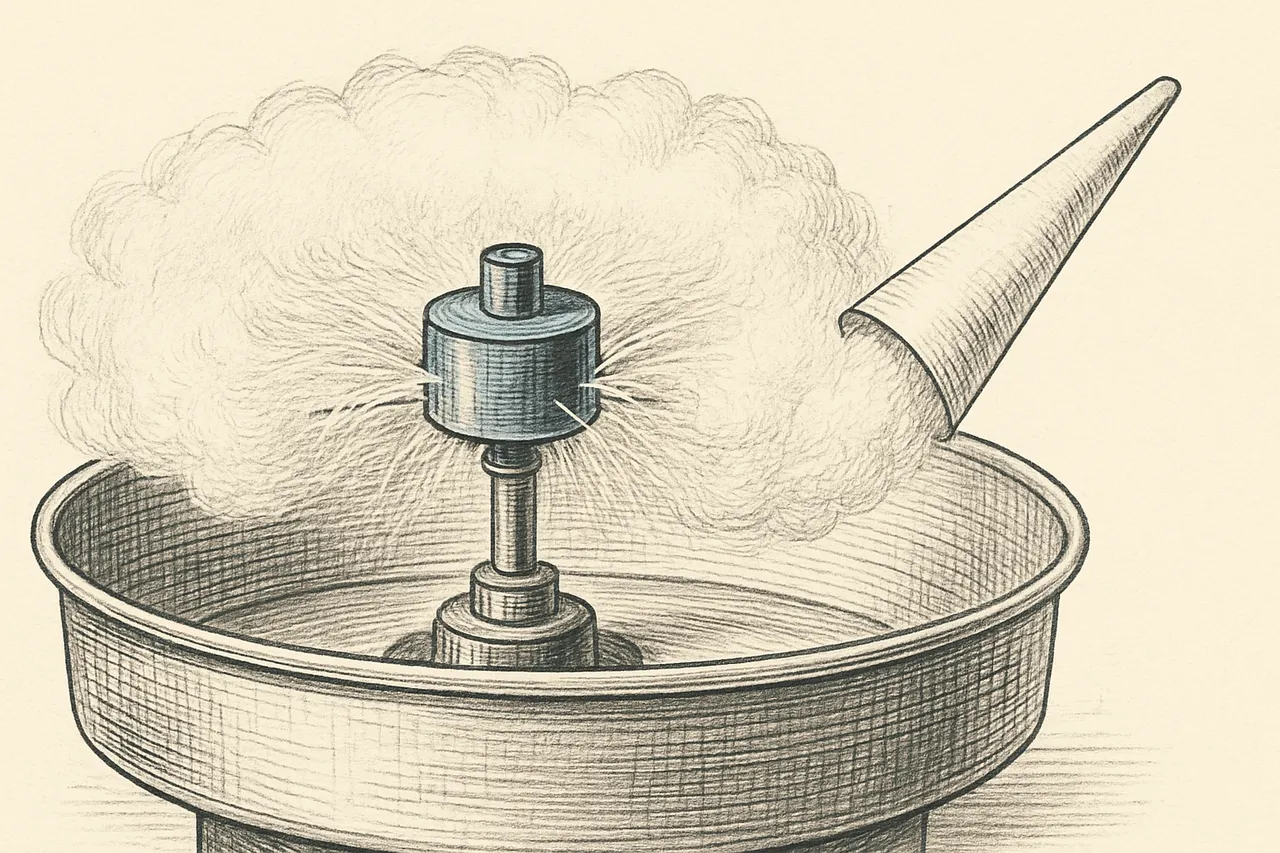
A Dentist Co-Invented the Cotton Candy Machine, and It Was Sold at the 1904 World's Fair as Fairy Floss
William Morrison was a dentist and John Wharton was a candy maker. Their machine melted sugar and flung it through tiny holes so that it cooled into threads finer than hair before it could crystallize. They filed in 1897, and at the St. Louis World's Fair it was a sensation.
Read the story →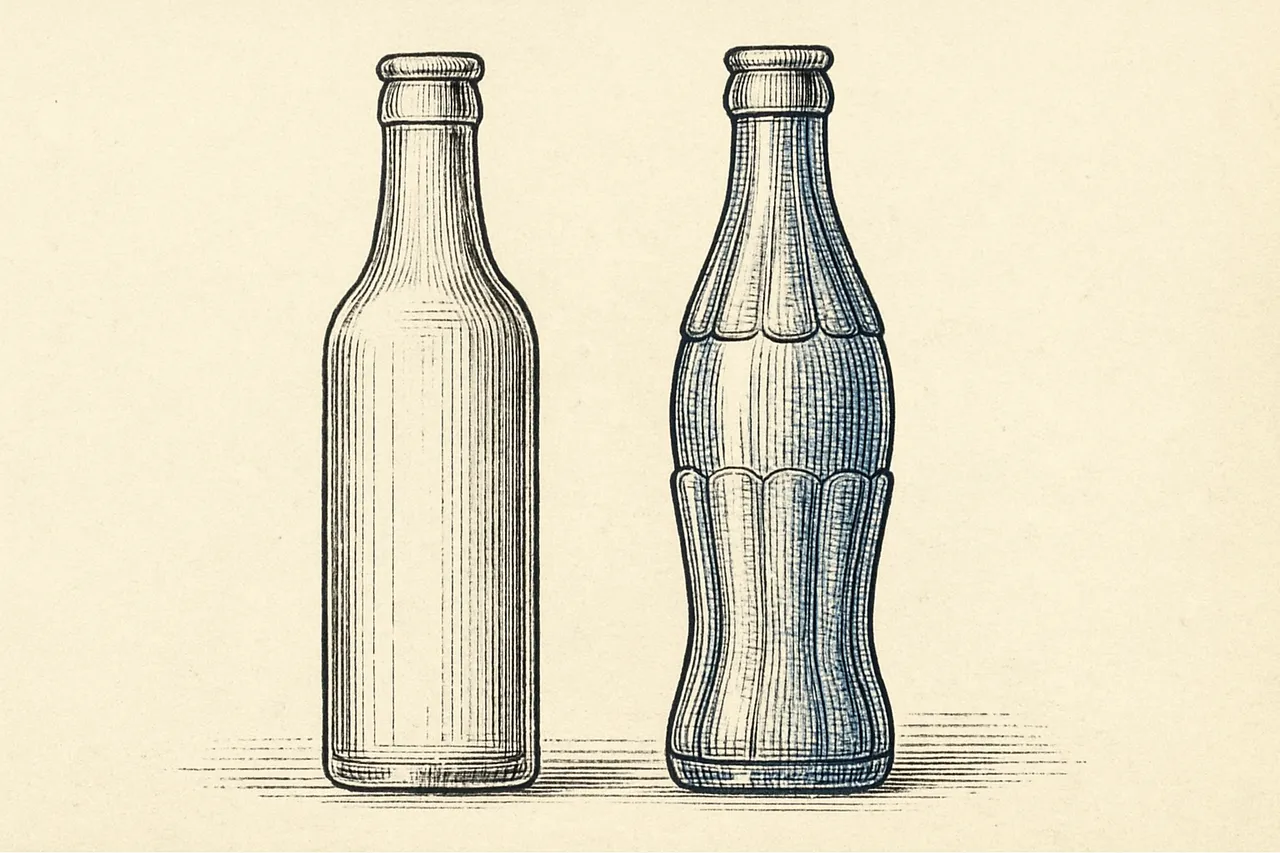
Coca-Cola Asked Glassmakers for a Bottle You Could Recognize in the Dark, or Broken on the Ground
In 1915 Coca-Cola had an imitation problem, since competitors used the same straight-sided bottles and borrowed-sounding names. It challenged glass companies to design a bottle identifiable by touch alone. The winner came from a small glassworks in Terre Haute, Indiana, and the name on the patent is not the name of the man who drew it.
Read the story →