A Factory Mechanic Got Tired of Burnt Toast in the Company Cafeteria and Patented the Timer That Ejects It
Electric toasters already existed in 1919, and they all required a person to stand there, watch, and flip the bread by hand. Charles Strite's patent added the two things that made toast automatic: a timer, and a spring that throws the toast out when the timer runs down.
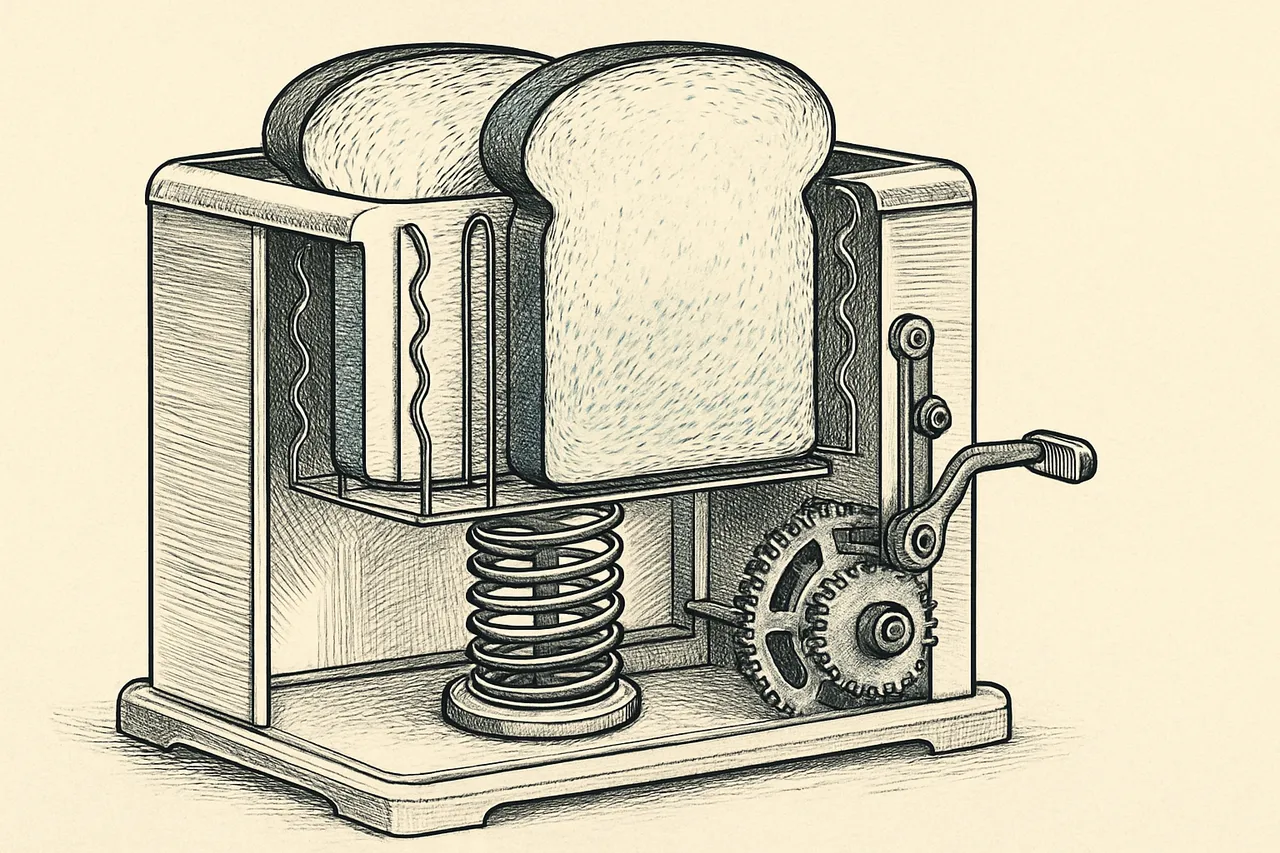
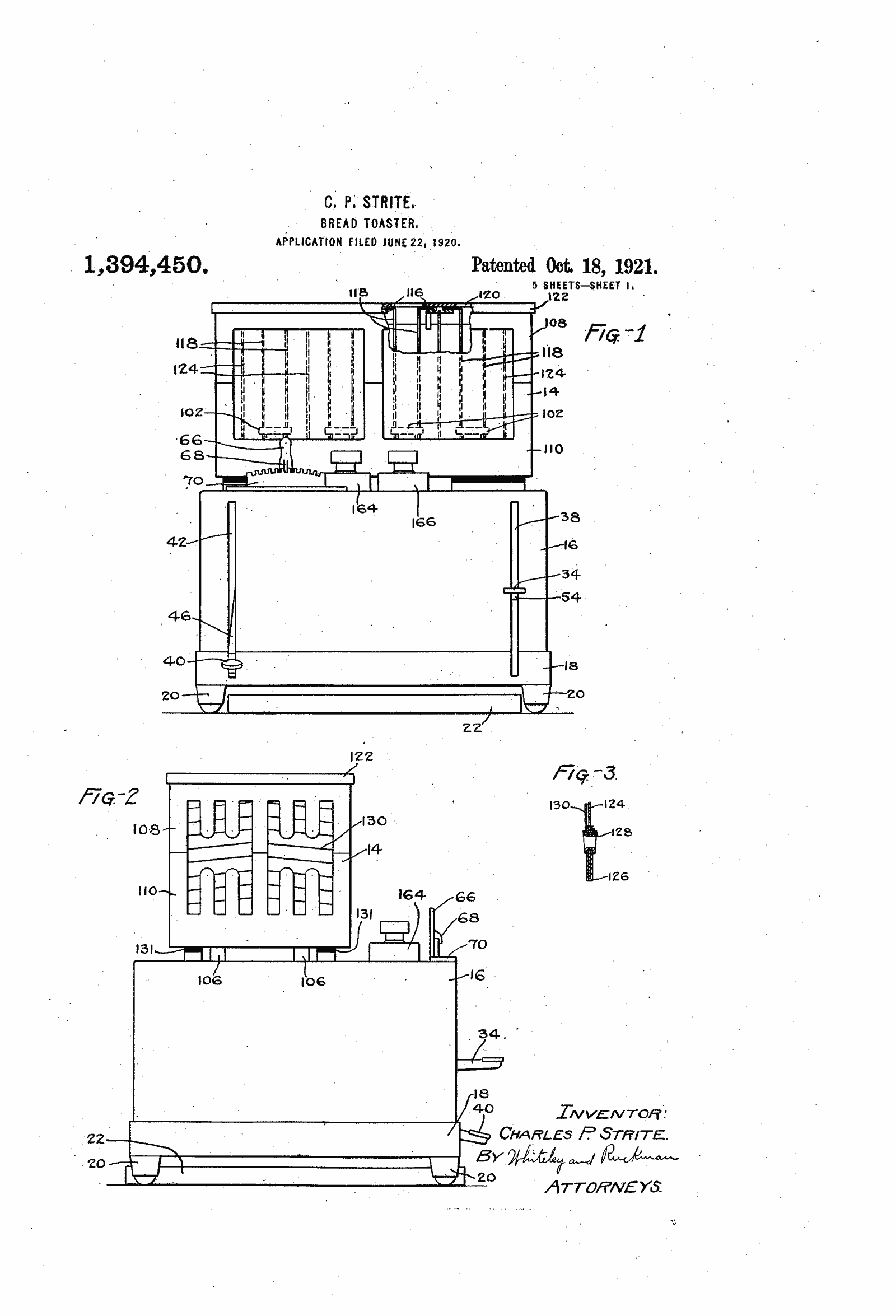
US1394450 was filed by Charles P. Strite on June 22, 1920, and granted the following year under the plain title Bread-Toaster. The electric toaster was not new. What Strite added is the part that lets you walk away.
What a toaster was before this
Electric toasters had been sold since roughly 1909. They worked, in the narrow sense that they applied heat to bread using an electric element rather than a fire.
What they did not do is any of the judgment. The typical design was a vertical rack with a heating element on one side only, so the machine toasted one face of one slice. The operator stood at the machine, watched the bread, decided when that side was done, and then opened a hinged door so the slice flopped over to present the other face.
Then watched again.
There was no timer and no thermostat. The only thing standing between breakfast and a carbonized slice was a person paying continuous attention, and the failure mode was not subtle. Toast goes from pale to ruined over a fairly short interval, and the machine gave no warning.
The cafeteria
Strite was a master mechanic at a manufacturing plant in Stillwater, Minnesota. The account he and his associates gave is straightforward: the cafeteria at the plant served burnt toast routinely, because a kitchen worker cooking for a crowd cannot stand and watch every slice.
That is a fair description of the real problem. Manual toasting scales badly. One slice at a time with continuous supervision is workable at a domestic breakfast and impossible in an institutional kitchen at shift change.
He decided the machine should do the watching.
The two mechanisms
Strite's patent combines two things, and neither is exotic on its own.
The first is a timer. A clockwork mechanism is wound when the bread goes in and runs down over a set interval, which the user can adjust. The machine is not measuring how brown the toast is. It is measuring elapsed time, which for a fixed heating element and a fixed distance is a reasonable proxy.
The second is a spring-loaded carriage. The bread sits in a wire carriage held down under spring tension. When the timer runs out, it cuts the current to the elements and releases a catch, and the spring throws the carriage upward.
That ejection is doing more work than it appears to. It stops the cooking by physically removing the bread from between the elements, rather than trusting residual heat to be harmless. It makes the toast easy to retrieve without reaching into a hot slot. And it is an unmissable signal that the cycle is finished, audible from across a kitchen, which is exactly what the cafeteria needed.
Strite's design also heated both faces of the slice at once, which removes the flip.
Into the home
Strite filed in 1920 and began making units for restaurants. In 1926 the Waters Genter Company brought out a consumer model under the name Toastmaster, and household sales followed quickly.
There is a detail of timing that helped enormously and had nothing to do with Strite. Commercially sliced bread arrived in 1928 with Otto Rohwedder's bread slicing machine. A pop-up toaster with a fixed slot works far better when every slice is the same thickness. The two inventions made each other more useful, and neither was coordinated with the other.
The mechanism has barely changed. A modern toaster is a timer, a pair of elements, a spring carriage, and a catch. Most now use a bimetallic strip or simple electronics rather than clockwork for the timing, but the architecture is Strite's, and the thing it automated was never the heating. It was the attention.
See the original
The full text and figures of US1394450 are on Google Patents.
Related stories
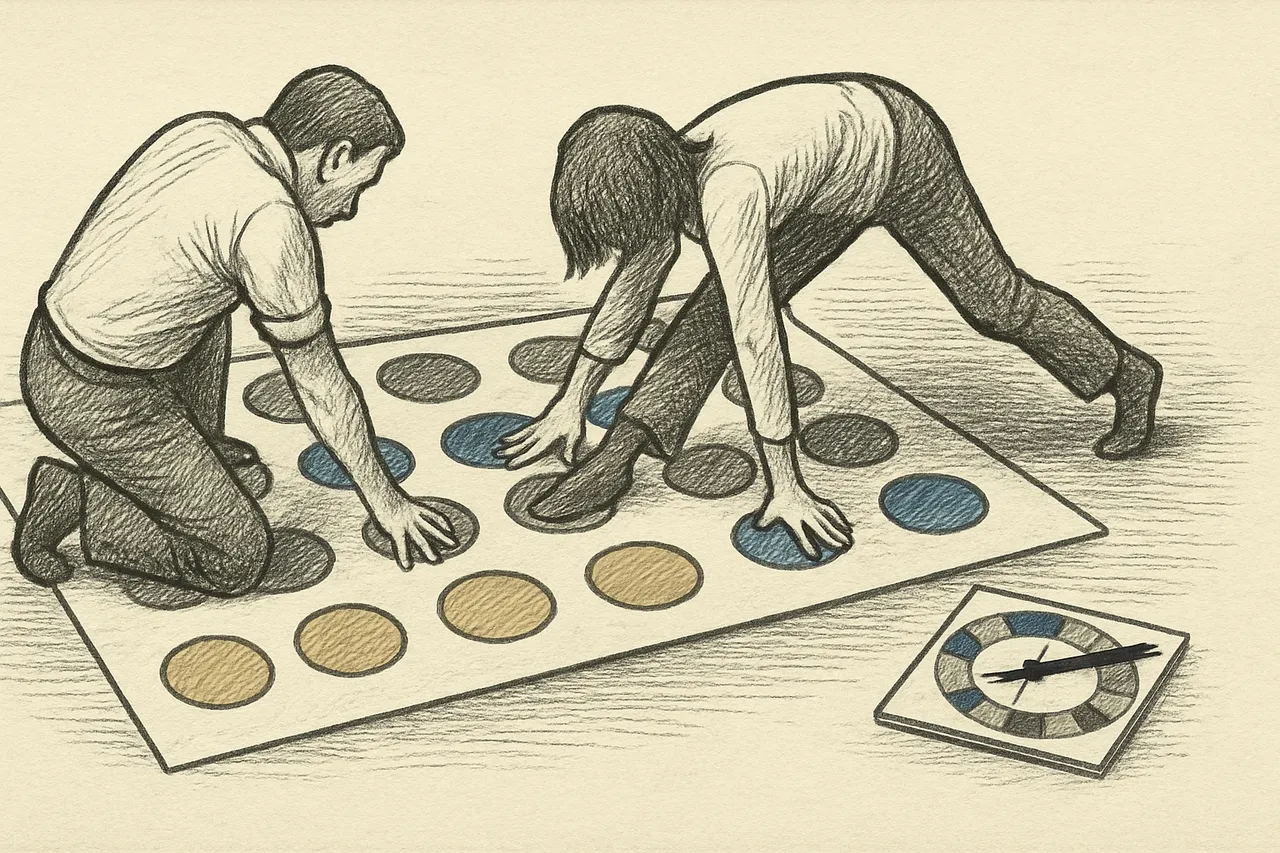
Twister's Patent Is Titled 'Apparatus for Playing a Game Wherein the Players Constitute the Game Pieces'
The patent title is the whole idea: the people are the pieces. Milton Bradley released the game in 1966, some retailers were wary of it, and critics found it a little too intimate. Then Johnny Carson played it on television with Eva Gabor, and the orders poured in.
Read the story →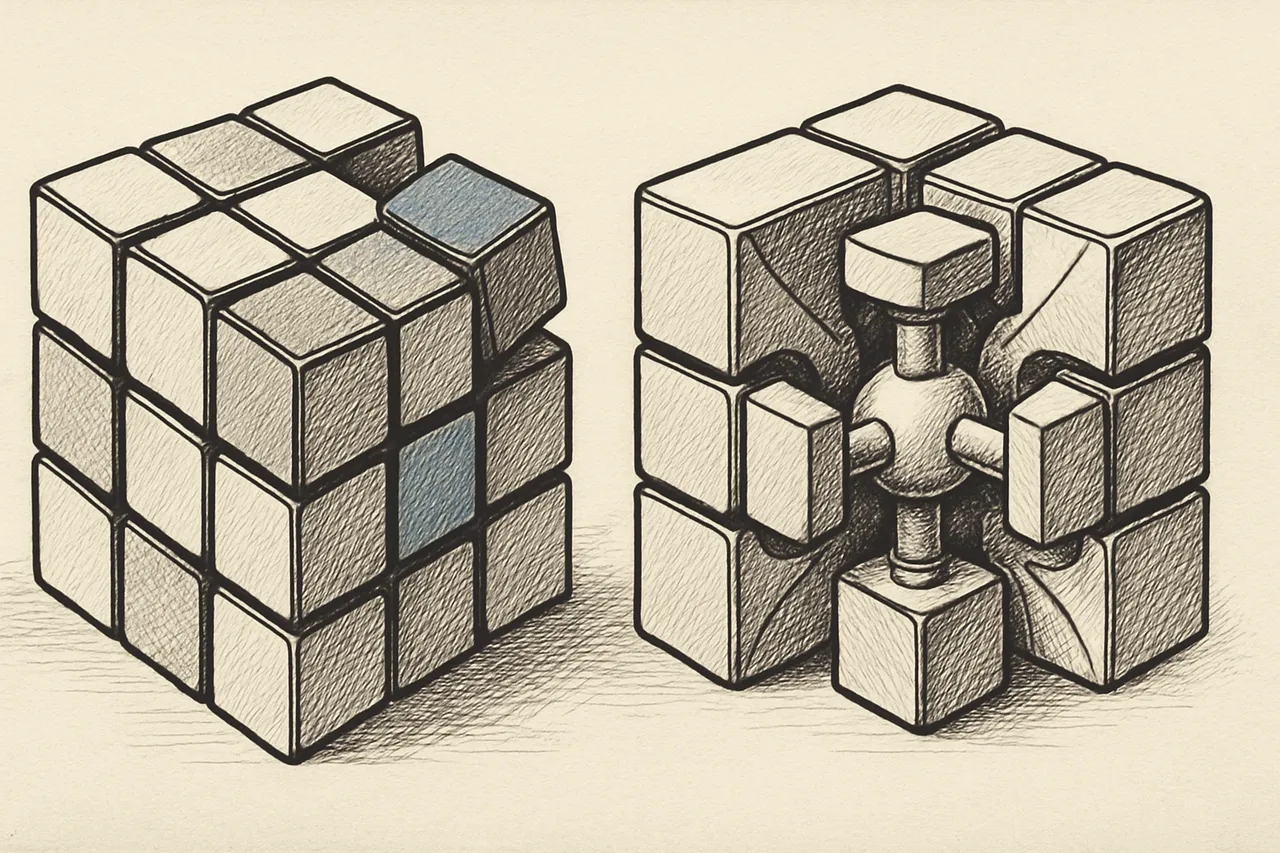
Ernő Rubik Needed About a Month to Solve His Own Cube. An American Court Later Found It Infringed an Earlier US Patent.
Rubik built the first cube in Budapest in 1974 as a way to think about three-dimensional movement. The clever part is how it holds together when most of its pieces are not attached to anything. In the United States, a chemist named Larry Nichols had patented a related puzzle in 1972, and his company sued.
Read the story →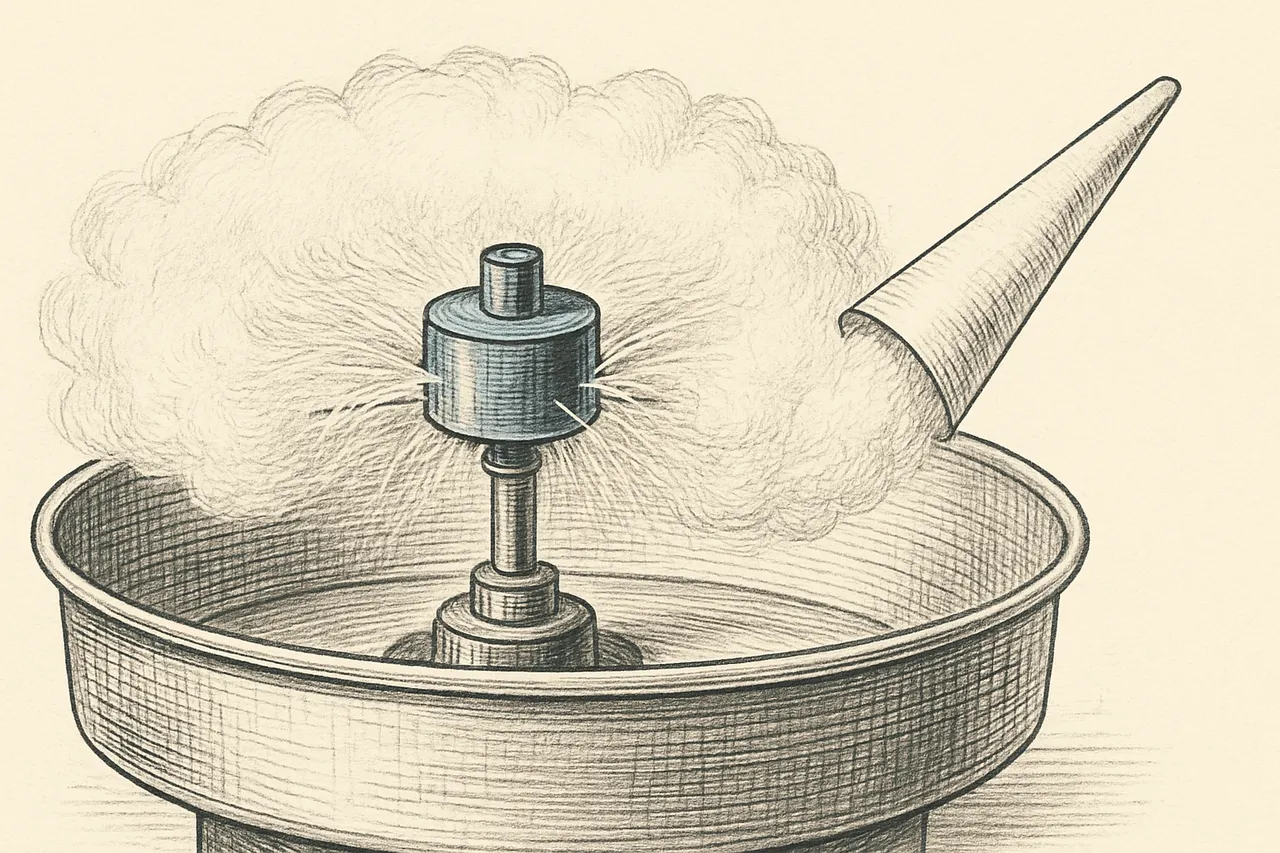
A Dentist Co-Invented the Cotton Candy Machine, and It Was Sold at the 1904 World's Fair as Fairy Floss
William Morrison was a dentist and John Wharton was a candy maker. Their machine melted sugar and flung it through tiny holes so that it cooled into threads finer than hair before it could crystallize. They filed in 1897, and at the St. Louis World's Fair it was a sensation.
Read the story →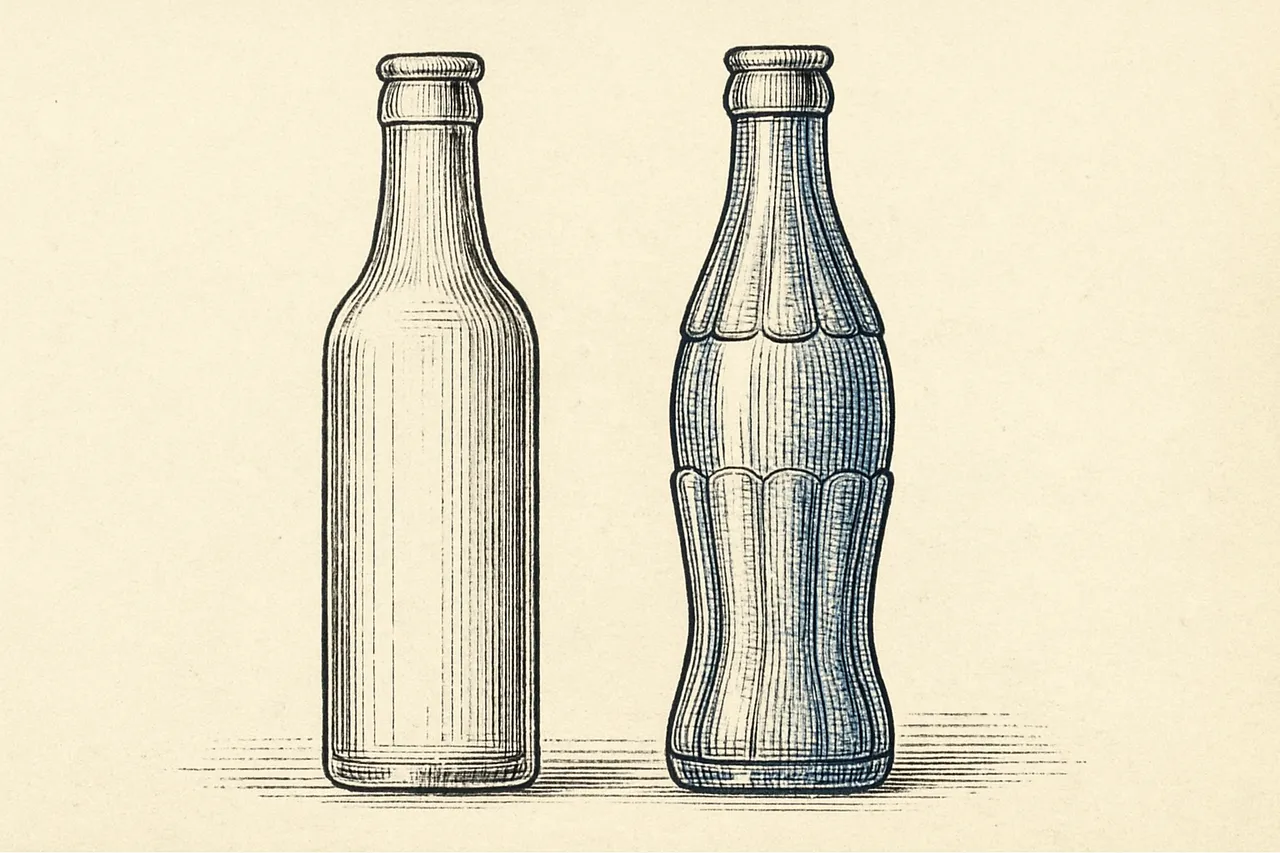
Coca-Cola Asked Glassmakers for a Bottle You Could Recognize in the Dark, or Broken on the Ground
In 1915 Coca-Cola had an imitation problem, since competitors used the same straight-sided bottles and borrowed-sounding names. It challenged glass companies to design a bottle identifiable by touch alone. The winner came from a small glassworks in Terre Haute, Indiana, and the name on the patent is not the name of the man who drew it.
Read the story →