The First Electric Guitar You Could Buy Was Nicknamed the Frying Pan, and Its Patent Took Three Years
In the big band era, guitarists could not be heard over the horns. George Beauchamp set the strings inside a pair of horseshoe magnets, wound a coil beneath them, and mounted it all on a round aluminum body with a long neck. It looked like cookware, and the magnetic pickup it used is still how electric guitars work.
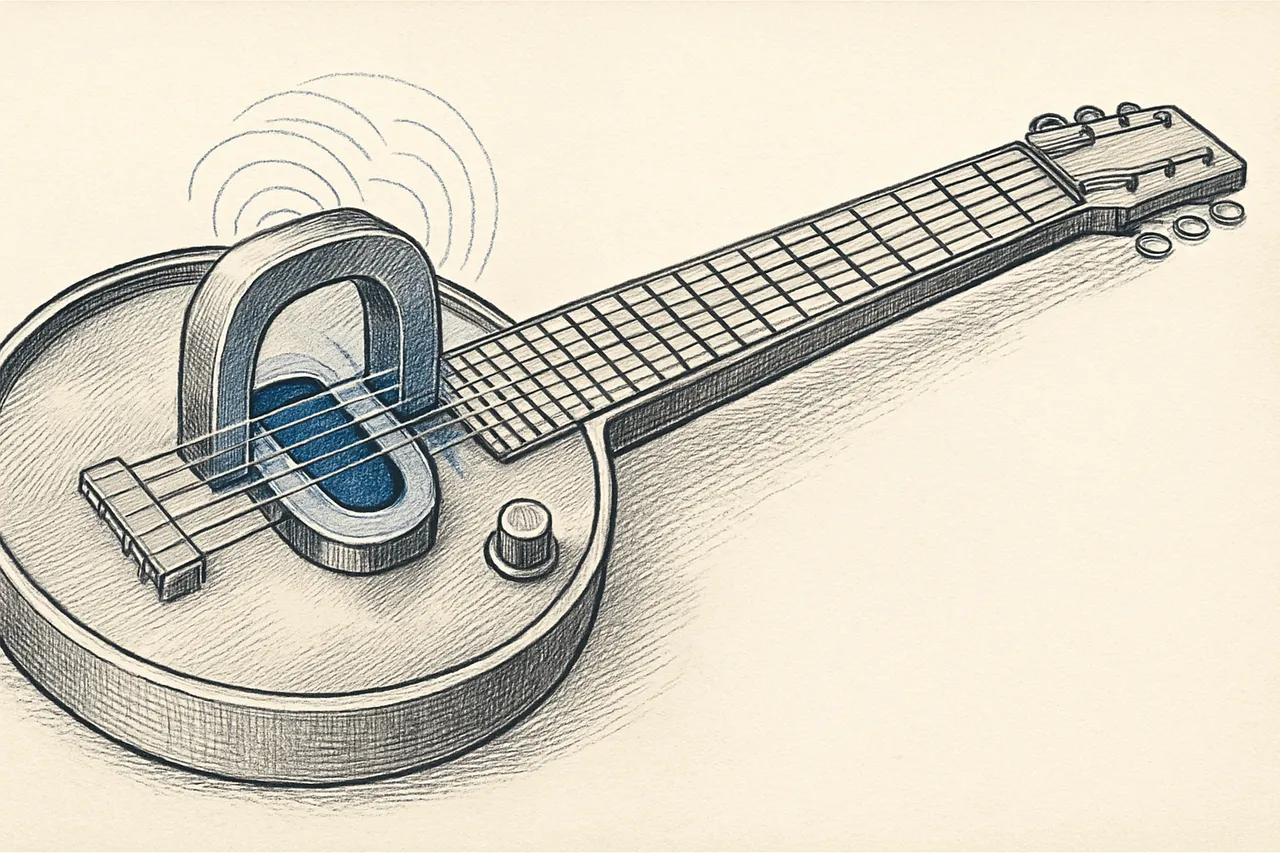
US2089171 was filed by George D. Beauchamp on June 2, 1934, and not granted until 1937. The Patent Office title is Electrical Stringed Musical Instrument. The instrument it describes was sold as the Electro Hawaiian guitar. Everyone called it the Frying Pan.
The volume problem
In the 1920s and early 1930s, popular music was increasingly played by large bands with brass and reed sections. Against a row of trumpets and saxophones, an acoustic guitar is close to inaudible. Guitarists in big bands were largely confined to keeping rhythm, because a melody played on the guitar simply could not be heard from the audience.
Instrument makers attacked this mechanically first. Beauchamp, a Los Angeles musician who played Hawaiian steel guitar, was involved with the National String Instrument Corporation, which made resonator guitars. These used thin aluminum cones inside the body, working a little like a loudspeaker, to project the sound of the strings further than a wooden top could.
Resonators were louder. They were not loud enough, and there was a limit to how much further a purely acoustic design could go.
The pickup
Beauchamp's approach was to stop trying to make the guitar itself louder, and instead turn the vibration of the strings into an electrical signal that an amplifier could make as loud as needed.
The mechanism in the patent is electromagnetic induction. Two horseshoe magnets arch over the strings, so the strings pass through a strong magnetic field. Beneath the strings sits a coil of fine wire. The strings are steel, and steel interacts with a magnetic field. When a string vibrates, it disturbs the field passing through the coil, and that changing field induces a small electric current in the wire.
The current rises and falls in step with the string's vibration. In other words, it is an electrical copy of the note. Send it to an amplifier and speaker, and the note can be played at whatever volume the room requires.
This is still the basic principle of the magnetic pickup found on most electric guitars. The magnets and coils have been redesigned countless times since, but the physics has not changed.
Others had experimented with amplifying stringed instruments before Beauchamp, with limited practical success. The Frying Pan is generally credited as the first electric guitar with a magnetic pickup to be manufactured and sold commercially.
Rickenbacker
Beauchamp partnered with Adolph Rickenbacker, whose manufacturing company had the tooling to produce metal parts in quantity. Together they formed a company to build the instrument, which later became the Electro String Instrument Corporation, and the guitars came to be sold under the Rickenbacker name.
Production began in 1932. The body was cast aluminum, a small round shape at the end of a long neck, which is how it earned its nickname. It was a lap steel, played flat across the knees with a slide in the Hawaiian style, and the company also made electric models in the ordinary upright Spanish style.
The delay
The patent application took until 1937 to be granted, several years after the instrument had gone on sale. In the meantime the idea had spread. Other manufacturers began offering electric instruments of their own. Gibson introduced the ES-150 in 1936, and in the hands of Charlie Christian, who joined Benny Goodman's band in 1939, it showed what the electric guitar could do as a lead instrument, playing solos that the audience could actually hear.
Beauchamp died in 1941 and did not see what followed. Within a couple of decades the electric guitar had moved from the back of the bandstand to the center of popular music, and the principle that got it there was the one on his round aluminum body: a vibrating steel string, a magnet, and a coil of wire.
See the original
The full text and figures of US2089171 are on patents.us.
Related stories
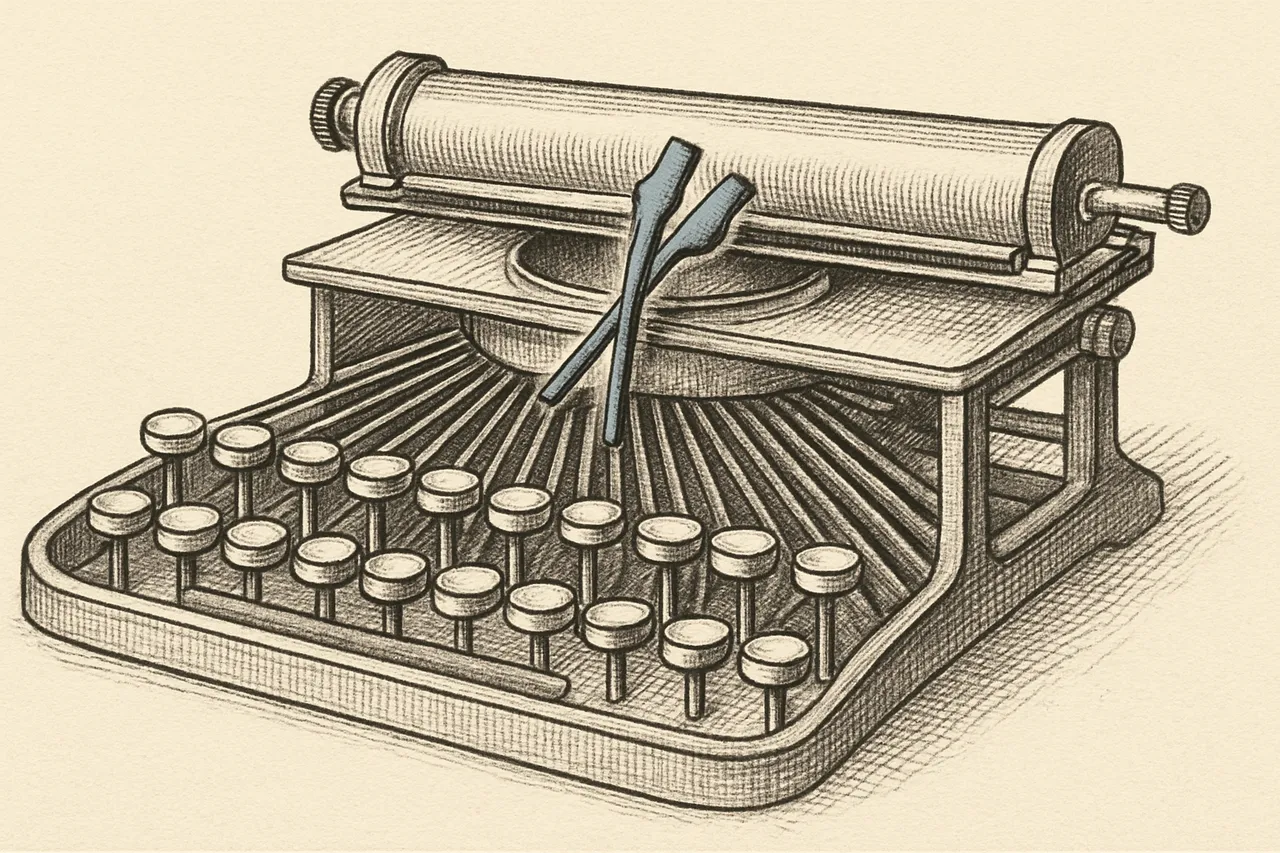
The 1868 Patent Behind the First Successful Typewriter Had Its Keys in Alphabetical Order. QWERTY Came Later, and Nobody Fully Agrees Why.
Christopher Latham Sholes and two partners patented a typewriter in Milwaukee in 1868 with keys arranged like a piano, roughly in alphabetical order. Over the next several years the letters were shuffled into QWERTY. The popular explanation for that is a distortion of a better one.
Read the story →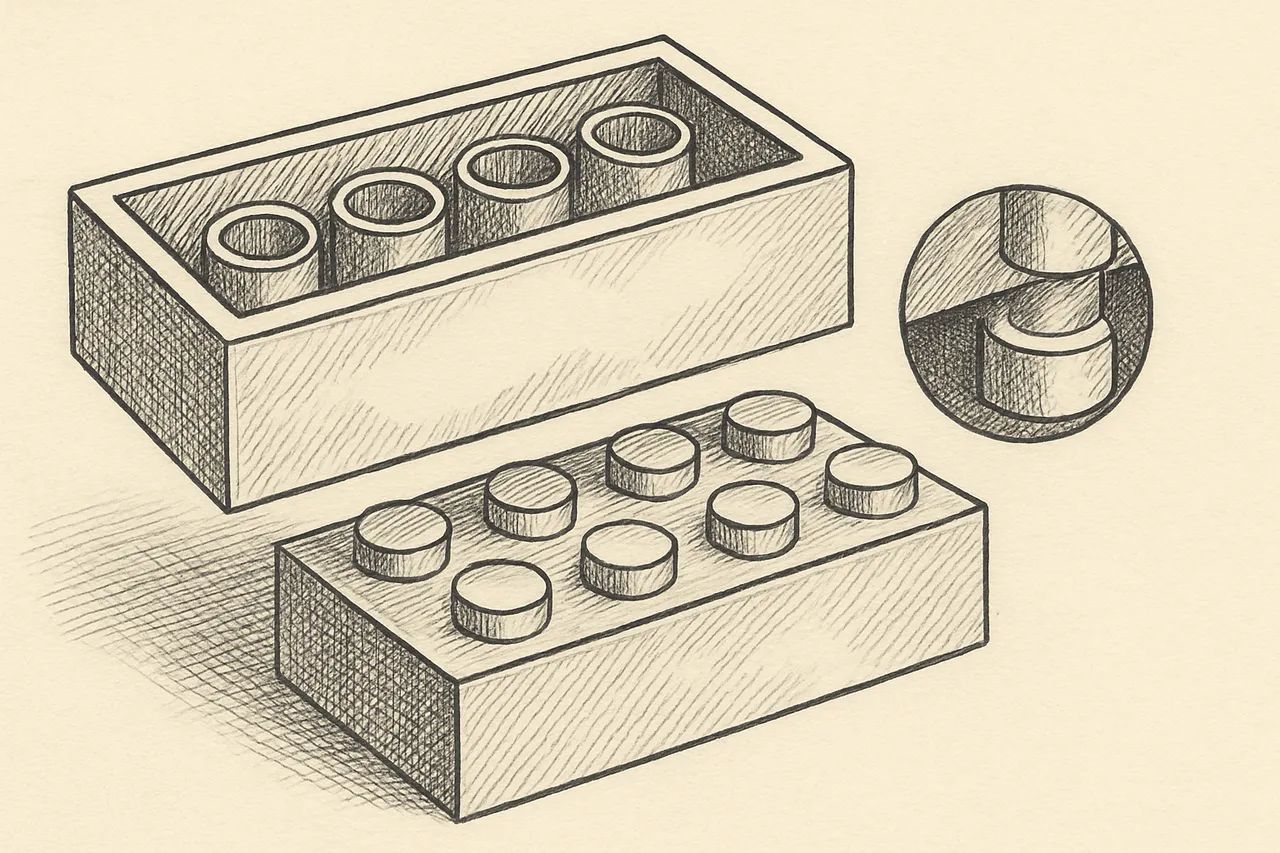
LEGO Bricks Were on Sale for Nine Years Before They Held Together Properly. The Fix Was a Row of Hollow Tubes.
The first LEGO bricks had studs on top and an empty space underneath, so models tended to come apart when you picked them up. Godtfred Kirk Christiansen's 1958 design put tubes inside the brick, and a brick molded that year still fits one molded today.
Read the story →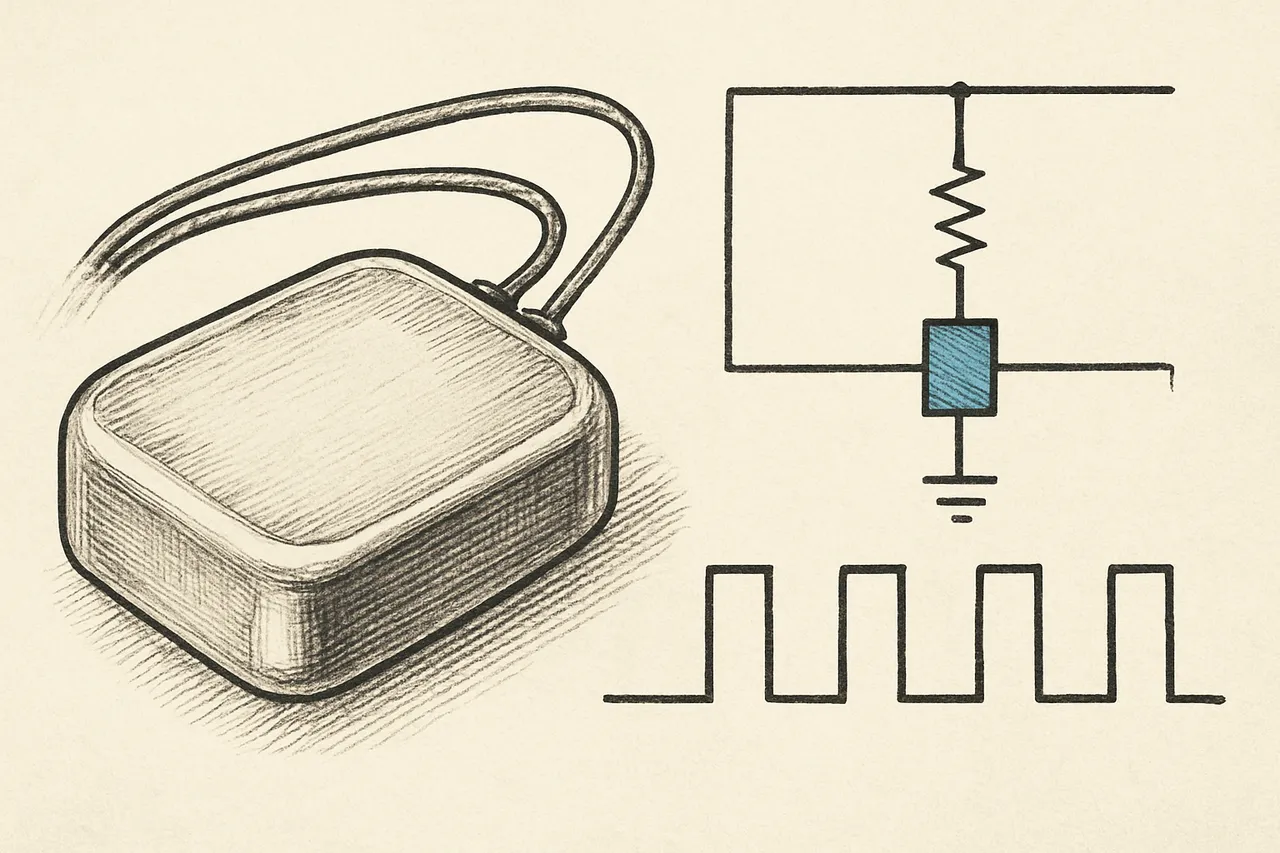
He Reached Into the Wrong Bin, Soldered in the Wrong Resistor, and Built the First Implantable Pacemaker
Wilson Greatbatch was building a device to record heart sounds. He grabbed a resistor of the wrong value, and the circuit started pulsing instead of recording. He recognized the rhythm immediately, because he already knew what problem it solved.
Read the story →
Clarence Birdseye Watched Inuit Fishermen Pull Fish From a Hole in the Ice and Worked Out Why Frozen Food Tasted Bad
Frozen food existed long before Birdseye and it was considered close to inedible. What he figured out in Labrador is that the problem was never freezing. It was freezing slowly, and the difference comes down to the size of the ice crystals.
Read the story →