The Engineer Who Invented Cruise Control Had Been Blind Since He Was Five
Ralph Teetor lost his sight in an accident at five years old, became a mechanical engineer anyway, and ran a piston ring company. The usual story is that he invented cruise control because his lawyer's uneven driving annoyed him. The engineering holds up better than the anecdote.
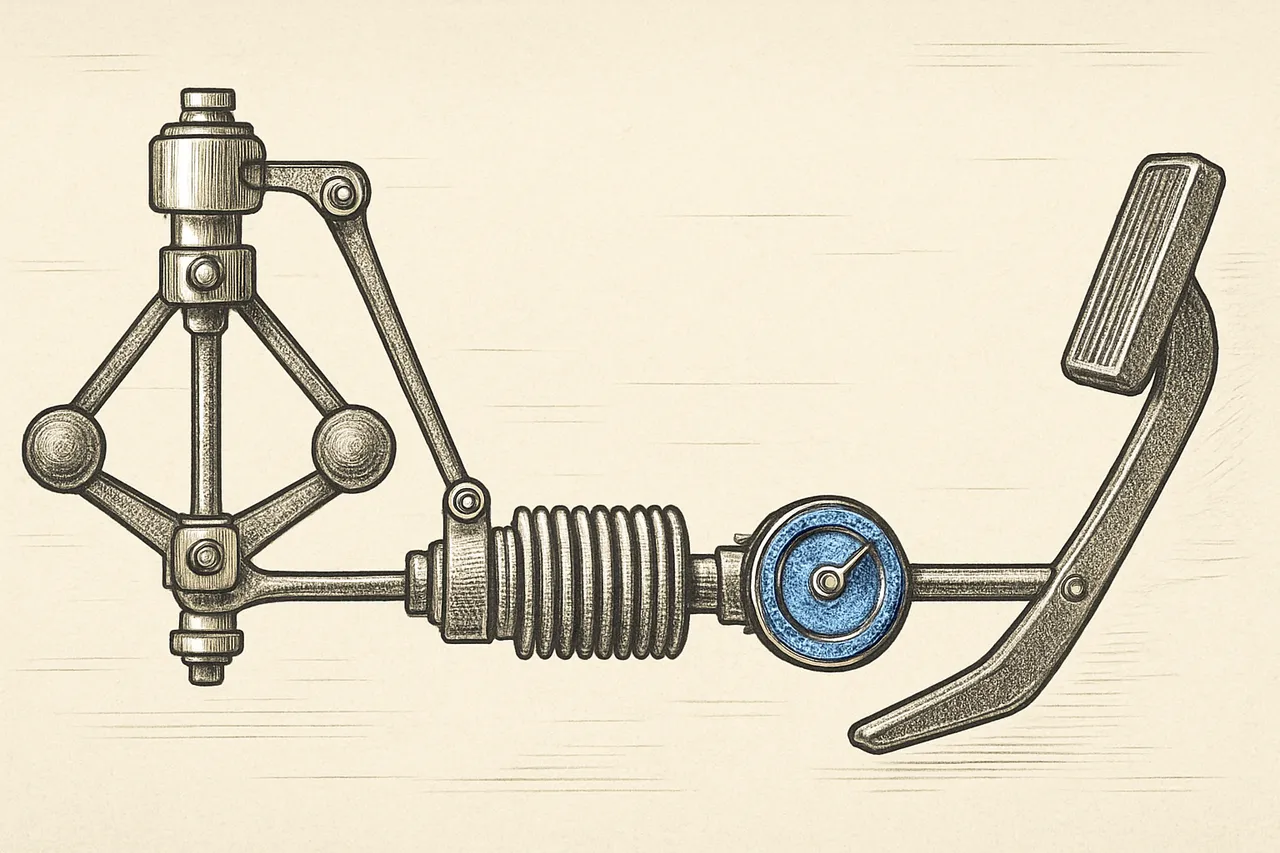
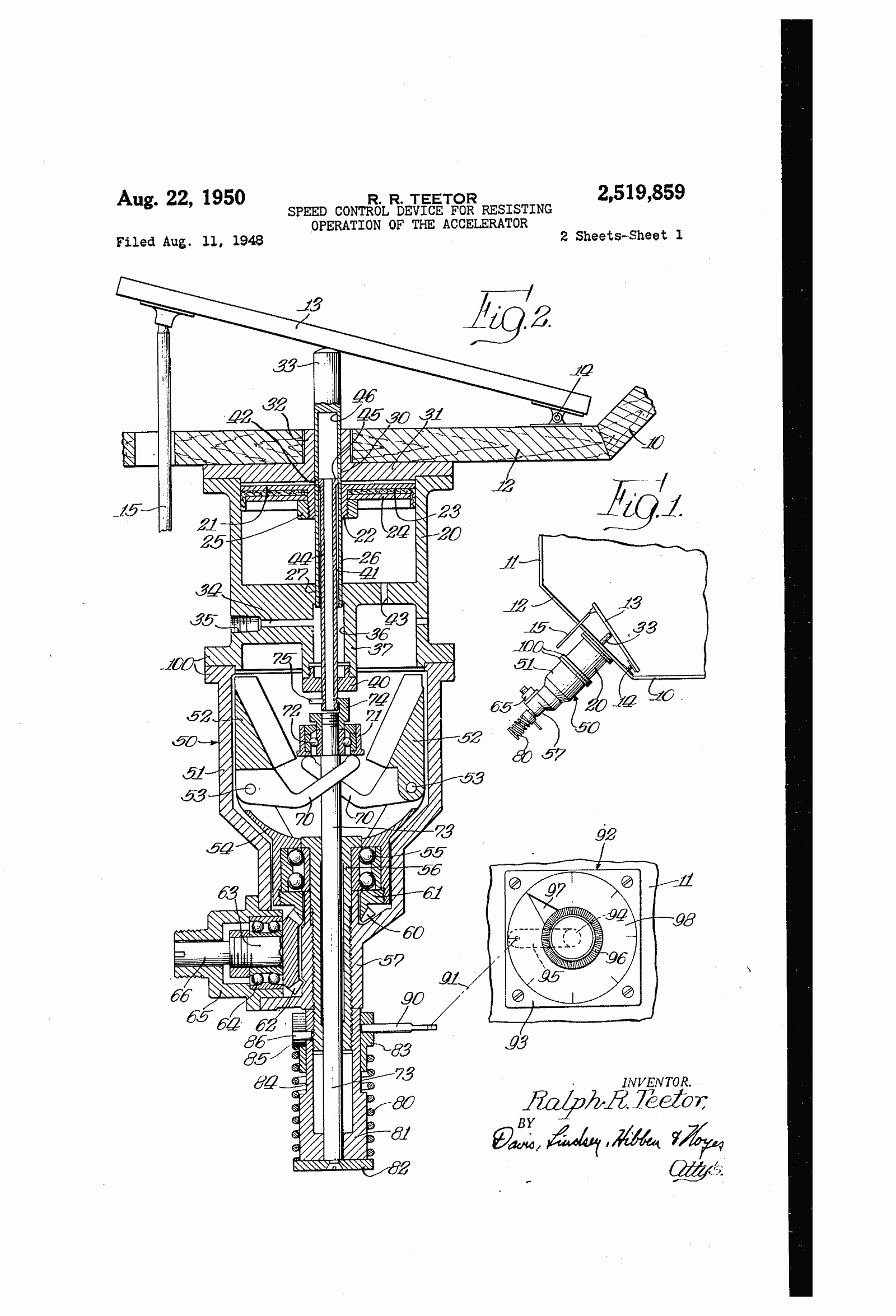
US2519859 was filed by Ralph R. Teetor on August 11, 1948. The Patent Office title is precise and slightly odd: Speed Control Device for Resisting Operation of the Accelerator.
That title is worth pausing on, because it describes what the invention actually does, and it is not quite what most people assume cruise control does.
Blind at five
Teetor lost his sight at the age of five in an accident with a knife. He grew up in Hagerstown, Indiana, in a family that ran a machine business, and he did not treat blindness as a reason to stay out of the shop.
He built a car at twelve. He went to the University of Pennsylvania and took a degree in mechanical engineering, which he completed in 1912. He spent the First World War working on steam turbine rotors for Navy torpedo boats, doing balancing work by feel, and he later became president of the Perfect Circle Corporation, a major manufacturer of piston rings.
He was, by every account, an unusually good engineer, and he navigated a machine shop by memory and touch closely enough that people who worked with him described forgetting he could not see.
The story about the lawyer
The anecdote attached to this patent is that Teetor was riding with his lawyer, that the lawyer had a habit of slowing down while talking and speeding up while listening, and that the constant surging irritated Teetor enough that he decided to solve it.
The story is repeated in nearly every account, including ones from his own family, so it has better provenance than most invention legends. It is still worth noting that a man who spent his career on precision rotating machinery, and who experienced every ride as a passenger, had more reason than most to think about how unevenly people hold a speed.
Being driven everywhere for fifty years is its own kind of research.
What it does mechanically
The device works through the accelerator pedal, which is why the patent title says resisting.
A governor senses road speed, driven from the car's driveshaft. The driver sets a desired speed. When the car reaches that speed, the mechanism applies pressure back against the accelerator pedal, pushing against the driver's foot.
So the early version does not take over the car. It pushes back. The driver feels resistance building under their foot at the set speed, and holding a steady speed becomes the path of least effort rather than a thing requiring attention. The driver can override it by simply pressing harder.
Later refinements moved toward actually holding the throttle rather than resisting the pedal, which is how modern systems behave, but the original insight is this feedback through the pedal itself.
Getting it into cars
The patent was filed in 1948 and the technology did not reach production for a decade. Chrysler introduced it on 1958 model year cars, initially under the name Auto-Pilot, and Cadillac followed. Teetor's own company's marketing settled on the name Speedostat. Cruise Control is the name that stuck, and it came from Cadillac.
Adoption climbed sharply during the oil crises of the 1970s, when a steady speed stopped being a comfort feature and started being a fuel economy feature.
Teetor was inducted into the Automotive Hall of Fame in 1988, twenty-six years after his death. He held patents on a range of things beyond this, including a powered lawn mower and a locking mechanism for hoppers.
The invention that most reduced how much attention driving requires came from someone who was never able to do it.
See the original
The full text and figures of US2519859 are on Google Patents.
Related stories
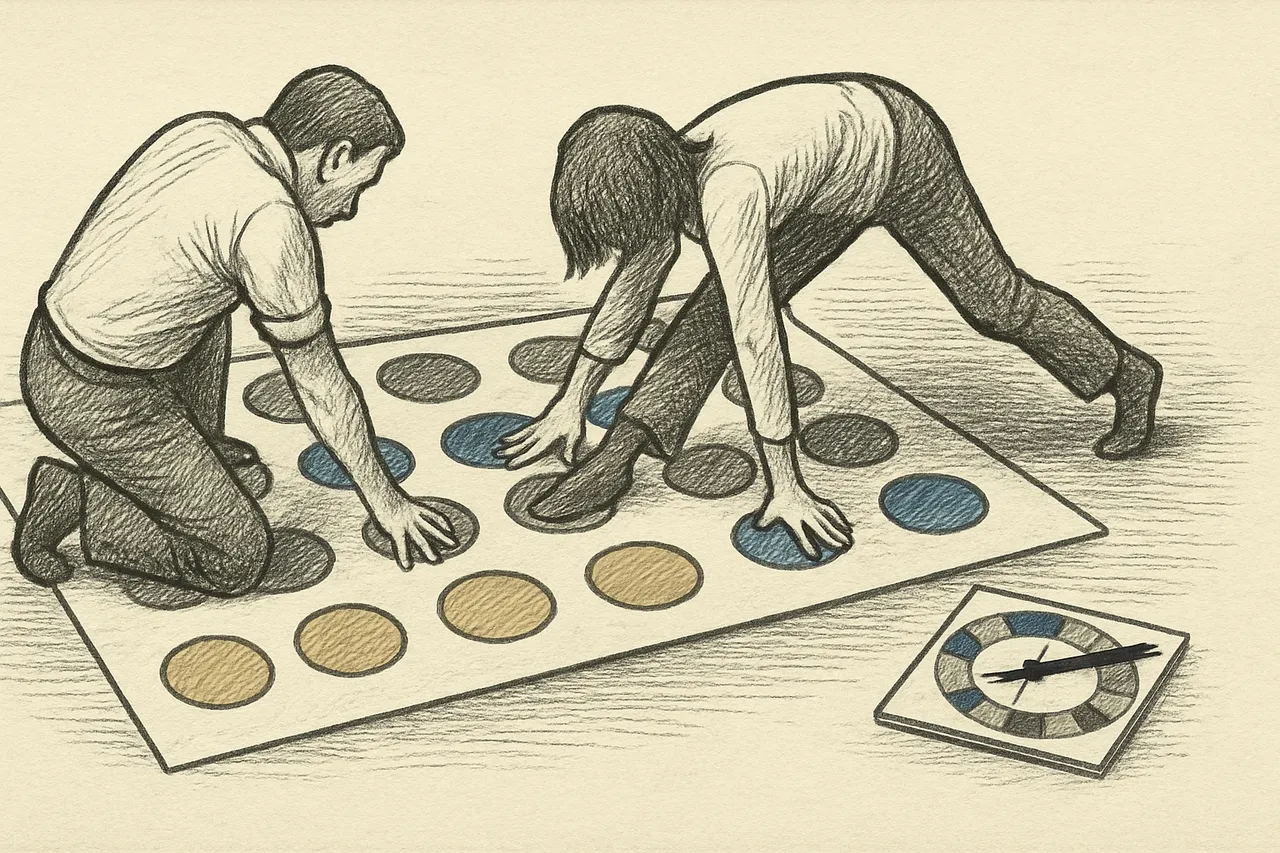
Twister's Patent Is Titled 'Apparatus for Playing a Game Wherein the Players Constitute the Game Pieces'
The patent title is the whole idea: the people are the pieces. Milton Bradley released the game in 1966, some retailers were wary of it, and critics found it a little too intimate. Then Johnny Carson played it on television with Eva Gabor, and the orders poured in.
Read the story →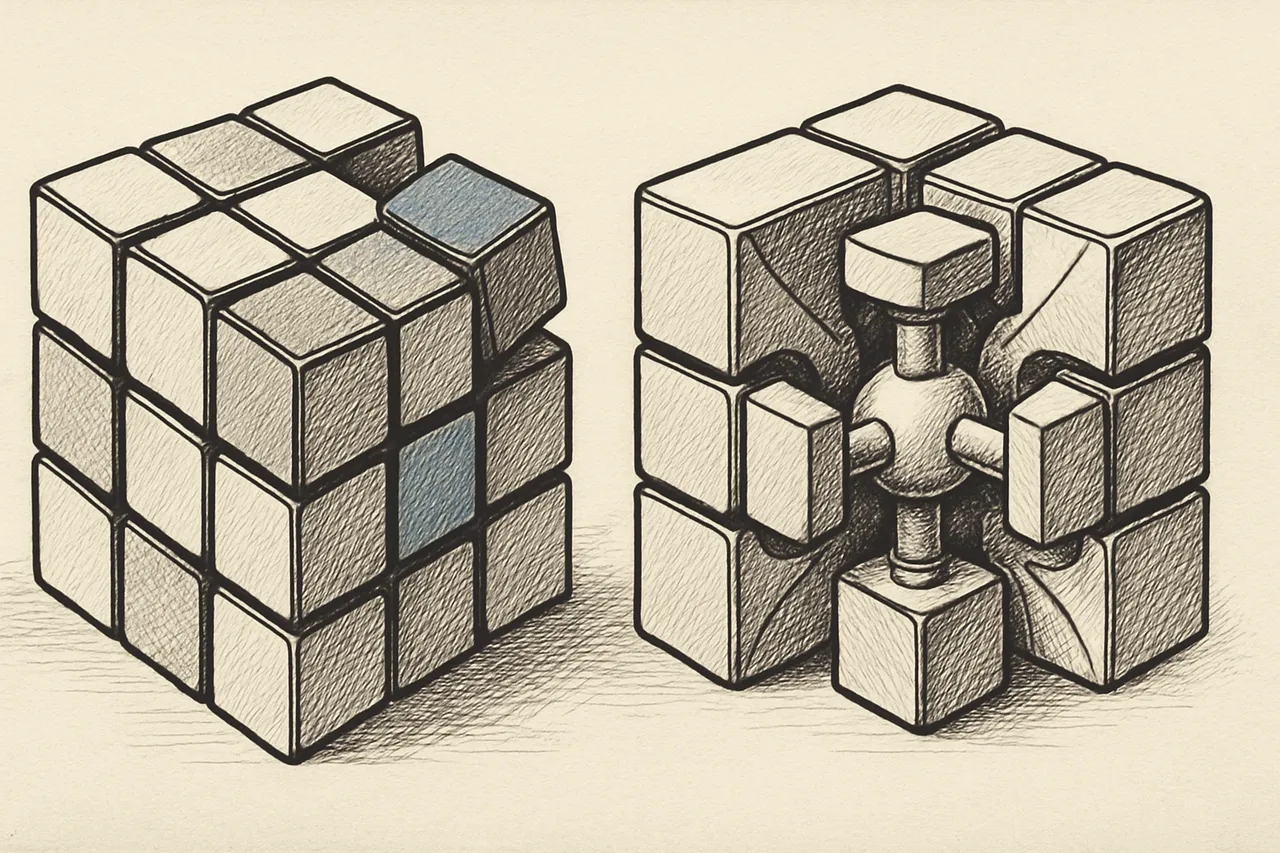
Ernő Rubik Needed About a Month to Solve His Own Cube. An American Court Later Found It Infringed an Earlier US Patent.
Rubik built the first cube in Budapest in 1974 as a way to think about three-dimensional movement. The clever part is how it holds together when most of its pieces are not attached to anything. In the United States, a chemist named Larry Nichols had patented a related puzzle in 1972, and his company sued.
Read the story →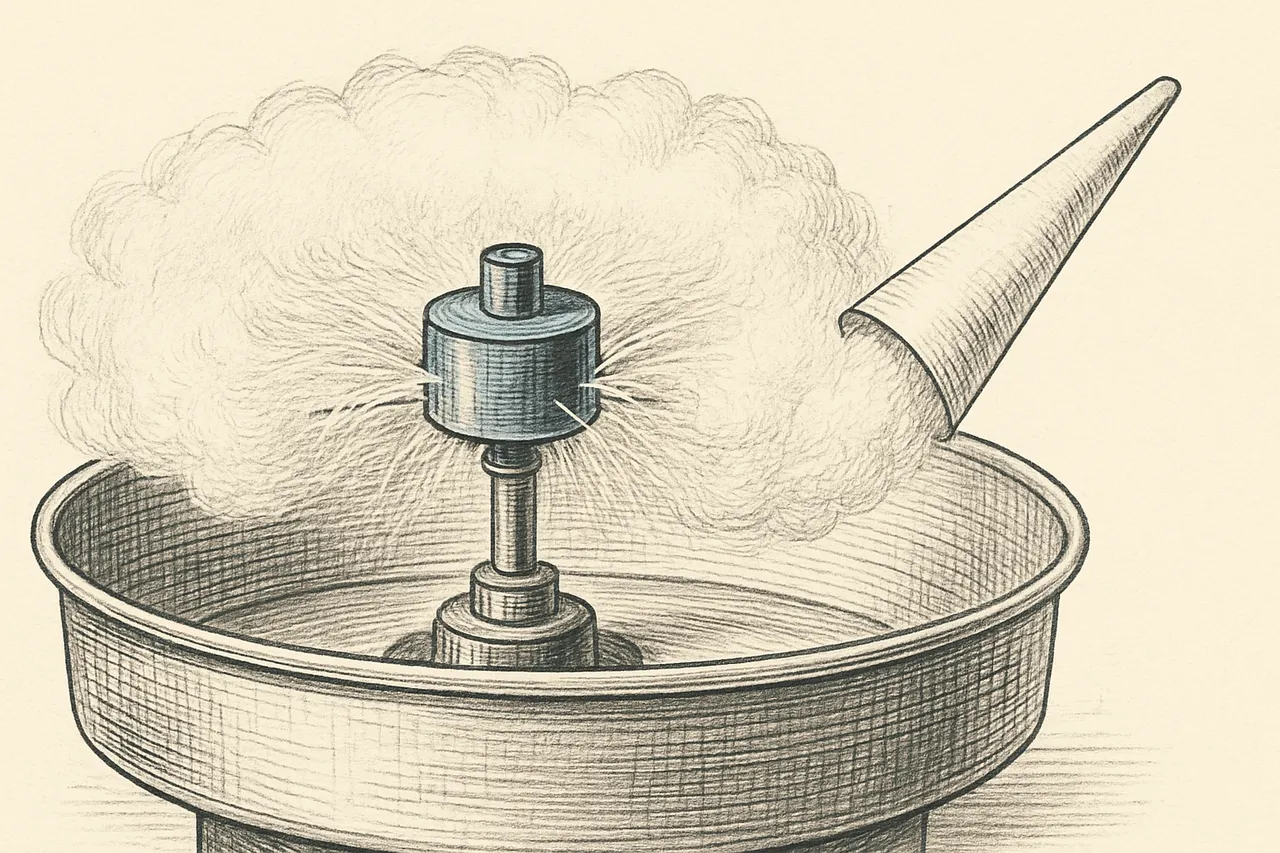
A Dentist Co-Invented the Cotton Candy Machine, and It Was Sold at the 1904 World's Fair as Fairy Floss
William Morrison was a dentist and John Wharton was a candy maker. Their machine melted sugar and flung it through tiny holes so that it cooled into threads finer than hair before it could crystallize. They filed in 1897, and at the St. Louis World's Fair it was a sensation.
Read the story →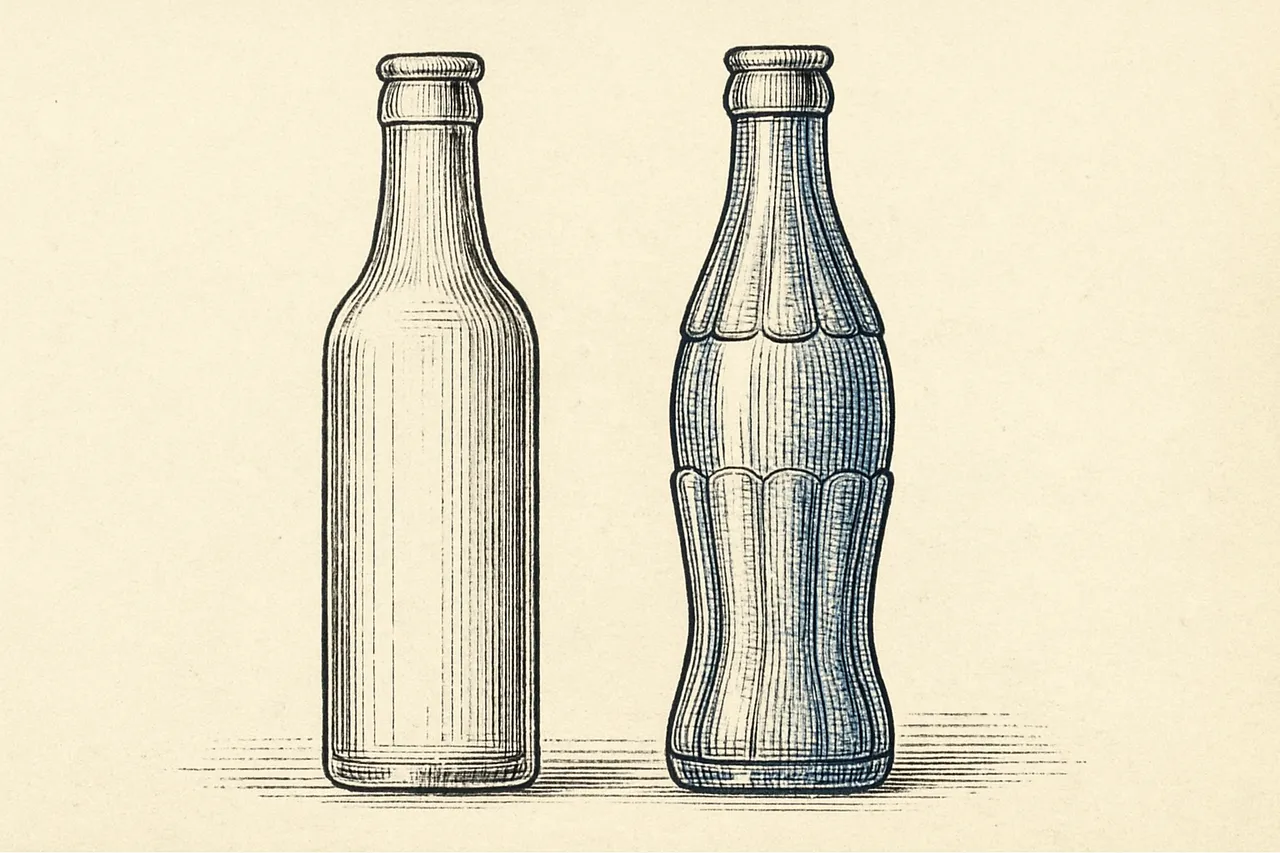
Coca-Cola Asked Glassmakers for a Bottle You Could Recognize in the Dark, or Broken on the Ground
In 1915 Coca-Cola had an imitation problem, since competitors used the same straight-sided bottles and borrowed-sounding names. It challenged glass companies to design a bottle identifiable by touch alone. The winner came from a small glassworks in Terre Haute, Indiana, and the name on the patent is not the name of the man who drew it.
Read the story →