A Saloon Owner Built the Cash Register to Catch His Own Bartenders Stealing
James Ritty ran a bar in Dayton and could not stop his staff pocketing the takings. On a steamship to Europe he watched a device count the revolutions of the propeller shaft, and realized a machine could count sales the same way.
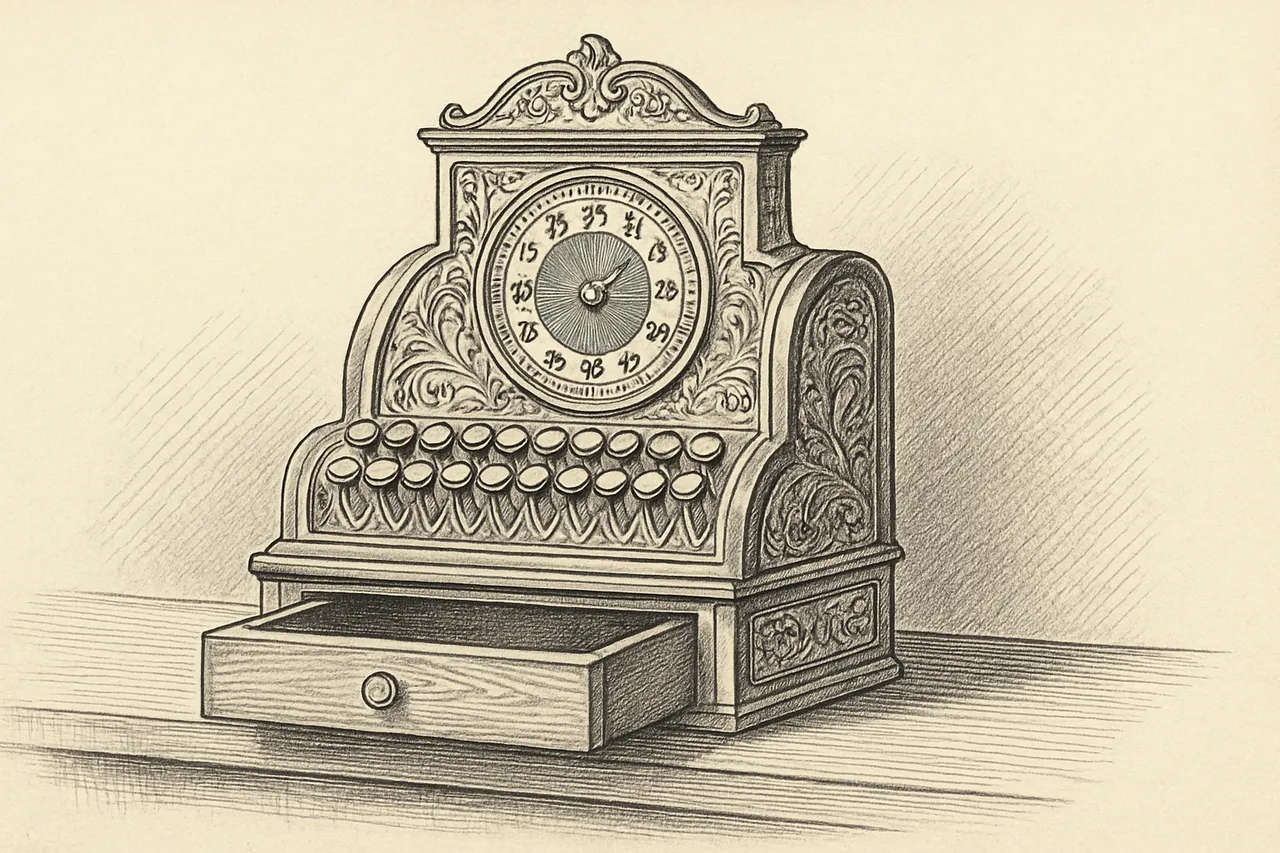
US221360 was granted to James Ritty and John Ritty on November 4, 1879, for a machine they called the Incorruptible Cashier. It counted money so that employees could not.
James Ritty owned a saloon in Dayton, Ohio, in the 1870s. The business took in a great deal of cash, all of it handled by bartenders, none of it recorded. Money went into a drawer and some of it did not come back out. Ritty knew he was being robbed and had no way to prove it, because there was nothing to compare the drawer against at the end of a shift.
He was not alone in this. Any cash business of the period ran on the honesty of whoever stood at the counter, and the losses were treated as a cost of operating.
A dial on the engine
Ritty's health suffered under the stress, and in 1878 he took a steamship to Europe. Down in the engine room he watched a mechanical counter that logged how many times the propeller shaft went around. It was a simple thing. Every rotation moved a dial one notch, and at any moment the captain could read a number that nobody had to remember or write down.
Ritty cut the trip short and went home to build the same idea for money.
What the first machine did
The version he and his brother John patented was crude by later standards. Pressing a key for a given amount advanced a mechanism, and a large clock-like face on top of the machine displayed the total. There was no paper tape, no receipt, and at first no cash drawer.
The important part was not the arithmetic. It was that the total was visible. A running tally sat on the counter where the customer could see it, and it could not be adjusted downward by the person taking the money.
Later refinements added the drawer that springs open, and the bell that rings when it does. Both are surveillance features rather than conveniences. A drawer that cannot be opened silently means every transaction announces itself to the owner in the back room.
Ritty sold it and left
The saloon owner turned out not to want to be a manufacturer. Sales were slow, running two businesses exhausted him, and in 1881 he sold the patent and the company for a reported one thousand dollars, then went back to running bars.
The buyer eventually sold on to John H. Patterson, who renamed the business the National Cash Register Company. Patterson was a ferocious salesman who built NCR into one of the largest companies in America and trained a generation of executives, including Thomas Watson, who went on to run IBM.
Ritty died in 1918. The machine he built to solve a problem in one bar became standard equipment in every shop in the country, and the reason it exists is that he could not trust the people working for him.
See the original
The full text and figures of US221360 are on patents.us.
Related stories
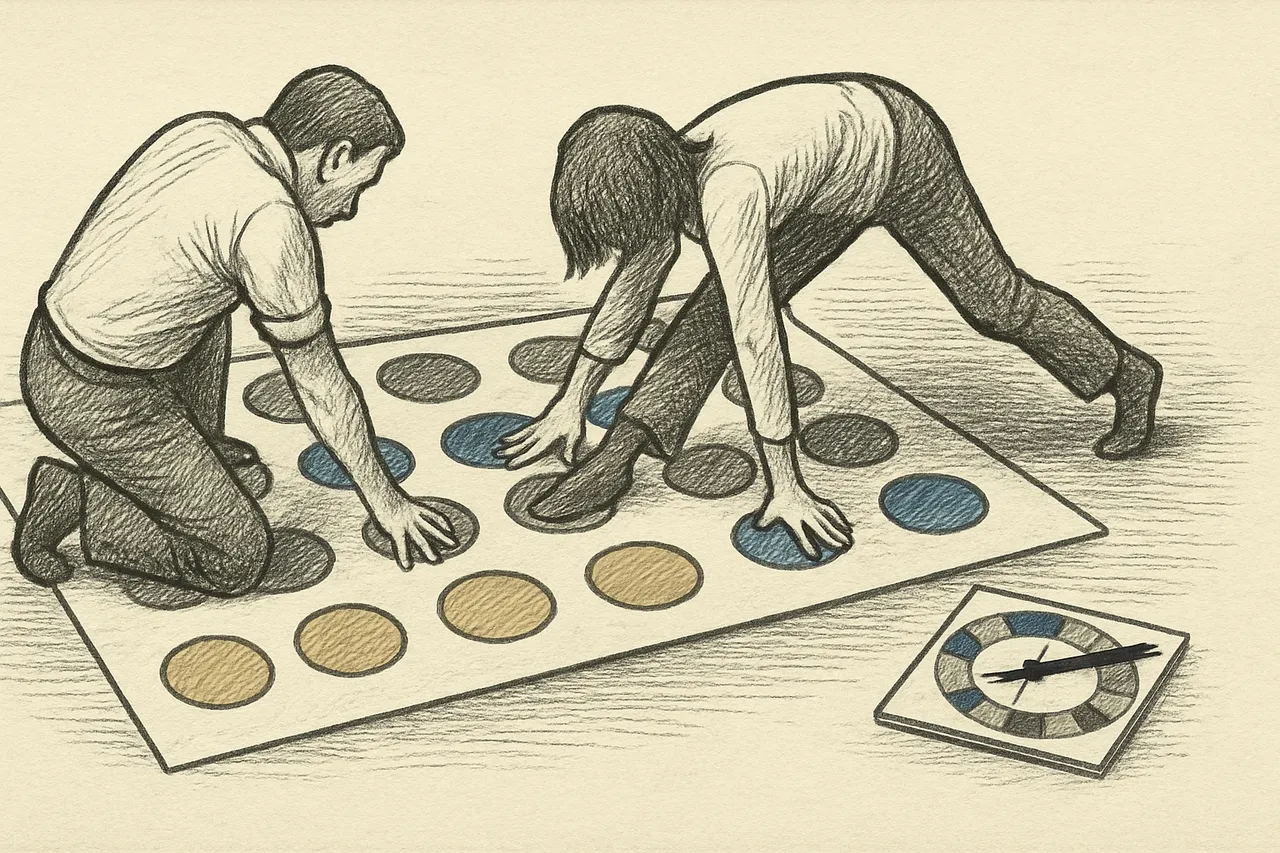
Twister's Patent Is Titled 'Apparatus for Playing a Game Wherein the Players Constitute the Game Pieces'
The patent title is the whole idea: the people are the pieces. Milton Bradley released the game in 1966, some retailers were wary of it, and critics found it a little too intimate. Then Johnny Carson played it on television with Eva Gabor, and the orders poured in.
Read the story →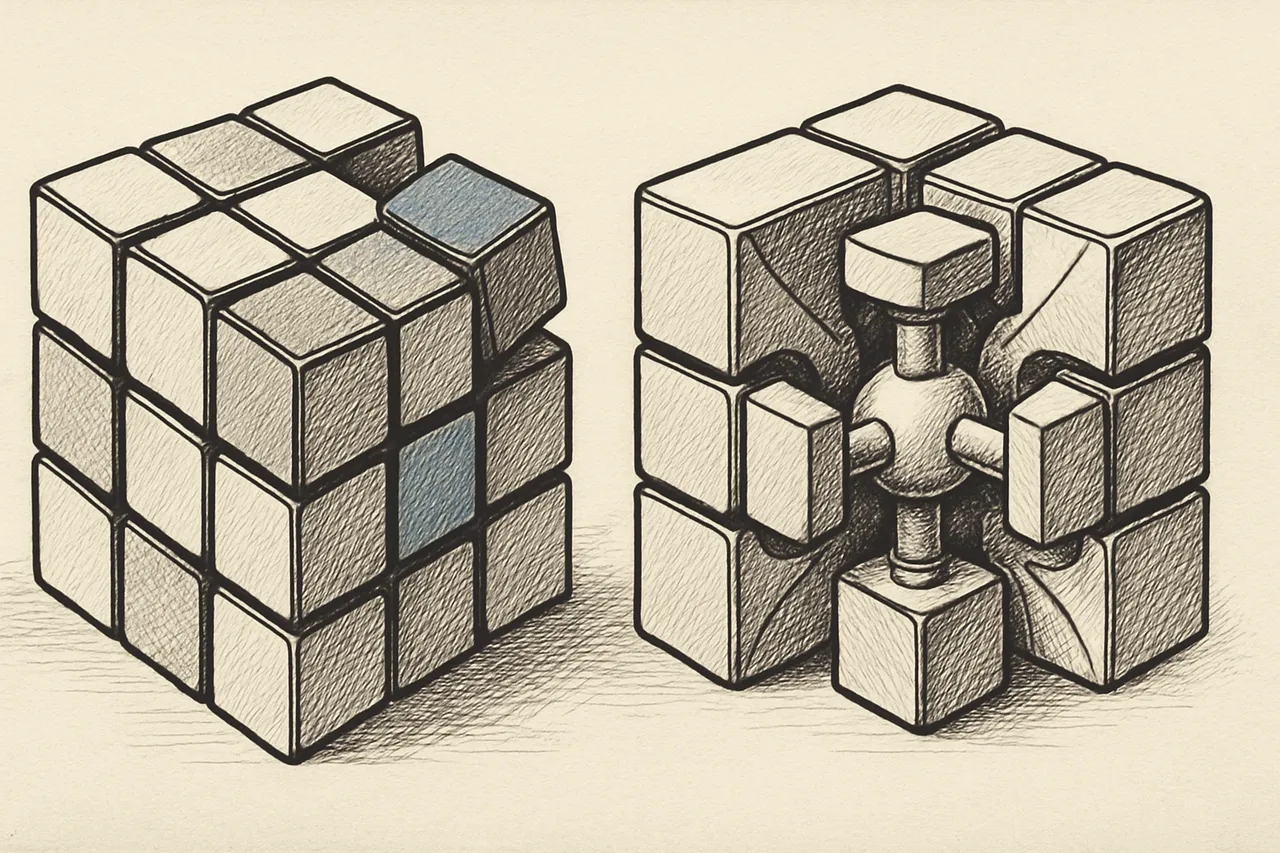
Ernő Rubik Needed About a Month to Solve His Own Cube. An American Court Later Found It Infringed an Earlier US Patent.
Rubik built the first cube in Budapest in 1974 as a way to think about three-dimensional movement. The clever part is how it holds together when most of its pieces are not attached to anything. In the United States, a chemist named Larry Nichols had patented a related puzzle in 1972, and his company sued.
Read the story →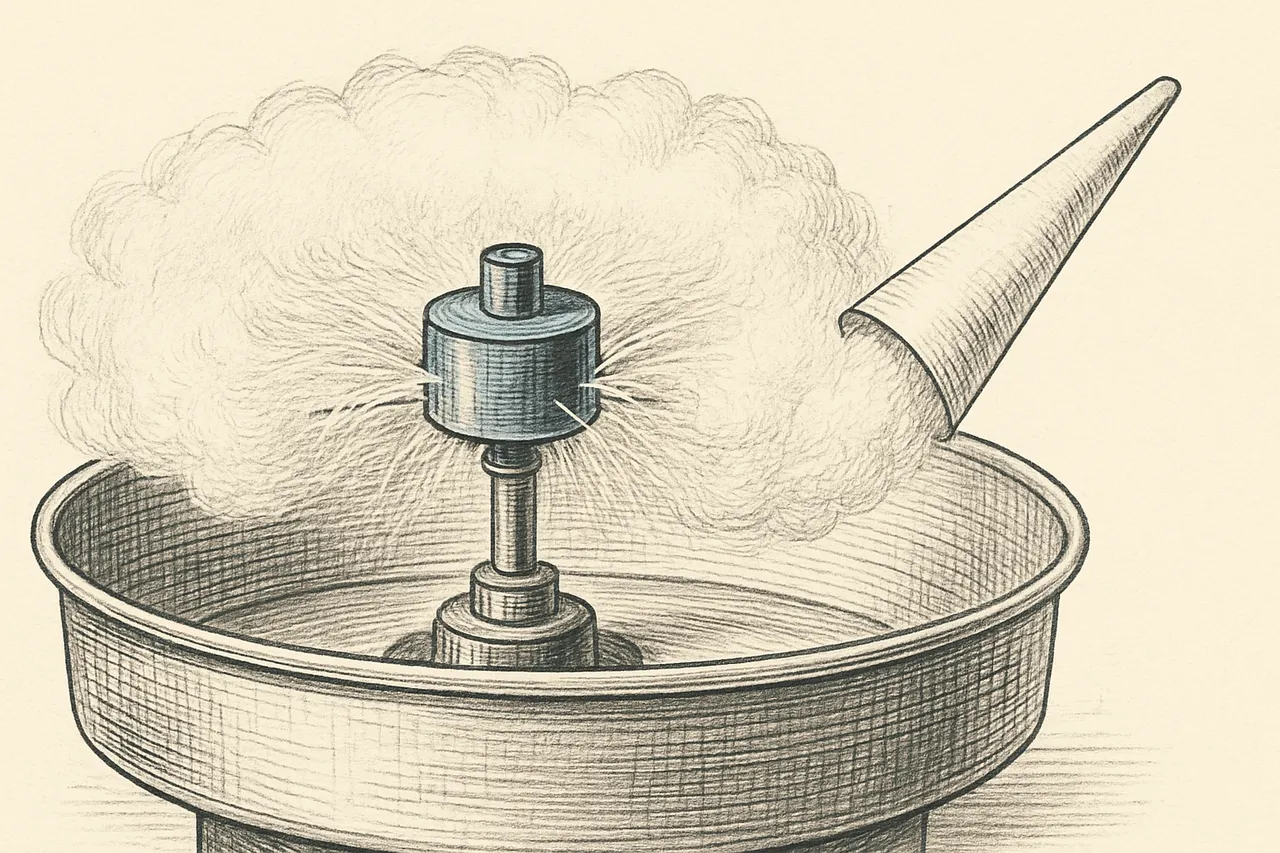
A Dentist Co-Invented the Cotton Candy Machine, and It Was Sold at the 1904 World's Fair as Fairy Floss
William Morrison was a dentist and John Wharton was a candy maker. Their machine melted sugar and flung it through tiny holes so that it cooled into threads finer than hair before it could crystallize. They filed in 1897, and at the St. Louis World's Fair it was a sensation.
Read the story →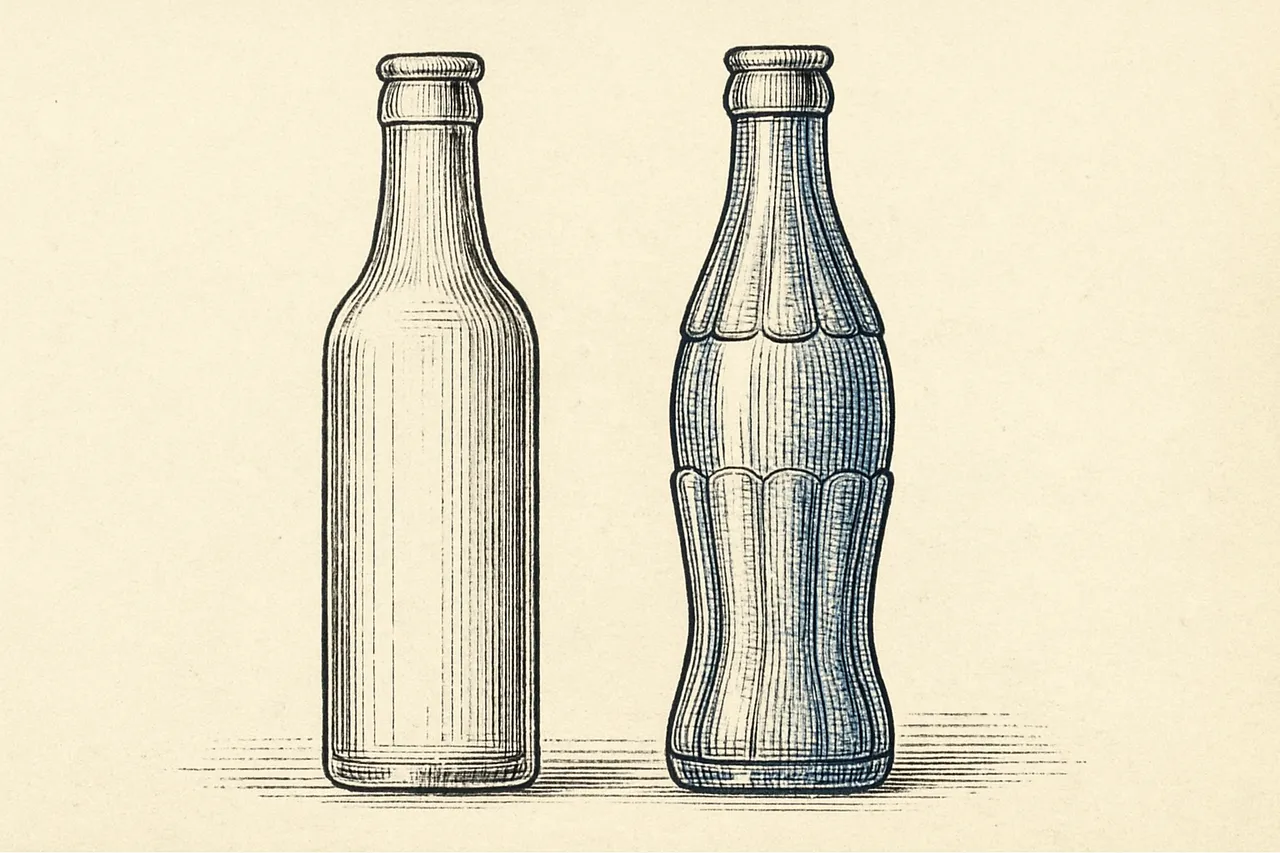
Coca-Cola Asked Glassmakers for a Bottle You Could Recognize in the Dark, or Broken on the Ground
In 1915 Coca-Cola had an imitation problem, since competitors used the same straight-sided bottles and borrowed-sounding names. It challenged glass companies to design a bottle identifiable by touch alone. The winner came from a small glassworks in Terre Haute, Indiana, and the name on the patent is not the name of the man who drew it.
Read the story →