A Father Watched His Daughter Struggle With a Straw at a Soda Fountain and Went Home and Fixed It
Joseph Friedman's daughter was too short to reach the top of a straight paper straw. He took one home, dropped in a screw, wrapped it with floss, and made the first flexible drinking straw. Hospitals turned out to need it far more than soda fountains did.
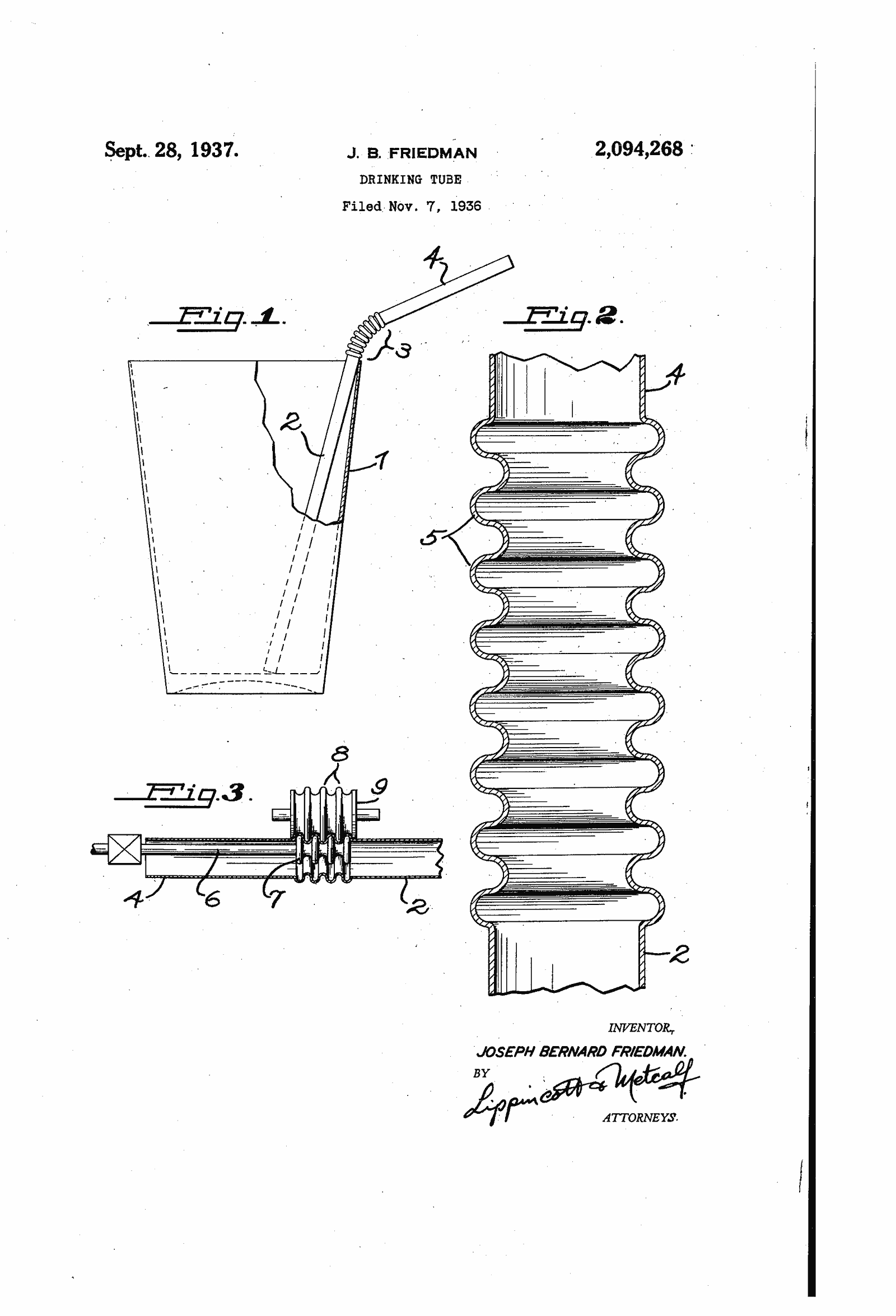
US2094268 was filed by Joseph Bernard Friedman on November 7, 1936, and granted the following year. The Patent Office called it a Drinking Tube. Everyone else calls it the bendy straw, and the reason it exists is a small girl at a counter who could not reach her milkshake.
The soda fountain
Friedman was sitting in his brother's soda fountain in San Francisco with his young daughter Judith. She had a milkshake in front of her and a straight paper straw in it, and the straw was taller than she could comfortably manage. She had to stand up or crane over the glass to get to the top of it, and the straw kept tipping.
The straight paper straw was already a patented product. Marvin Stone had patented one in 1888, made by winding paper around a pencil and gluing it, specifically to replace the rye grass straws people had been using, which went soggy and lent a grassy taste to the drink.
Stone's straw solved the taste problem. It did not solve the geometry problem, which is that a rigid tube pointing straight up is inconvenient for anyone whose mouth is not directly above the glass.
The screw and the floss
What Friedman did that evening is the part worth understanding, because the method is the patent.
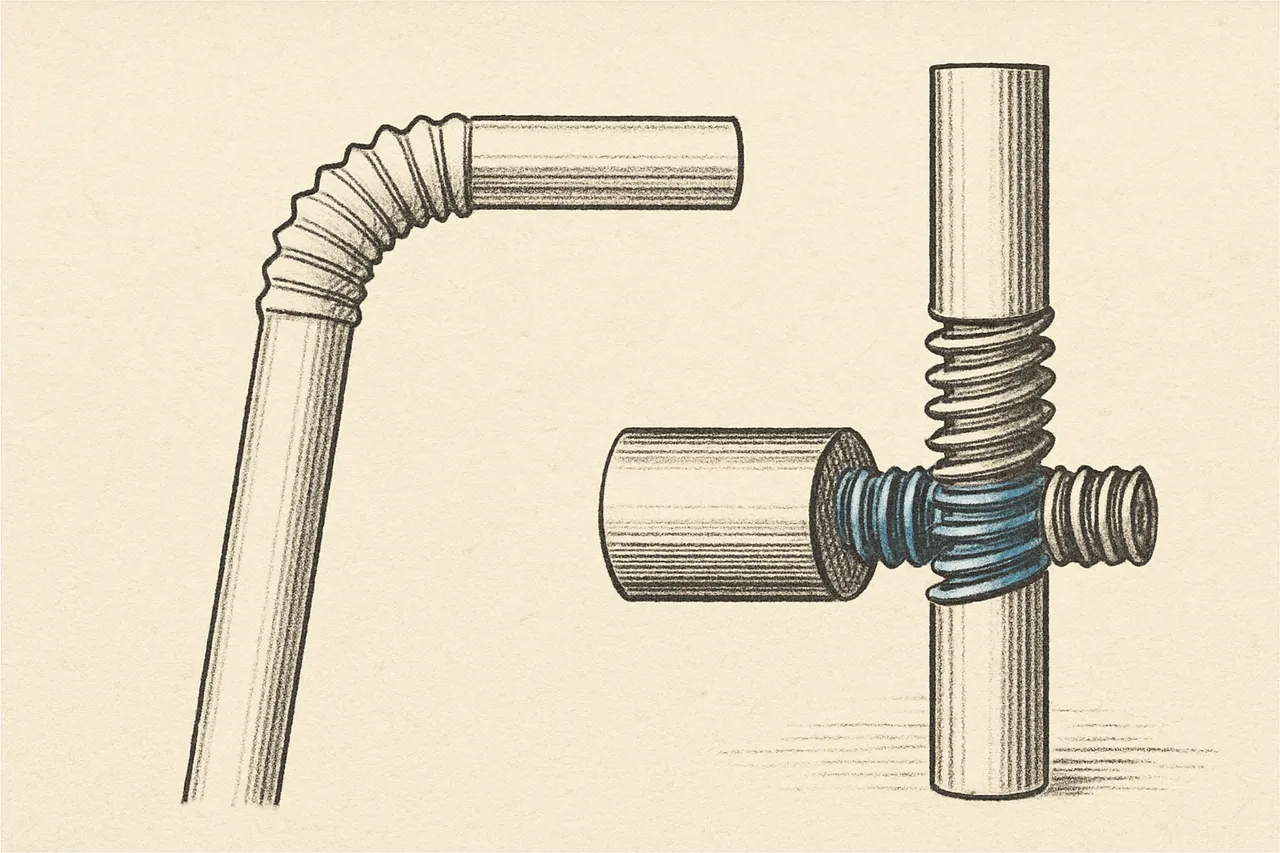
He took a paper straw and inserted a screw into it, pushing it down to about where he wanted the bend. Then he wound dental floss tightly around the outside of the straw, following the screw's thread, and cinched it down. The floss pressed the paper into the spiral groove of the screw beneath it.
When he removed the floss and the screw, the straw had a short section of corrugated ridges running around it, like a tiny accordion.
That corrugated section is the whole thing. A tube of uniform paper kinks and closes when you bend it. A tube with concentric ridges bends by letting the ridges compress on the inside of the curve and open on the outside, so the passage stays open. The straw holds whatever angle you put it at, and liquid still moves through.
He built it out of a screw and floss on a countertop, and the mechanism was correct enough that it is essentially still how they are made.
Nobody wanted it
Friedman tried to sell the idea to the existing straw manufacturers. He approached the companies that would have been the obvious buyers and was turned down repeatedly over several years. The straight straw worked, it was cheap, and the case for changing it was not obvious to anyone but him.
So he manufactured it himself, eventually founding the Flexible Straw Corporation and getting production running in the late 1940s, more than a decade after the patent.
The customer he did not expect
His first substantial buyer was not a soda fountain. It was hospitals.
The problem the bendy straw solves for a child at a counter is the same problem it solves for a patient who cannot sit up. A person lying in a hospital bed cannot drink from a glass or from a rigid straight straw without being raised, which may be painful, unsafe, or impossible. A straw that bends to the patient means a nurse can hold a glass at the bedside and the patient can drink lying down.
Hospitals bought them, and that is where the flexible straw first found a real market.
It is a fair summary of the object. A father solved a small inconvenience for his daughter, industry told him for years that it was not worth solving, and it turned out to be medical equipment.
See the original
The full text and figures of US2094268 are on Google Patents.
Related stories
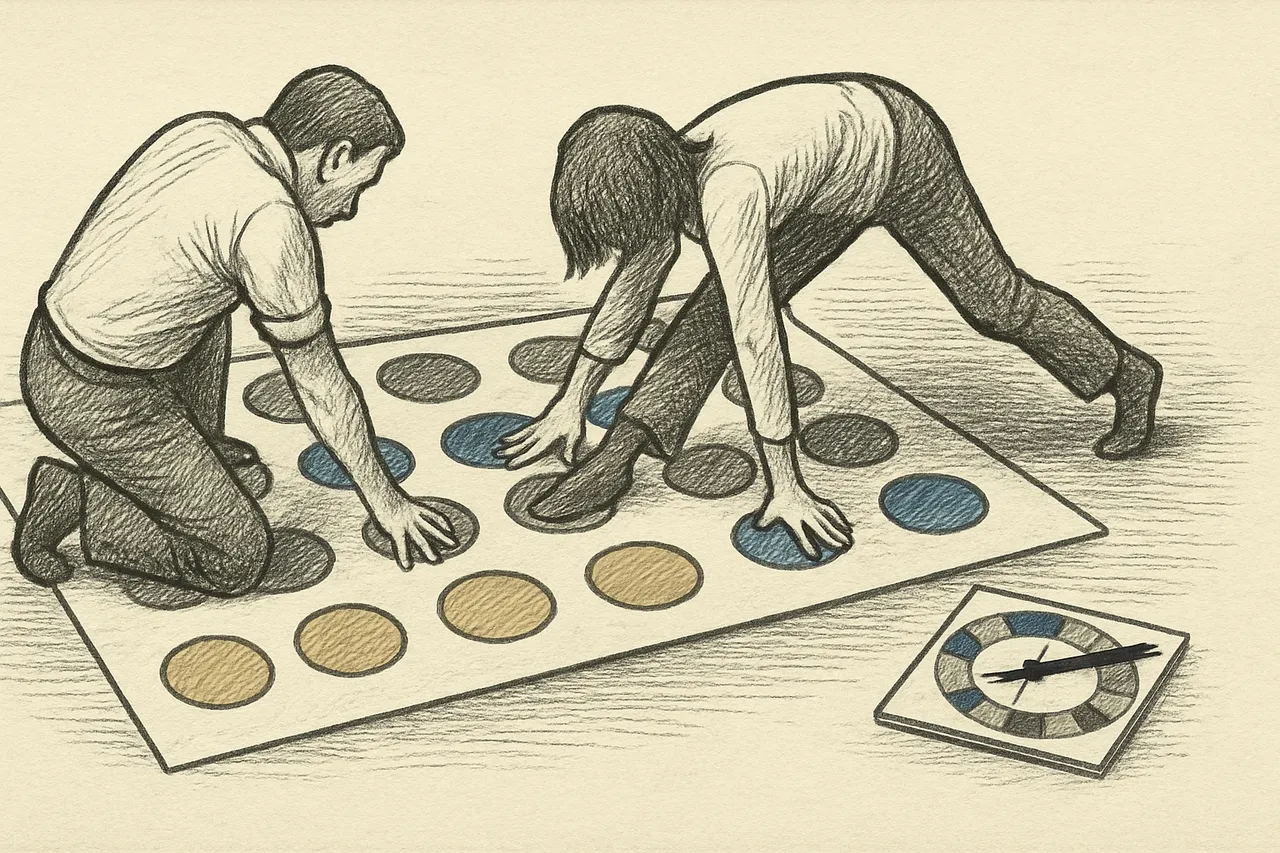
Twister's Patent Is Titled 'Apparatus for Playing a Game Wherein the Players Constitute the Game Pieces'
The patent title is the whole idea: the people are the pieces. Milton Bradley released the game in 1966, some retailers were wary of it, and critics found it a little too intimate. Then Johnny Carson played it on television with Eva Gabor, and the orders poured in.
Read the story →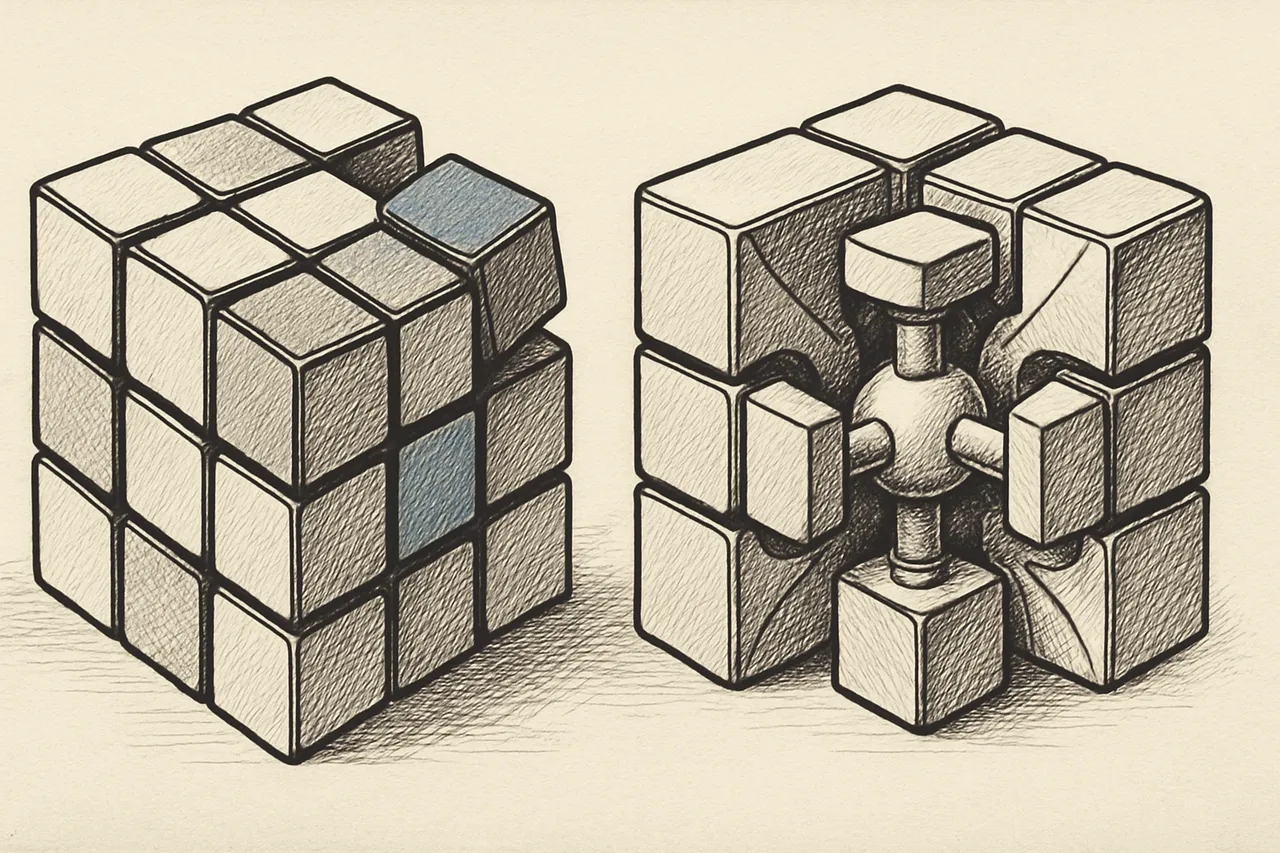
Ernő Rubik Needed About a Month to Solve His Own Cube. An American Court Later Found It Infringed an Earlier US Patent.
Rubik built the first cube in Budapest in 1974 as a way to think about three-dimensional movement. The clever part is how it holds together when most of its pieces are not attached to anything. In the United States, a chemist named Larry Nichols had patented a related puzzle in 1972, and his company sued.
Read the story →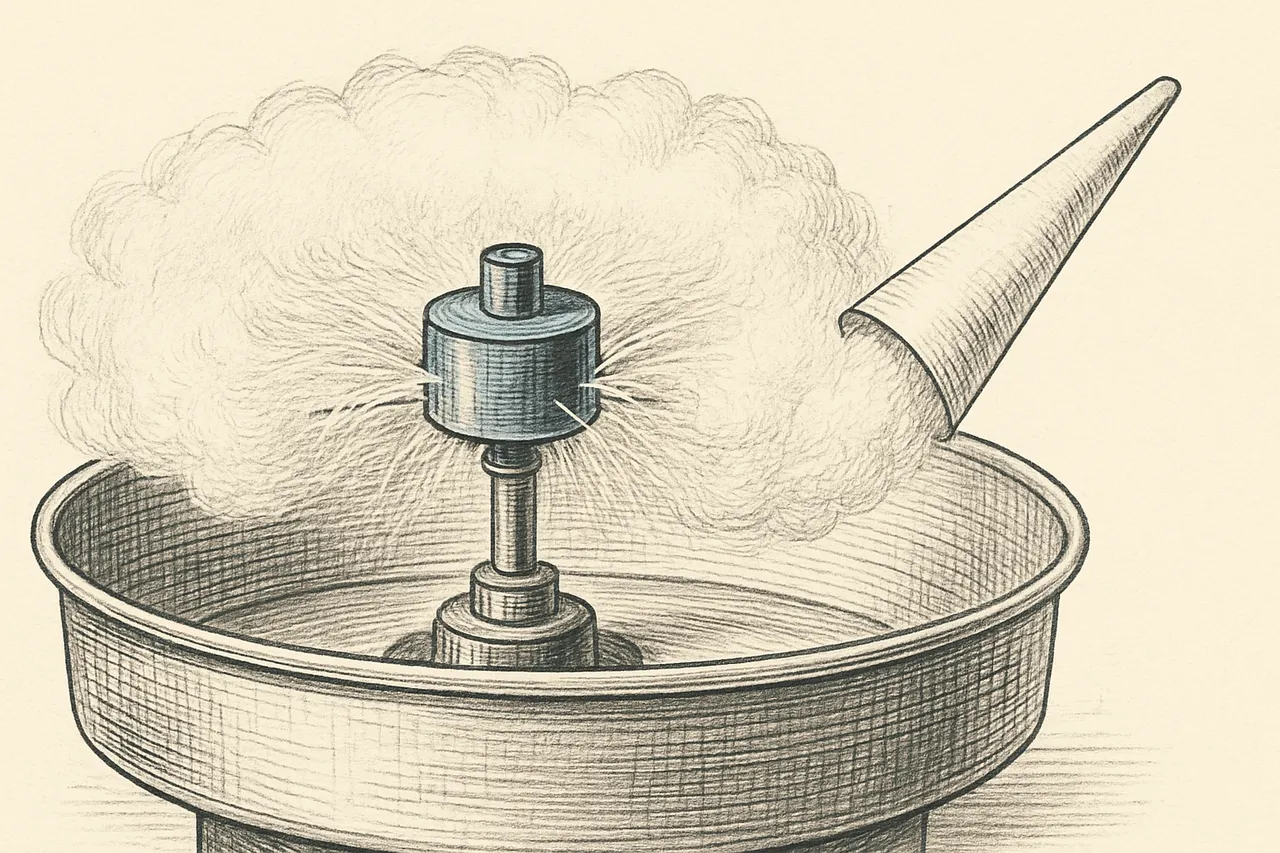
A Dentist Co-Invented the Cotton Candy Machine, and It Was Sold at the 1904 World's Fair as Fairy Floss
William Morrison was a dentist and John Wharton was a candy maker. Their machine melted sugar and flung it through tiny holes so that it cooled into threads finer than hair before it could crystallize. They filed in 1897, and at the St. Louis World's Fair it was a sensation.
Read the story →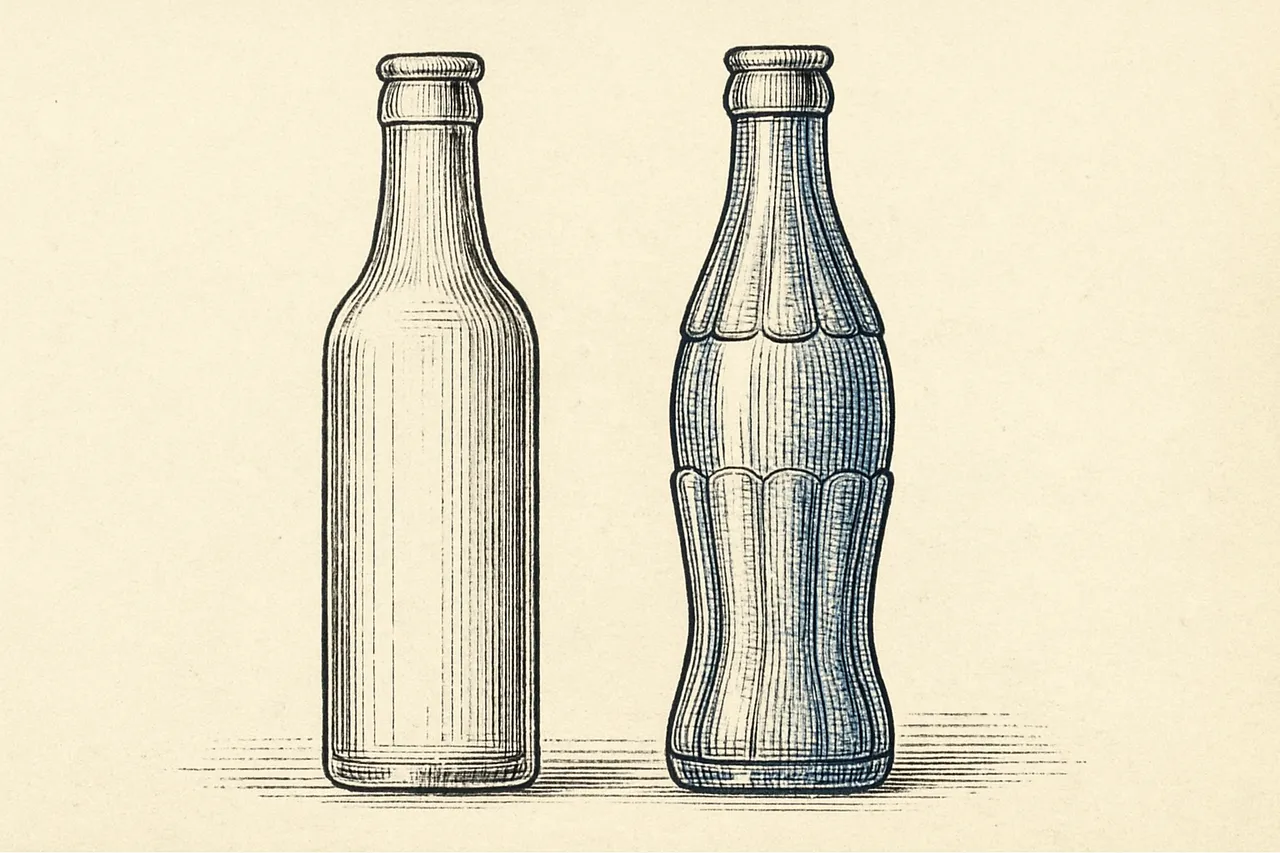
Coca-Cola Asked Glassmakers for a Bottle You Could Recognize in the Dark, or Broken on the Ground
In 1915 Coca-Cola had an imitation problem, since competitors used the same straight-sided bottles and borrowed-sounding names. It challenged glass companies to design a bottle identifiable by touch alone. The winner came from a small glassworks in Terre Haute, Indiana, and the name on the patent is not the name of the man who drew it.
Read the story →