Samuel Morse Patented the Telegraph — and Abolished Distance
Before 1844, a message could travel only as fast as a horse, a train, or a ship. Samuel Morse's telegraph made it travel at the speed of electricity. For the first time in history, communication was faster than transportation.
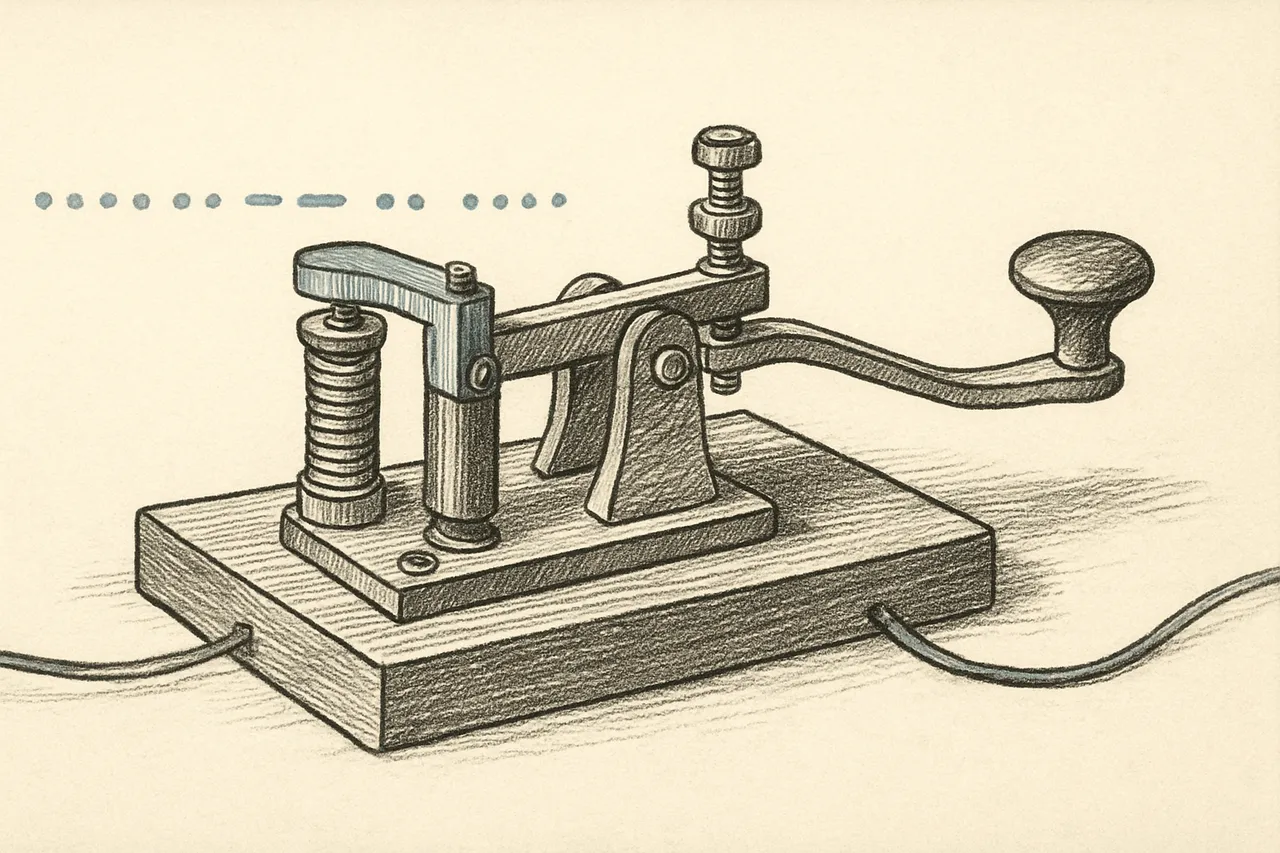
US1647 was granted to Samuel F. B. Morse on June 20, 1840. Its title is a mouthful, in the manner of the era: "Improvement in the Mode of Communicating Information by Signals by the Application of Electro-Magnetism." It is the founding patent of the electric telegraph in America, and it marks one of the genuine hinge points in human history: the moment communication became faster than travel.
For all of history before the telegraph, information moved at the speed of the fastest available transportation. A message could go no quicker than the horse, ship, train, or runner carrying it. News of a battle, a birth, a market price, or a death arrived days, weeks, or months after the fact, and the map of the world was, in an informational sense, enormous — every place was far from every other place, measured in the time it took word to travel.
The system
Morse — a portrait painter by profession, who came to invention relatively late and partly through personal tragedy, having learned of his wife's death too slowly to reach her before she was buried — worked out a system with the help of collaborators including Alfred Vail and the physicist Joseph Henry. An electric current sent down a wire could be switched on and off at one end and detected instantly at the other. By encoding letters as patterns of short and long pulses — the code that still bears his name — an operator could spell out any message and have it received, essentially instantaneously, hundreds of miles away.
The famous public demonstration came in 1844, when Morse sent a message over an experimental line from Washington, D.C., to Baltimore. The words he chose, from the Book of Numbers, were fitting for a man who saw the invention as almost providential: "What hath God wrought."
What it changed
The telegraph spread across the United States and the world with astonishing speed. Within a couple of decades, wires connected the coasts; in 1866, after several heartbreaking failures, a cable was successfully laid across the floor of the Atlantic Ocean, connecting North America and Europe. A message that had taken ten days by fast ship now took minutes.
The consequences rippled through everything. Financial markets in distant cities synchronized their prices for the first time. Railroads used the telegraph to coordinate trains and prevent collisions. Newspapers built wire services and could report events from across the continent the next morning. Weather warnings could outrun the storms they described. Governments could govern, and armies could be commanded, across distances that had previously swallowed any attempt at real-time control.
Morse's patent made him wealthy and, after the usual grinding years of litigation to defend it, secure. But the deeper legacy is conceptual. Every communication technology since — the telephone, radio, television, the internet — is a descendant of the basic thing Morse proved in 1844: that information could be separated from the physical object carrying it and sent at the speed of electricity. The world has been shrinking ever since.
See the original
The full text and figures of US1647 are on patents.us.
Related stories
Charles Goodyear Invented Rubber That Works — and Died $200,000 in Debt
Natural rubber melted in summer and cracked in winter. Charles Goodyear spent years and his family's health obsessively trying to fix it, then discovered the answer by accident — dropping rubber and sulfur on a hot stove. The world got tires. He got debtor's prison.
Read the story →
George Eastman Made Everyone a Photographer With Four Words: You Press the Button
Before 1888, photography meant glass plates, chemicals, and expertise. Eastman's roll-film box camera came pre-loaded, took a hundred pictures, and was mailed back to the factory for developing. The slogan said the rest: 'You press the button, we do the rest.'
Read the story →
The Zipper Took Twenty Years and Three Inventors to Actually Work
The first 'clasp locker' was shown at the 1893 World's Fair and was a flop — it jammed, sprang open, and rusted. It took two more decades and a Swedish-American engineer's complete redesign to produce the interlocking-tooth zipper we use today.
Read the story →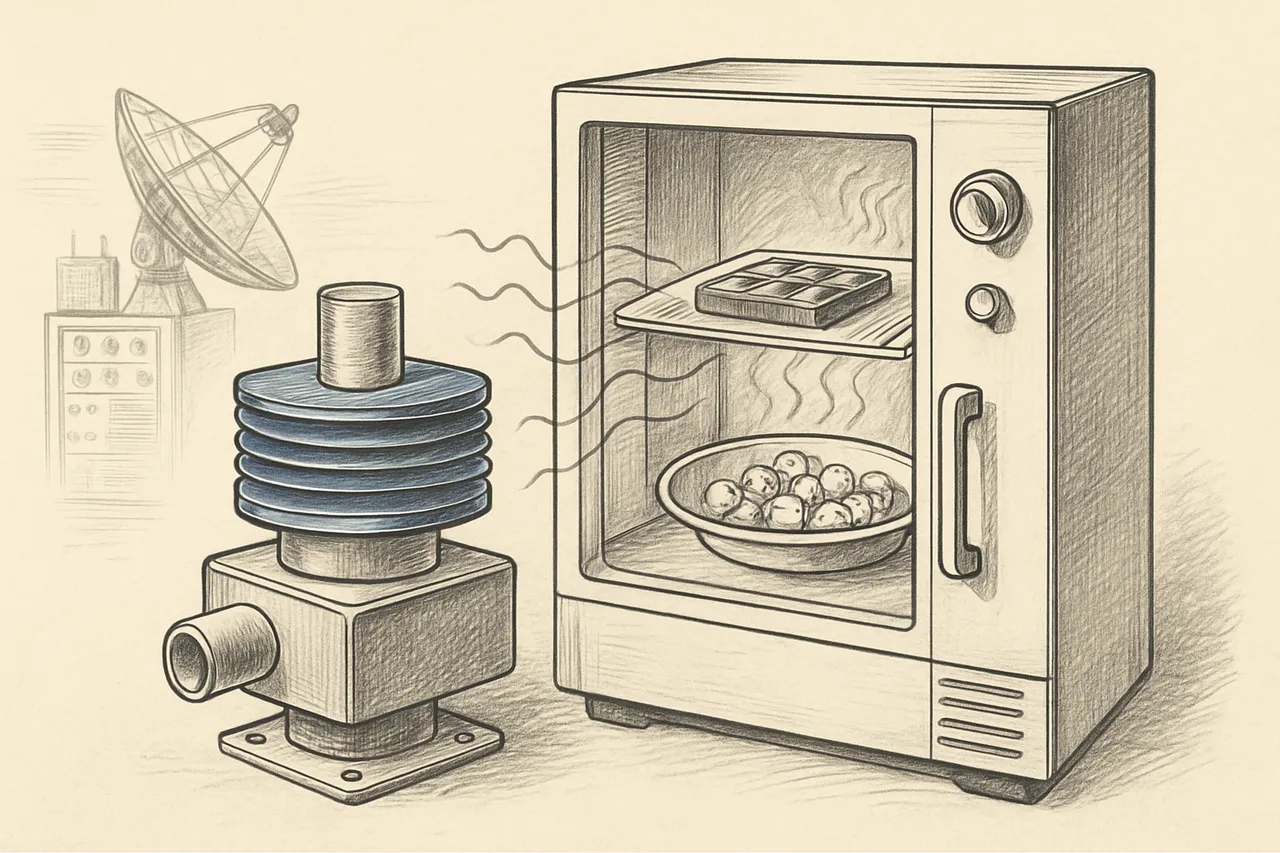
A Melted Candy Bar in His Pocket Led to the Microwave Oven
An engineer testing radar equipment noticed the chocolate bar in his pocket had turned to goo. Instead of shrugging, he aimed the magnetron at some popcorn kernels. They popped. The kitchen was never the same.
Read the story →